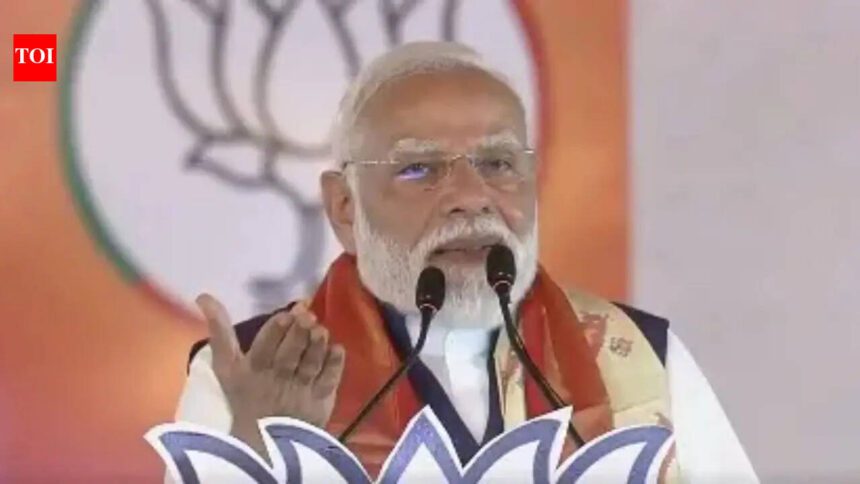

NEW DELHI: Following Prime Minister Narendra Modi’s announcement of measures aimed at conserving fuel and saving foreign exchange, the government urged citizens on Monday to remain calm and refrain from panic buying. Officials emphasized that the country has adequate oil supplies and is taking decisive actions to avert shortages and disruptions in the supply chain.
At a meeting of the informal group of ministers (IGoM) focusing on developments in West Asia, Defence Minister Rajnath Singh stated, “The government’s primary focus is to ensure that energy flows remain uninterrupted, maintain economic stability, and secure maritime trade routes.”
During the Confederation of Indian Industry’s (CII) annual meeting, Petroleum Secretary Neeraj Mittal reassured the public that there is no need for fuel rationing or panic buying, while advocating for adherence to the Prime Minister’s guidelines.
Modi reinforced his appeal on Monday, suggesting that schools might consider temporarily shifting to online classes. He noted, “First came Covid-19, followed by global economic challenges, and now rising tensions in West Asia. The impact of these circumstances is continuously felt worldwide, and India is not immune to it.” He called for efforts to reduce the consumption of imported products and encouraged people to avoid spending foreign currency on non-essential activities.
Mittal echoed this sentiment, stating, “In times of crisis, we must remember that these fuels are expensive. If we can conserve them, it saves dollars that can be invested into developmental programs rather than wasted.” He reassured the public that there are sufficient supplies and that rationing is not being considered, describing India as “an oasis of comfort.”
According to Mittal, India’s extensive refining capacity has helped cushion against supply shocks, fulfill domestic demand, and facilitate the export of refined petroleum products. The IGoM, attended by multiple ministers, reported that the country has a surplus of essential commodities, with current conservation efforts aimed at building long-term capacity in preparation for potential prolonged crises.
India maintains reserves of 60 days of crude oil, 60 days of natural gas, and 45 days of liquefied petroleum gas (LPG). The nation’s foreign exchange reserves stand at a robust $703 billion. As the world’s third-largest oil refiner and fourth-largest exporter of petroleum products, India continues to meet its domestic demands fully. However, the nation is faced with significant costs due to persistently high international crude prices, which fuel conservation could help alleviate, according to a government release.