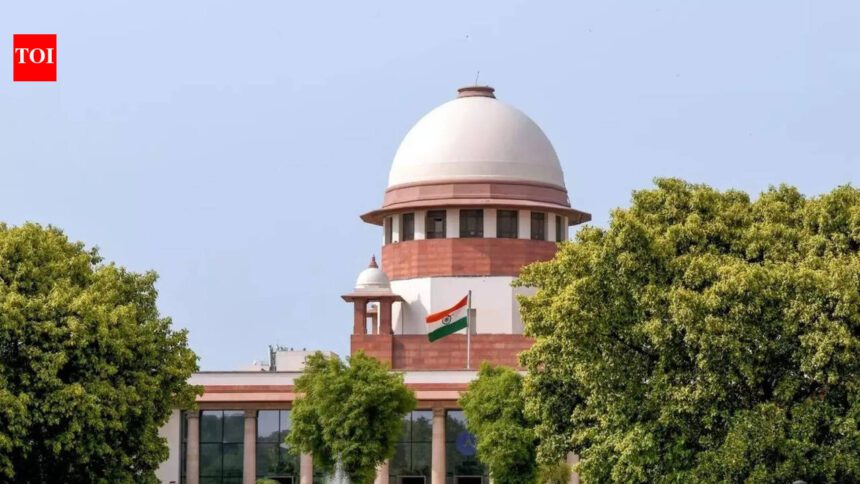

The Supreme Court of India stated on Monday that the prolonged pendency of thousands of bail petitions in high courts infringes upon the “precious” right to liberty. To address this issue, the Court mandated that the practice of issuing notices on bail pleas could be streamlined. Specifically, a copy of the petition must be served in advance to the prosecution, enabling them to respond on the first day of the hearing.
Currently, the standard procedure is for courts to issue notices on an accused’s bail application, seeking responses from the state government, the investigating agency, or the relevant prosecution. This process often leads to delays, as responses may take weeks to be filed, hindering the timely resolution of petitions for release from judicial or police custody related to criminal cases.
The Supreme Court commended the Madras High Court for its efficiency in resolving bail petitions swiftly. In contrast, while the Allahabad High Court has a high volume of pending bail pleas, the bench acknowledged the significant caseload faced by judges there, who are required to hear nearly 200 bail pleas per day.
Emphasizing the importance of expeditious hearings, the Court maintained that the swift processing of bail petitions must not overlook the rights of crime victims. The bench issued several directives, including the automatic re-listing of previously entertained bail applications for hearings at least once every two weeks through specialized software.
The Supreme Court noted that protecting the liberty of the accused does not equate to marginalizing the rights of victims. It highlighted the critical responsibility of investigative agencies and prosecutions in victim-centric cases, underlining that any negligence could facilitate the unjust release of accused individuals.
The bench urged high courts to adopt practices that discourage government bodies and investigations from requesting adjournments, stressing the court’s obligation to safeguard the fundamental rights enshrined in the Constitution.
Additionally, it was observed that many cases under the Narcotic Drugs and Psychotropic Substances (NDPS) Act experienced delays due to the tardy provision of forensic laboratory reports. Consequently, the Supreme Court directed high court chief justices to engage with government authorities to expedite these forensic reports in relevant court cases.
To further enhance transparency and accountability, the bench recommended that high courts establish a portal to provide updates on the status of all pending bail petitions, allowing all parties—including the accused, prosecution, and courts—to pursue swift resolutions.