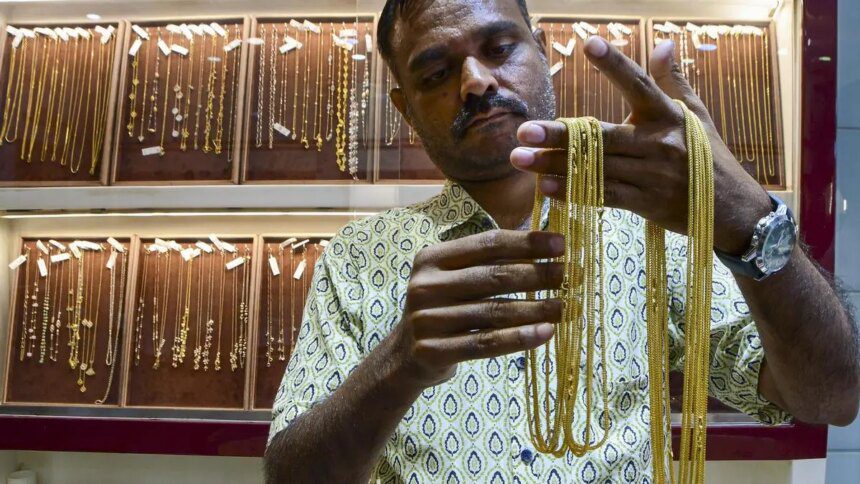

Jewellers’ associations nationwide are planning to reach out to the Prime Minister’s Office (PMO) regarding Prime Minister Narendra Modi’s recent comments encouraging consumers to delay gold jewellery purchases over the coming year. This recommendation aims to alleviate India’s import bill amid rising global uncertainty.
Rajesh Rokde, chairman of the All India Gem and Jewellery Domestic Council, stated that the council intends to request an appointment with the PMO to discuss this matter in detail. “Our objective is to present long-term solutions that can make India truly self-reliant by channeling idle household gold into the formal economy, rather than depending heavily on imports. This dialogue will be crucial in aligning industry practices with national priorities while safeguarding livelihoods and consumer trust,” he remarked.
Modi’s comments, made during a rally in Secunderabad, included several measures aimed at reducing foreign exchange expenditure, such as encouraging public transport, promoting remote work, and limiting international travel. These remarks provoked strong reactions from jewellers, particularly in Lucknow, where local traders called for a market shutdown. The Lucknow Mahanagar Sarafa Association declared a one-day closure on Monday, warning that the Prime Minister’s statements could significantly impact artisans and traders during the vital wedding season.
Currently, India’s jewellery demand is at a near 30-year low, attributed to high gold prices and weak consumer sentiment. Industry estimates indicate that a further slowdown in gold jewellery sales could jeopardize the livelihoods of over one crore individuals employed in the sector.
Dr. C Vinod Hayagriv, managing director of C Krishniah Chetty Group, suggested that structural reforms could effectively address the import issue. “A simple structural reform permitting the sale of raw bullion only to GST-registered buyers can immediately reduce unnecessary imports, improve transparency, and strengthen the organised jewellery ecosystem,” he explained. “This is not a short-term measure but a long-term economic safeguard that can benefit the country for years to come. India must encourage value-added consumption of gold rather than idle locker-based investments that do not support the broader economy.”
Gold is India’s second-largest imported commodity following crude oil. Increased gold jewellery demand drives manufacturers to import more bullion, amplifying pressure on the rupee and widening the current account deficit (CAD), which typically escalates when both crude oil and gold imports surge. The CAD indicates the gap between foreign exchange inflows into India and funds expended on imports.
Market reactions were immediate, with jewellery stocks falling in response to fears of dwindling consumer demand. Titan Company shares declined by 7%, while Kalyan Jewellers and PNG Jewellers dropped by 9% and 8% respectively. Senco Gold & Diamonds saw an 11% decrease. This decline occurred despite most jewellery companies reporting stronger earnings for the March quarter.