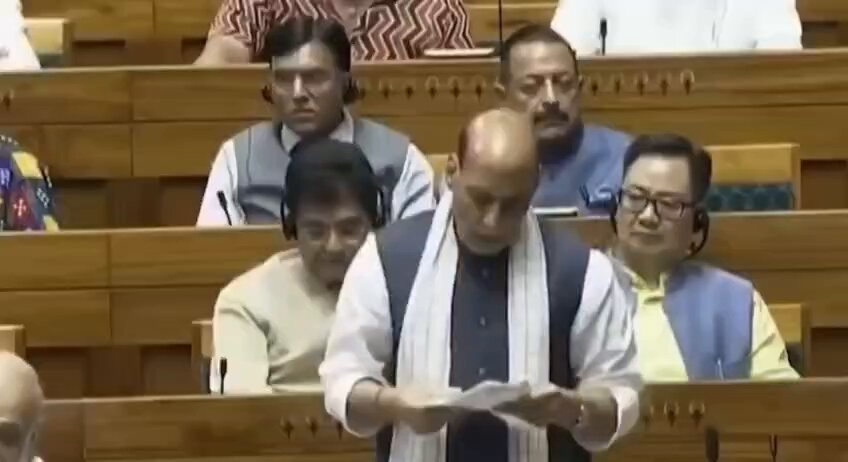

In recent statements made by Indian Defense Minister Rajnath Singh, he emphasized that there were no casualties among Indian soldiers during a particular military operation, countering claims made by the Congress party regarding losses of aircraft. Pradeep Bhandari, a political commentator, has criticized the Congress party for allegedly trying to undermine trust in the armed forces with selective video clips.
Context of the Claims
The controversy stems from a video shared by the Congress party, which appears to show Defense Minister Rajnath Singh discussing military operations. In the video, Singh clearly states, “If you have to ask a question, then ask whether our brave soldiers suffered any harm in this operation. The answer is ‘no’.” This statement was intended to address narratives suggesting significant losses during a recent military engagement.
Singh’s comments were specifically aimed at dismissing allegations that the Indian Air Force had lost aircraft during an operation, particularly in the context of criticisms aimed at the government. These statements come amid heightened tension regarding India’s defense capabilities, especially following various military standoffs in recent times.
Congress Party’s Response
The Congress party’s use of a clipped segment of Singh’s speech has sparked accusations from pro-government supporters, including Bhandari, who assert that the party is attempting to mislead the public. According to Bhandari, the Congress’s approach reflects a historical pattern of undermining national security to gain political mileage. He likened this tactic to the methods used by British colonial rulers to foster distrust among Indian forces.
Bhandari further criticized Congress for what he described as an “Anti-India campaign,” pointing to their historical decisions, such as refraining from retaliatory action against Pakistan after the 26/11 Mumbai attacks and their responses during border confrontations in Doklam. He accused the party of prioritizing political agendas over national interest.
Government’s Defense Strategy
The Indian government has defended its strategic approach to national security, particularly in light of Congress’s assertions. The recent maintenance orders for Rafale jets have been viewed as evidence of the government’s commitment to bolstering defense capabilities, which Bhandari suggests counters Congress’s narrative of military inadequacy.
The government’s broader strategy hinges on projecting a strong military front, especially against historical adversaries. Analysts suggest that this emphasis on military readiness and capability is aimed not just at the opposition but also at a national audience eager for assurance regarding the security of the nation.
Why This Matters
This ongoing debate over military operations and national security holds significant importance in the Indian political landscape. With heightened geopolitical tensions—both regionally and globally—how parties frame these discussions can have profound implications for public perception and electoral prospects.
The portrayal of Congress’s intentions as being at odds with national security interests may sway voters who prioritize defense issues. As India continues to navigate complex relationships with neighboring countries, ensuring public trust in the military and its leaders remains crucial. This incident reflects how political rhetoric can shape or shift public opinion on vital issues like national security.
Frequently Asked Questions
What exactly did Rajnath Singh say regarding military operations?
Rajnath Singh stated that there were no casualties among Indian soldiers during a recently discussed operation, countering claims made by the Congress party about losses.
How did the Congress party respond to Singh’s comments?
The Congress party shared a clipped video of Singh’s remarks, which they interpreted as a response to questions about military losses, leading to accusations from the ruling party that they were distorting facts.
What is the significance of the Rafale jets in this context?
The recent maintenance orders for Rafale jets are seen as an effort by the Indian government to reinforce its military capabilities and dispel fears regarding India’s defense strategy, especially in light of criticisms from the opposition.
Why is this debate important for Indian politics?
The framing of national security issues can significantly influence public sentiment and electoral decisions, making this discourse a vital aspect of Indian political strategy, especially in an environment of rising geopolitical tensions.