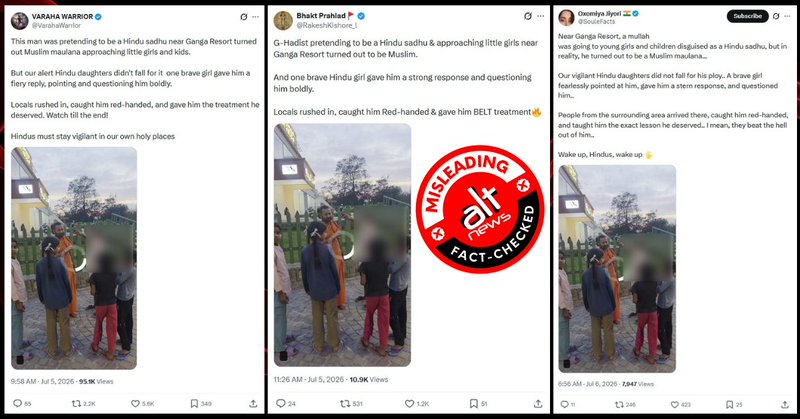

A video claiming that a Muslim man disguised as a Hindu monk was caught harassing young girls in Rishikesh has recently gone viral. However, police have confirmed to #AltNews that the man is not a Muslim and that allegations of harassment are unfounded.
Viral Video Sparks Controversy
The video depicts a confrontation between a group of young girls and a man clad in saffron robes, commonly associated with Hindu monks. In the footage, the girls accuse him of inappropriate behavior, which quickly drew widespread attention on social media. The claims surrounding the incident suggested a deeper narrative of religious deceit and predation, reflecting ongoing communal tensions in India. As the video circulated, it fueled a wave of speculation and outrage, particularly among those keen on portraying this event through a religious lens.
Police Investigation and Clarification
In response to the viral claims, the local police conducted an investigation into the matter. Their findings revealed that the man involved was not a Muslim pretending to be a Hindu monk. Police emphasized that the allegations of harassment were baseless. This revelation challenged the narrative spun by users on various platforms, many of whom jumped to conclusions about the identity and motives of the individual in question. The incident highlights the importance of fact-checking before spreading content that can potentially incite communal discord.
Impact of Social Media on Public Perception
This incident underscores the role of social media in shaping public perceptions and narratives around sensitive issues such as communal identities. The rapid dissemination of misinformation can lead to unwarranted backlash against specific communities, feeding into a cycle of distrust and fear. The viral spread of this video serves as a reminder of the power that social media holds in influencing societal views, often bypassing traditional channels of news verification. Fact-checking organizations like AltNews have played a crucial role in countering misinformation, yet the challenge remains to combat the speed at which false narratives can spread in the digital age.
Why This Matters
The implications of this incident resonate beyond mere misinformation; they tap into the larger narrative of religious identity and communal harmony in India. With tensions often flaring between different religious groups, such incidents can exacerbate divisions. The acknowledgment by authorities that claims were spurious is a critical step toward maintaining societal cohesion. It highlights the necessity for citizens to seek genuine verification of information before reacting, particularly in a nation where communal relations are fragile. Such episodes can distill public sentiment and influence future discourse around religious identities and national solidarity.
Frequently Asked Questions
What sparked the incident involving the alleged harassment in Rishikesh?
The incident began when a viral video showed a group of girls confronting a man dressed as a Hindu monk, accusing him of inappropriate behavior toward them, which led to widespread speculation on social media.
What was the police’s conclusion regarding the claims made in the video?
The police confirmed that the man in the video was neither Muslim nor involved in any form of harassment, refuting the main claims circulating on social media.
Why is this incident significant in the context of Indian communal relations?
The incident is significant as it reflects the fragile nature of communal relations in India. Misleading narratives can rapidly escalate tensions between communities, making it essential for the public to verify information before forming judgments.
How have fact-checking organizations responded to this incident?
Fact-checking organizations, such as AltNews, played a pivotal role in investigating the claims and providing clarity, emphasizing the importance of accurate information in the face of rapidly spreading misinformation.