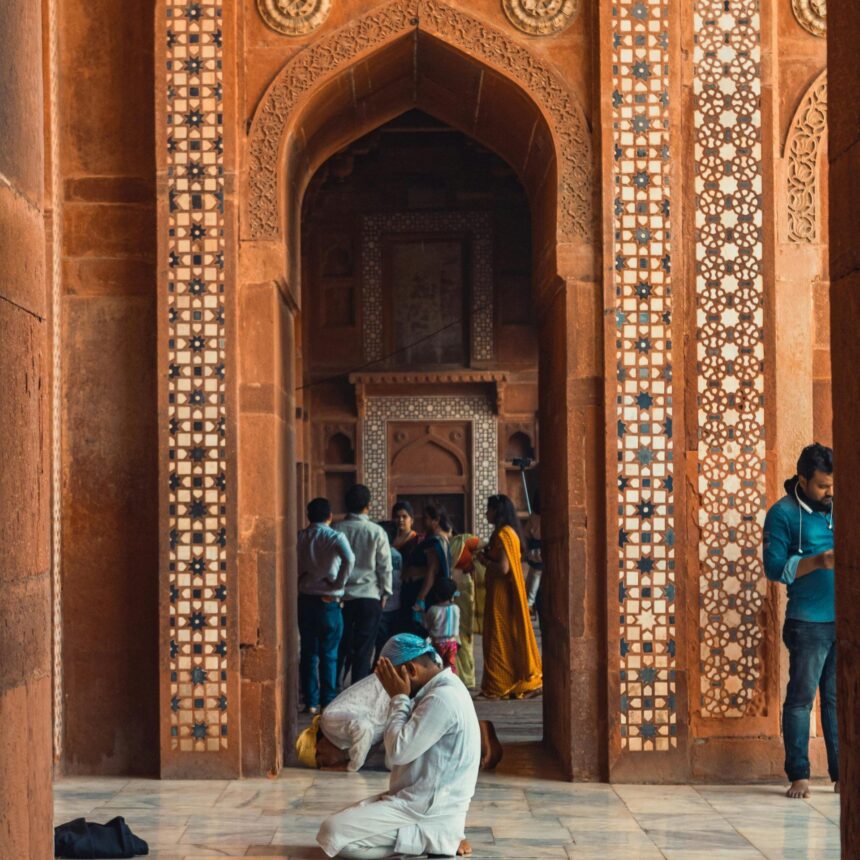

Historical Mosques in Varanasi Under Threat
In Varanasi, India, six historic mosques face possible demolition as part of a government campaign to widen roads and modernize infrastructure. This initiative is causing significant alarm within the predominantly Muslim community, as it threatens to displace families and erase centuries of Islamic heritage in the region.
Government Actions and Community Pushback
The Dalmandi neighborhood, one of Varanasi’s oldest Muslim localities, is the epicenter of the government’s demolition campaign. Local authorities claim the road-widening project aims to reduce congestion and modernize infrastructure, but communities argue that it disproportionately targets Muslim neighborhoods and religious sites.
Among the mosques identified for demolition are the Karimullah Beg Mosque, estimated to be over 226 years old, along with others such as Marble Wali Masjid and Ali Raza Khan Mosque. Bulldozers have already cleared over 100 houses in the densely populated area, displacing entire families and crippling local businesses reliant on their shops.
Officials assert that compensation will be provided, particularly when ownership of mosque lands can be validated by the Waqf Board. The suggestion that mosques could face relocation has added to the community’s anxiety, particularly amid accusations that the demolition efforts under the current Bharatiya Janata Party (BJP) government are part of a broader trend of marginalization of Muslim identities and heritage.
BJP Government’s Policies and Public Sentiment
Uttar Pradesh, governed by Chief Minister Yogi Adityanath of the BJP, has seen an uptick in demolition drives known colloquially as “bulldozer politics.” Critics accuse the administration of using urban redevelopment as a pretext to undermine Muslim neighborhoods and religious structures. This has intensified fears among residents, who already feel insecure in a socio-political climate increasingly hostile to their communities.
Babu Jaan, the muezzin of the Karimullah Beg Mosque, articulated the sentiments of many local residents, emphasizing the mosque’s historical significance and the community’s willingness to adhere to legal processes. However, he warned against actions that violate constitutional rights, indicating deep mistrust of government intentions.
The city of Varanasi holds significant value for Hindus and serves as Prime Minister Narendra Modi’s parliamentary constituency. Consequently, any actions taken against Muslim heritage sites here acquire heightened relevance in national politics, further complicating the relationship between the state and Muslim communities.
Wider Implications for Indian Muslims
The threats against these mosques symbolize a broader pattern of discrimination against Muslims in India, particularly under the BJP administration. The demolition drives have sparked concerns that they are part of a systematic effort to erase Islamic cultural heritage. Muslim organizations and civil rights advocates argue that such actions contribute to a growing sense of insecurity among the Muslim minority, whose identity is being increasingly scrutinized and undermined.
Legal battles over mosque sites have escalated tensions between religious communities in various states, feeding into long-standing grievances and animosities. As historical narratives clash, and with temples and mosques at the center of political debates, the situation is likely to remain volatile.
Why It Matters
The developments in Varanasi serve as a crucial case study in understanding the socio-political dynamics affecting religious minorities in India. For global observers, these actions illustrate how urban planning and redevelopment agendas may inadvertently (or intentionally) marginalize communities. Moreover, the incidents highlight challenges faced by minority populations, particularly regarding cultural preservation and community trust in governance. Such events resonate beyond India’s borders, drawing attention to issues of religious freedom and minority rights in democratic societies.
Frequently Asked Questions
What mosques in Varanasi are threatened with demolition?
The mosques reportedly marked for removal include the Karimullah Beg Mosque, Marble Wali Masjid, Ali Raza Khan Mosque, Nisaran Mosque, Rangeele Shah Mosque, and Langde Hafiz Mosque.
What is the government’s justification for the demolition?
Authorities claim the demolition is part of a road-widening project aimed at reducing congestion and modernizing infrastructure in the Dalmandi area, a densely populated commercial district.
How are residents responding to the demolition campaign?
Local residents express deep concern and anger, accusing authorities of targeting their community and religious sites. Many have reported displacement and economic setbacks as a result of the demolitions.
What legal recourse do residents have?
Residents have stated their willingness to support lawful processes regarding the demolition, but many fear that unconstitutional actions could be taken against them, further worsening their situation.