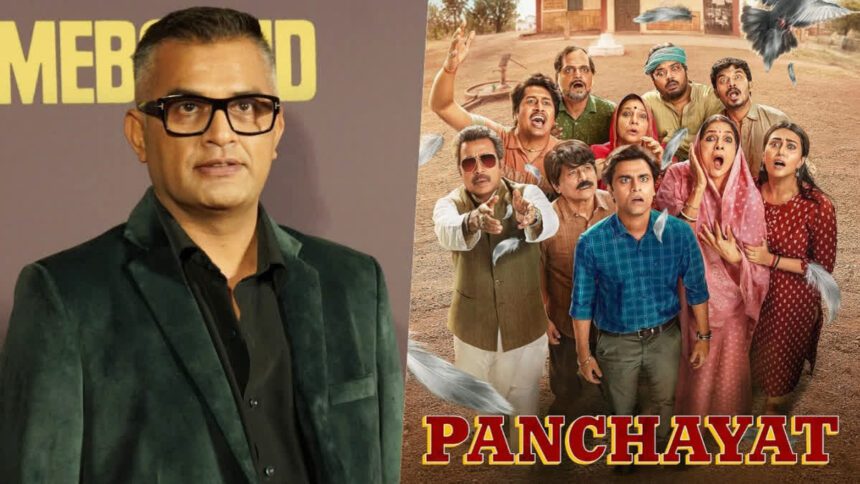

Filmmaker Neeraj Ghaywan has raised concerns regarding the representation of rural India’s diversity in popular media, specifically pointing to the web series “Panchayat,” produced by The Viral Fever (TVF). Ghaywan argues that the show predominantly features upper-caste characters and fails to include lower-caste or Muslim characters, suggesting a broader issue of marginalization in Indian storytelling.
Caste Representation in Indian Media
Neeraj Ghaywan, acclaimed for his directorial work on films addressing social issues, criticized TVF for its lack of caste diversity in storytelling. While acknowledging the studio’s quality content, he emphasized that the portrayal of only upper-caste characters promotes a one-dimensional view of rural life. Ghaywan stated, “Every single show of theirs, since inception, has always had upper-caste characters. Not a single lower-caste person, not a single Muslim.”
The sentiment reflects a larger critique of how Indian media often overlooks marginalized communities, thus perpetuating societal hierarchies. Ghaywan’s criticism of “Panchayat” comes from a belief that without the inclusion of varied voices, media representation becomes an exclusive narrative, lacking authenticity and failing to resonate with the complexity of Indian society.
Context of Discrimination
The concerns raised by Ghaywan also echo the ongoing societal and political challenges faced by lower-caste and Muslim communities in India. Since the rise of the Bharatiya Janata Party (BJP) and its affiliated groups, there has been a surge in reports of social exclusion and discrimination targeting these groups. Scholars and activists have noted that policies and narratives propagated by the ruling party often marginalize minority voices, further entrenching existing divides.
A myriad of reports has illustrated instances of discrimination against Muslims, including economic boycotts and social ostracization. Such dynamics have contributed to an atmosphere where the stories of these communities are rarely told or acknowledged, as highlighted in Ghaywan’s critique of mainstream media programming.
The Impact of Media Representation
Media representation plays a crucial role in shaping public perception and societal norms. Ghaywan’s remarks stress the importance of diverse narratives in fostering a more inclusive understanding of Indian society. When shows like “Panchayat” limit representation, they inadvertently contribute to a culture of exclusion, which can have real-world implications for social cohesion and equality.
Additionally, the arts serve as a lens through which issues pertaining to caste and religion can be explored and understood. As a filmmaker with a background in critically acclaimed work addressing social issues, Ghaywan’s insights urge creators to take responsibility in accurately reflecting the complexities of the societies they depict.
Why It Matters
Addressing the representation gap in media is significant not only for the entertainment industry but also for societal discourse. The AI industry, developers, and users alike should recognize that media narratives can perpetuate stereotypes or foster understanding. Inclusive representation in media can encourage dialogue and challenge prevailing societal norms, which, in turn, can influence the design and applications of AI technologies, making them more equitable and reflective of diverse experiences.
By understanding the importance of inclusive storytelling, developers can work to ensure that AI systems and content algorithms are tuned to recognize and promote diverse cultural narratives, facilitating greater empathy and social cohesion in an increasingly polarized society.
Frequently Asked Questions
What is Neeraj Ghaywan’s critique of “Panchayat”?
Neeraj Ghaywan criticized “Panchayat” for lacking representation of lower-caste and Muslim characters, arguing that the show presents a skewed view of rural India by featuring only upper-caste characters.
Why is media representation important?
Media representation matters because it shapes public perception and societal norms. Inclusive narratives can foster understanding and empathy, while limited representations can reinforce stereotypes and exclusion.
What communities are often marginalized in Indian media?
Lower-caste communities and Muslims are frequently underrepresented or misrepresented in Indian media, as highlighted in Ghaywan’s critique and broader discussions about social narratives in the country.
How can diverse representation impact society?
Diverse representation can challenge existing social norms, promote inclusivity, and foster dialogue among different communities, which is crucial for social cohesion and equality.