
Viral Video Misattributed to CJP Protest: A Closer Examination
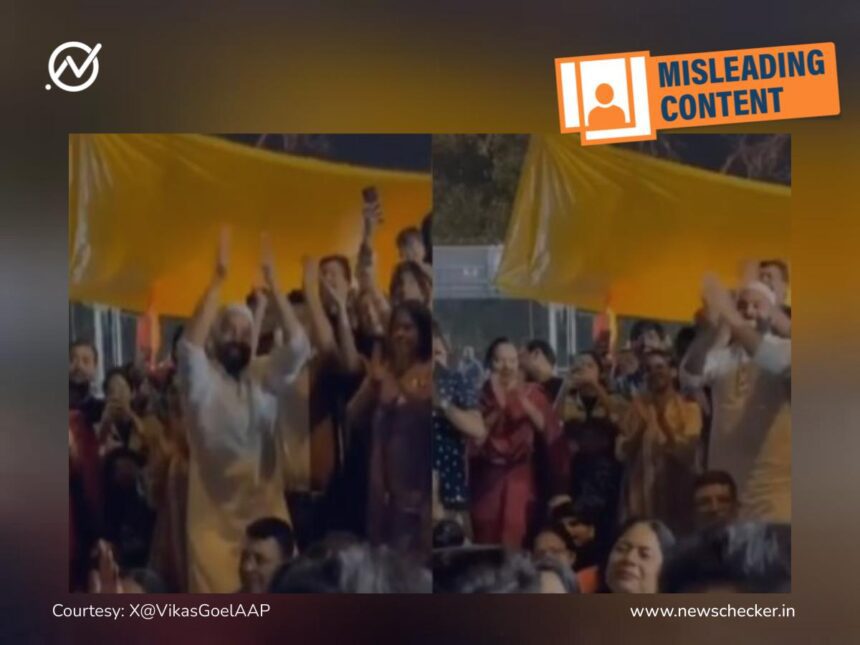
A recent viral video purportedly depicting a Muslim man dancing to a Hindu bhajan during a protest at Jantar Mantar has stirred controversy. However, investigations reveal that the footage predates the event, highlighting the need for careful consumption of information during times of social tensions.
Context of the Viral Video
The video in question features a man in Islamic attire dancing, and it was originally circulated through a post by the Instagram account @srs_mandal. Newschecker conducted a reverse image search, leading to the discovery that the video was uploaded on April 28, 2026, notably prior to the recent protests against Union Education Minister Dharmendra Pradhan. Hence, the link to the protests is misleading.
Further scrutiny found earlier uploads of the same footage, with clips existing as far back as March 22, 2026. These posts indicate that the man was filmed at the Pracheen Hanuman Mandir in Connaught Place, Delhi. This timeline raises important questions regarding the intent behind sharing the video in relation to the CJP protests.
The Impact of Misinformation
Misinformation can significantly affect vulnerable communities, especially when it capitalizes on sectarian tensions. The dissemination of the viral video aims to create an image—consciously or unconsciously—that fosters division. As the political landscape in India continues to be polarized, instances like this propel narratives that can lead to social exclusion and marginalization of Muslim communities. In the contemporary environment, the urgency for responsible reporting and verification of facts has never been clearer.
Moreover, these events stimulate economic boycotts and discriminatory practices against Muslim individuals. Misrepresented narratives often lead to scapegoating, contributing to broader socio-economic disadvantages for a marginalized population in India. The consequences of such misinformation go beyond mere discourse, affecting the day-to-day lives of affected communities.
Why It Matters
This incident emphasizes the importance of diligence in social media consumption and the need for awareness around the implications that misinformation can have for societal harmony. In an age where narratives can spread rapidly, especially regarding sensitive topics, a dedicated approach towards fact-checking is essential. For developers and users of AI technology, this presents an opportunity to create tools aimed at identifying and correcting misinformation, thereby promoting a more informed society. Such measures can empower individuals and communities to navigate complex narratives effectively and ensure more transparent communication.
Frequently Asked Questions
What sparked the controversy around the viral video?
The video was misattributed to a protest at Jantar Mantar, leading to discussions about communal tensions and misinformation.
What was the actual event depicted in the video?
The footage was taken at the Pracheen Hanuman Mandir in Connaught Place, Delhi, and predates the alleged protests.
How has misinformation affected the Muslim community in India?
Misinformation can lead to social exclusion and economic boycotts, further marginalizing already vulnerable groups within society.
Why is fact-checking important in today’s digital age?
With the rapid spread of information online, fact-checking helps prevent misleading narratives that can create societal harm and foster division among communities.