
Grieving Families in Gaza Hold Mass Funeral for 50 Victims
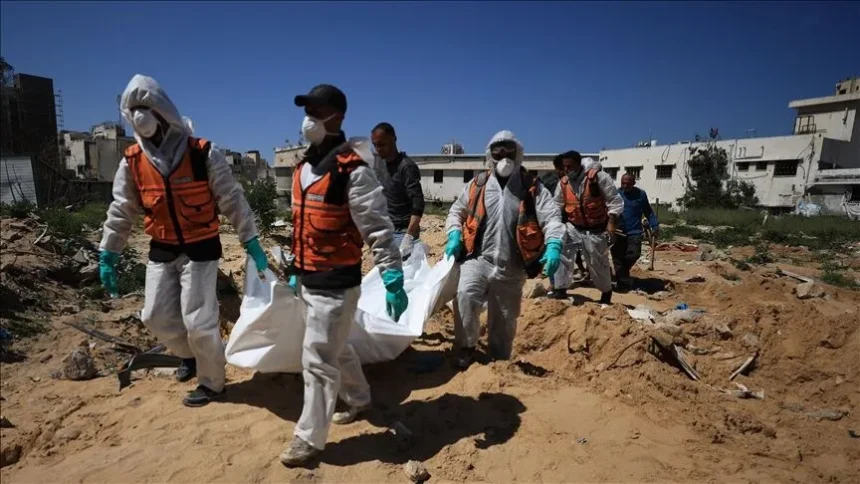
On Thursday, Gaza witnessed a poignant ceremony as families gathered to bury 50 Palestinians whose remains were finally recovered from the ruins of homes and buildings destroyed during the ongoing conflict with Israel. This tragic event underscores the immense human toll stemming from the war, which continues to affect countless lives.
Uncovering the Human Cost
The 50 victims represented several families, including the al-Sawafiri, al-Batniji, and Gharbiya families. They were killed during Israeli attacks in the war’s early months, remaining buried beneath the rubble in neighborhoods such as Tal al-Hawa, Zeitoun, Sabra, Sheikh Radwan, and Shati. Relatives of these victims have endured immense suffering, waiting not only to recover the bodies of their loved ones but also coping with the psychological trauma of such losses.
The mass funeral came just weeks after another funeral was held for 112 Palestinians whose remains were also recovered in a separate incident. The ongoing search for the missing has exposed the staggering statistics: Gaza’s Civil Defence estimates that approximately 8,000 Palestinians are still unaccounted for, believed to be buried under collapsed buildings. This grim reality has left many families in a state of prolonged grief.
Challenges in Recovery Efforts
Search and rescue teams in Gaza are grappling with severe shortages of equipment, hampering recovery efforts. Reports indicate that only one excavator is currently operational for digging through the debris. Munir al-Bursh, director general of Gaza’s Health Ministry, emphasized the urgent need for heavy machinery and forensic supplies to facilitate the recovery and identification of victims. This shortage has exacerbated the trauma experienced by families who are still awaiting news of their missing relatives.
The situation has further intensified with reports of continued Israeli attacks in Gaza, even after a ceasefire took effect in October. Since then, at least 1,266 Palestinians have reportedly been killed and another 4,200 injured. Gaza authorities have denounced the conflict, claiming that Israel’s bombardment has killed at least 73,400 Palestinians since the war began, marking a staggering humanitarian crisis.
Continued Political Tensions
Amid these tragic developments, a Hamas delegation met with Qatar’s Prime Minister to discuss the situation in Gaza and reaffirmed its commitment to a U.S.-backed proposal for peace. This proposal includes disarmament and a comprehensive plan to end hostilities, but Israeli Prime Minister Benjamin Netanyahu has reportedly rejected these terms, deepening the political divide and complicating peace negotiations. Qatar’s foreign minister has urged international stakeholders to pressure Israel to adhere to its commitments, highlighting the ongoing violence and suffering faced by civilians in Gaza.
Why It Matters
The situation in Gaza exemplifies the multi-faceted implications of prolonged conflict on both human lives and international relations. The scale of the humanitarian crisis raises questions about the adequacy of recovery efforts and the effectiveness of international diplomatic initiatives. The continued violence and loss of life reflect an urgent need for effective humanitarian response mechanisms, including the provision of essential equipment and resources to aid recovery in conflict zones. For the global community, the events in Gaza serve as a sobering reminder of the impact of unresolved conflicts on civilian populations, reinforcing the need for sustained dialogue and comprehensive strategies for peace.
Frequently Asked Questions
What caused the mass funeral in Gaza?
The mass funeral was for 50 Palestinians whose remains were recovered from buildings destroyed during Israeli attacks earlier in the conflict. Many victims remained buried under rubble for an extended period.
How many remain missing in Gaza?
Gaza’s Civil Defence estimates that about 8,000 Palestinians are still missing and are believed to be trapped under collapsed structures, highlighting the ongoing human toll of the conflict.
What challenges are rescue teams facing in Gaza?
Search and rescue teams are facing significant challenges due to a severe shortage of recovery equipment, with currently only one excavator available for retrieving bodies, which slows down the recovery efforts.
What are the political implications of the ongoing conflict in Gaza?
The conflict continues to hinder effective peace negotiations, with stalled proposals and ongoing violence impacting humanitarian conditions. The rejection of peace terms by Israeli officials complicates potential resolutions, exacerbating the suffering of civilians.