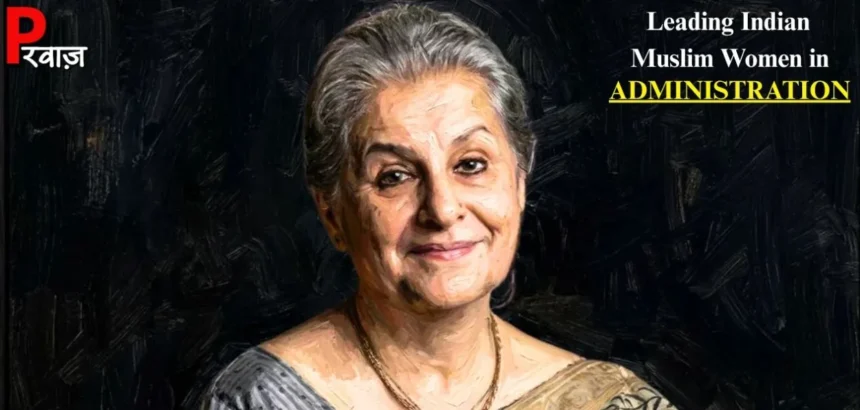

Syeda Saiyidin Hameed stands out as a pioneering figure among Indian Muslim women advocating for social justice and equality. Her lifelong commitment to civil rights and women’s empowerment exemplifies the challenges and resistance faced by marginalized communities in India, particularly under the current socio-political climate.
A Trailblazer in Public Service
Syeda Saiyidin Hameed’s accomplishments include being the first Muslim woman member of the Planning Commission of India, which has now transitioned to the NITI Ayog. Born in Kashmir before the Partition, she has dedicated her life to addressing societal inequities faced by Muslim women. With a master’s degree from the University of Hawaii and a PhD from the University of Alberta, her academic journey laid the foundation for a career that effectively combines education, activism, and governance.
Contributions to Women’s Rights
Hameed has significantly contributed to women’s rights through her role in the National Commission for Women (NCW). Appointed in 1997, she prepared influential reports like ‘Voice of the Voiceless’ and ‘My Voice Shall Be Heard,’ which highlighted the socio-economic challenges faced by Muslim women in India. Her advocacy efforts included public hearings across the country, providing a platform for Muslim women to express their struggles. This culminated in the formation of the Justice Rajinder Sachar Committee to evaluate the socio-economic status of Muslims, demonstrating her commitment to ensuring that Muslim voices are heard at governmental levels.
Challenges Faced and Continued Advocacy
Despite her achievements, Hameed has navigated significant challenges in a political climate marked by rising communalism and social exclusion. Her advocacy has often placed her at odds with the prevailing sentiments of the time, particularly regarding her support for marginalized groups, including illegal Bangladeshis. Such positions have led to backlash and criticism, yet she remains steadfast in her belief in the unity of South Asian nations as a cultural fraternity. Hameed’s involvement in initiatives like the Muslim Women’s Forum and Women’s Initiative for Peace in South Asia underscores her enduring commitment to civil rights, demonstrating the resilience of activists in the face of adversity.
Why It Matters
The story of Syeda Saiyidin Hameed reflects broader issues of discrimination and social exclusion affecting Indian Muslims under the current political regime. Her work provides valuable insights into the socio-political landscape, particularly concerning women’s rights and minority relations in India. The marginalization of communities can undermine social cohesion and lead to further polarization, making advocacy for inclusive policies essential for fostering unity. Hameed’s initiatives not only address immediate social injustices but also call for an inclusive framework that upholds the rights of all citizens, pivotal for the health of a diverse democracy.
Frequently Asked Questions
Who is Syeda Saiyidin Hameed?
Syeda Saiyidin Hameed is an influential Indian activist and former member of the Planning Commission of India, known for her advocacy for women’s rights and her extensive work in promoting social justice for marginalized communities, especially Muslim women.
What contributions has Hameed made to women’s rights in India?
Hameed has authored significant reports for the National Commission for Women that address issues faced by Muslim women. She has conducted public hearings and established organizations aimed at empowering women and ensuring their voices are included in policy-making processes.
What challenges has she faced in her advocacy work?
Hameed has encountered considerable resistance, especially in the increasingly polarized socio-political environment in India. Her positions, particularly those related to supporting marginalized communities, have drawn criticism and social backlash.
How does Hameed’s work impact the Muslim community in India?
Her efforts highlight the socio-economic issues confronting the Muslim community, advocating for their rights and addressing the systemic discrimination they face. Hameed’s advocacy creates awareness and fosters dialogue that is crucial for socio-political reforms.