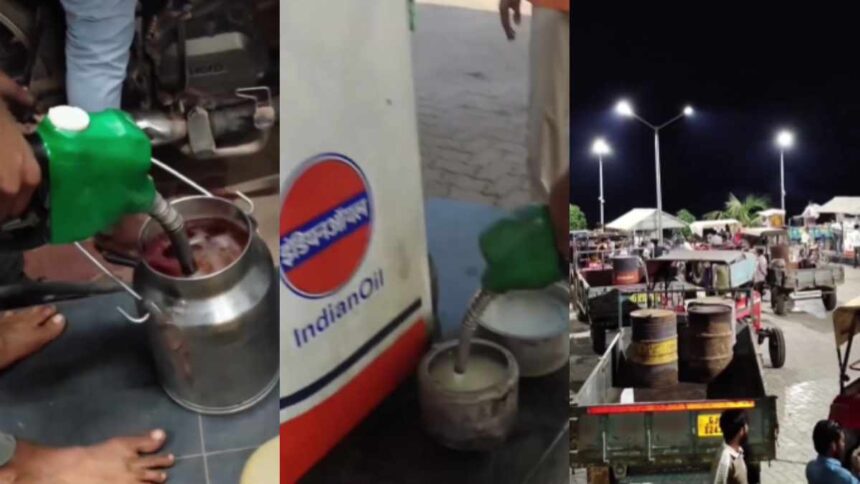

Recent visual reports of long petrol queues in various Indian cities have sparked widespread concern and panic among citizens. Despite reassurances from Prime Minister Modi and major fuel suppliers, images of desperate citizens hoarding fuel in unconventional containers have gone viral, raising questions about the integrity of the government’s claims regarding fuel supply stability.
Current Situation Across Major Cities
Images and videos from several cities including Hyderabad, Ahmedabad, Surat, Nagpur, and Indore have shown long lines of motorists at petrol pumps as fears of fuel shortages escalate. This panic has been attributed to disruptions in global oil shipments caused by the conflict in Iran, which has notably affected India, the world’s third-largest oil importer. Al Jazeera reported that the Indian police have been deployed to monitor petrol stations amid this widespread unrest.
In places like Gujarat, the situation is more alarming as people have been seen using kitchen utensils like cookers and jars to hoard petrol, raising safety concerns. While fuel suppliers such as Hindustan Petroleum (HP) and IndianOil assure the public there is no shortage, these stark visuals present a different reality, leading many to question the authenticity of these reassurances.
Government’s Response and Public Sentiment
Prime Minister Modi addressed the nation earlier in parliament, claiming there is sufficient strategic reserve, and urged unity amid the crisis, referencing the government’s handling of the COVID-19 pandemic. However, public sentiment is shifting from trust to skepticism as citizens voice concerns about the government’s ability to manage these crises effectively.
Responses on social media show a mix of sarcasm and serious concern. One user remarked on the irony of turning kitchenware into “mobile petrol bombs,” underscoring the potential danger of the public’s panic-driven actions. Furthermore, skepticism about Modi’s leadership has emerged, with some equating the current situation to previous crises the country has faced, such as during the demonetization phase in 2016.
The Viral Effect of Social Media
The role of social media in amplifying these fears cannot be understated. Videos showcasing panic-buying and long queues at fuel stations have spread rapidly online, leading to a collective sense of alarm among the populace. As visuals flood platforms like Instagram and Twitter, they contribute to a wider atmosphere of distrust towards government communication regarding fuel security. Hashtags related to the crisis are trending, highlighting the necessity for immediate government action to quell public concern.
Why This Matters
Understanding the implications of this crisis is crucial. The current panic not only affects everyday citizens but also has far-reaching effects on the political landscape in India. As discontent grows, it could impact upcoming elections and the government’s approval ratings. The handling of this fuel crisis represents a critical test for Modi’s administration, with potential ramifications for public confidence in government institutions. If not addressed effectively, the sense of chaos and uncertainty could translate into deeper political unrest.
Frequently Asked Questions
What is causing the panic over fuel shortages in India?
The panic has been fueled by disruptions in oil shipments due to geopolitical tensions, particularly involving Iran, leading to fears of inadequate fuel supply in India.
How has the Indian government responded to the situation?
Prime Minister Modi has assured the public of sufficient strategic reserves and has called for unity, referencing the government’s past management of crises like COVID-19.
What are the safety concerns regarding fuel hoarding?
Citizens have been seen hoarding petrol in unsafe containers like cookers and jars, which poses serious risks such as fires and explosions.
How is social media influencing public perception of this crisis?
Social media platforms are amplifying fears and chaos, with viral videos showing long queues at petrol pumps contributing to widespread panic and distrust towards government assurances.