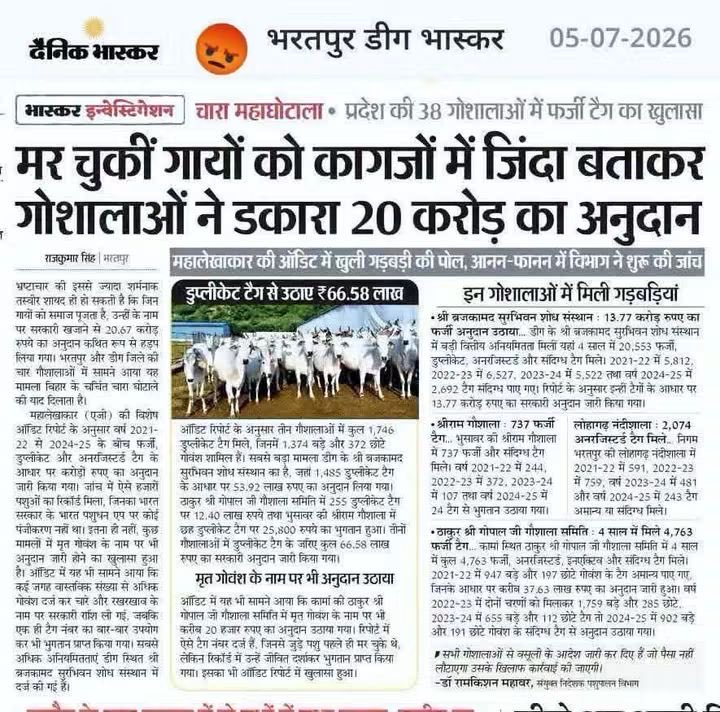

An audit in Rajasthan has revealed an alleged ₹20 crore cattle shelter scam involving fraudulent claims for government grants. Reports indicate that deceased cows were falsely reported as alive, and duplicate and fake ear tags were utilized to manipulate figures. This malpractice includes overstating cattle numbers to collect funds for fodder and maintenance.
Details of the Scam
The ₹20 crore cattle shelter scam has captured significant attention in India, raising serious concerns about transparency and accountability in the allocation of government funds. The audit indicates that some individuals and organizations submitted fraudulent reports stating that dead cows were still alive in order to access grants meant for cattle maintenance. This deception involved not only misreporting the health status of the animals but also using phony ear tags to create duplicates for multiple payments.
How the Fraud Was Conducted
This intricate scheme reportedly involved registering more cattle than actually existed at various shelters. By doing so, those running the shelters could claim excess funds for fodder and other maintenance costs from the government. This misuse of the welfare system serves as a significant breach of trust, with public resources being siphoned off through deceitful means. The utilization of the same tag number for multiple cows allowed perpetrators to exploit the system further, making it difficult for auditors to track duplication effectively.
Government Response and Accountability
The Rajasthan government faces mounting pressure to investigate this fraudulent activity thoroughly. With the discovery of such widespread irregularities, there are calls for accountability among officials responsible for overseeing cattle shelter operations. The situation necessitates systemic changes to ensure that similar fraud does not recur. Stricter monitoring mechanisms and better data management practices are imperative to safeguard public funds and maintain the integrity of welfare schemes.
Why This Matters
This scam has substantial political implications for voters in Rajasthan and across India. It highlights potential systemic failures in governance, where checks and balances may not be effectively enforced. As allegations of corruption continue to emerge, they contribute to public skepticism regarding governmental transparency. For political leaders, addressing such issues is essential to rebuilding trust with constituents. A strong response to the scandal can serve as an opportunity for political parties to differentiate themselves in a crowded electoral landscape, especially ahead of upcoming elections.
Frequently Asked Questions
What is the primary allegation in the Rajasthan cattle shelter scam?
The primary allegation is that deceased cows were falsely reported as alive to claim government grants, along with the use of fake ear tags.
How much money is involved in the scam?
The alleged scam involves a total of ₹20 crore in government funds.
What actions are being taken by the government regarding this issue?
The Rajasthan government is under pressure to conduct a thorough investigation into the allegations and ensure accountability among the officials involved.
Why is this fraud significant for the public?
This fraud undermines public confidence in government welfare schemes and raises concerns regarding the misuse of taxpayer money, which can have wider implications for governance and accountability.