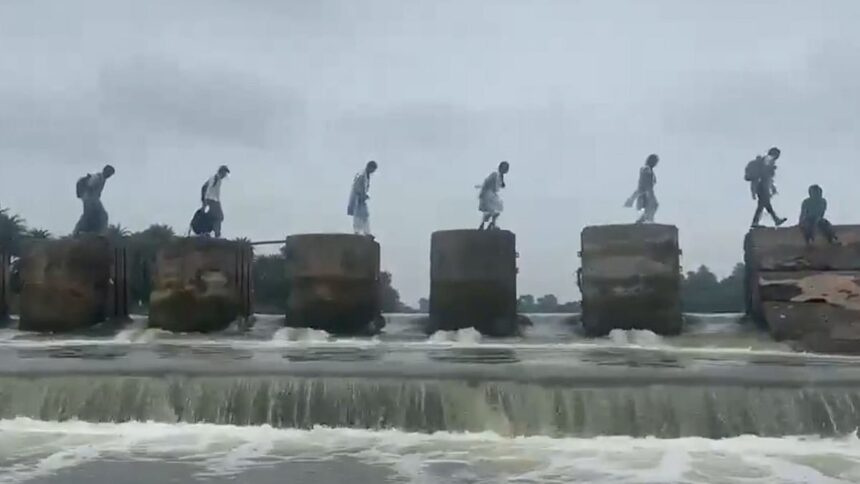

The National Human Rights Commission (NHRC) has taken note of the alarming situation in Madhya Pradesh, where students are risking their safety by traversing check dam pillars to cross the Betwa River on their way to school. This hazardous route dramatically reduces their travel distance but raises significant concerns about their fundamental right to education.
Statement from the NHRC
The NHRC issued a notice to the Madhya Pradesh government following reports that students in Vidisha district are hopping across check dam pillars to reach school. The commission expressed deep concern, noting that this risky practice is a response to the lack of safe transportation options, highlighting a critical issue affecting children’s rights. The NHRC highlighted that this dangerous route cuts travel from 13 km by road to just 1.5 km.
Legal and Constitutional Considerations
The NHRC emphasized that Article 21A of the Indian Constitution ensures that children aged 6 to 14 have the right to free and compulsory education. The Right of Children to Free and Compulsory Education Act, enacted in 2009, reinforces this mandate, holding the state responsible for providing a secure environment for education. The Supreme Court ruling in the Avinash Mehrotra vs Union of India case further mandates that the right to education includes access to safe and adequate infrastructure, making the current situation not just a safety issue but a violation of legal entitlement.
Impact on Students
Reports indicate serious implications for students’ educational outcomes due to the dangers posed by this practice. One particularly distressing case highlighted by the NHRC involved a student who failed her final exams after being unable to cross the pillars due to her short height. Moreover, villagers have expressed their inability to escort their children to distant schools, leading to serious dilemmas about whether to continue their education under such perilous conditions. The district education officer’s visit to the site and subsequent communication with the district collector have not yet produced any timeline for constructing a safer crossing.
Why This Matters
This issue underscores the broader challenges of education accessibility in rural India, particularly regarding the safe transportation of students. The NHRC’s involvement highlights the responsibility of the state in ensuring not only the availability of education but also the safety of students in accessing it. The demand for safe passages for students may prompt necessary policy changes and investments in infrastructure, which could help mitigate such risks in the future. For Indian readers, this serves as a reminder of the gap between legal entitlements and the realities faced by many families, emphasizing the need for urgent action and systemic change to protect children’s rights.
Frequently Asked Questions
What prompted the NHRC to take action regarding the students in Madhya Pradesh?
The NHRC acted on media reports showcasing students risking their lives by crossing check dam pillars to reduce their travel distance to school, raising serious human rights concerns.
How does this situation violate the rights of students?
The absence of a safe mode of transport for children to reach school constitutes a violation of their fundamental right to education, as mandated by Article 21A of the Constitution.
What are the implications for the government of Madhya Pradesh?
The Madhya Pradesh government has been issued a notice by the NHRC, requiring it to provide a detailed report on the situation, which could lead to policy evaluations or infrastructural improvements in the future.
How have villagers responded to this situation?
Villagers have expressed their inability to drop their children at distant schools due to work obligations, presenting a dilemma of either stopping education or continuing to risk the children’s safety.