
Recent observations by prominent commentator @zoo_bear have raised concerns about the impartiality of Indian news channels, particularly those like News18 India and India TV. The claim is that these platforms are using audience members sympathetic to the Bharatiya Janata Party (BJP), presenting them as neutral voices to undermine the opposition.
The Tools of Media Manipulation
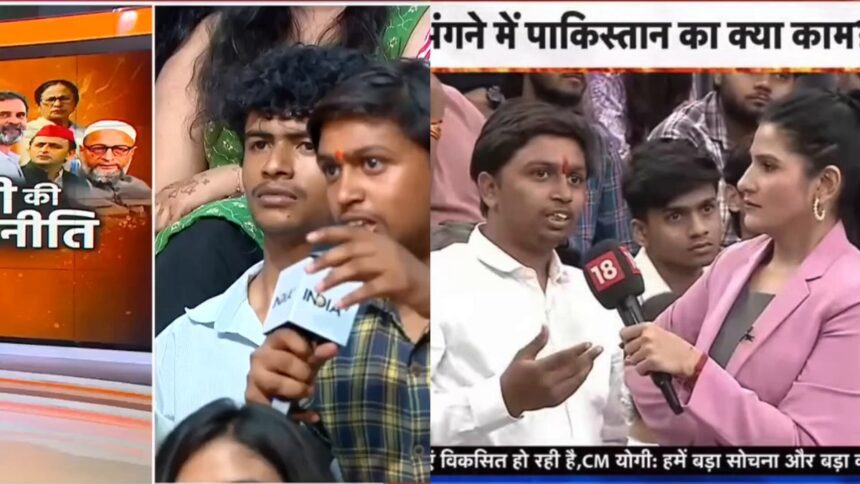
In the digital age, media representation is increasingly scrutinized. According to @zoo_bear, there appears to be a systematic approach to how discussions unfold on channels such as News18 India and India TV. The presence of what he describes as ‘BJP-friendly audience plants’ indicates a deliberate attempt to sway public perception during debates.
This tactic involves placing individuals who support the BJP among the audience and then allowing their questions or comments to dominate the discussion. The networks subsequently amplify these voices, often resulting in a one-sided narrative that favors the ruling party. Such strategies not only discredit opposing viewpoints but also skew public understanding of political issues.
Audience Manipulation in Political Commentary
The specific mention of audience member Shreyansh, who has been spotted across various debate formats, highlights a concerning pattern. @zoo_bear noted that this individual frequently appears alongside prominent news figures such as Rubika Liyaquat and Amish Devgan during debates targeting opposition parties. This raises questions about the integrity of journalistic practices used in these debates and whether the public is getting a fair representation of diverse perspectives.
Moreover, the routine use of similar audience members leads to a homogenized discourse that lacks genuine debate. In a healthy democracy, media outlets should strive to present a balanced array of viewpoints; however, these revelations suggest that neutrality may be compromised in favor of political allegiance.
The Role of Social Media in Broadcasting Concerns
As evidenced by the proliferation of tweets and videos, social media serves as an essential platform for raising awareness about these controversial practices. @zoo_bear’s posts, which include videos highlighting these fixed audience members, demonstrate how citizens and commentators can interact in public discourse to challenge mainstream narratives. The visual evidence serves as a call to action, inviting greater scrutiny from viewers and encouraging more comprehensive coverage of political events.
Engagement through platforms like Twitter also empowers viewers to question the authenticity of televised debates. Many users are now taking to social media to demand accountability from news channels, fueling discussions around media ethics and responsible journalism.
Why This Matters
The implications of these observations are significant for the Indian political landscape. If media outlets continue to perpetuate biased narratives, it risks eroding public trust in journalism—a cornerstone of any democratic society. The use of manipulated audiences not only distorts reality but also impacts voters’ understandings, potentially influencing electoral outcomes.
Additionally, as political biases become more pronounced in media presentations, the electorate faces challenges in making informed decisions. It is crucial for citizens to be aware of these dynamics and advocate for transparency and fairness in media representation.
Frequently Asked Questions
What are BJP-friendly audience plants?
BJP-friendly audience plants are individuals secretly placed in debate audiences to present a pro-BJP narrative, misleadingly portraying them as neutral citizens.
Why is this issue important for Indian democracy?
Manipulating audience perception can mislead voters, undermining the fairness of political discourse and jeopardizing the integrity of electoral processes.
How can viewers recognize biased reporting?
Viewers should critically analyze the diversity of voices presented in debates and compare coverage across different news outlets for balanced perspectives.
What can be done to promote fair media practices?
Advocating for transparency and ethical journalism standards, as well as holding media outlets accountable, can help foster a more balanced political discourse.