
Ongoing Struggles at Mohammad Ali Jauhar University
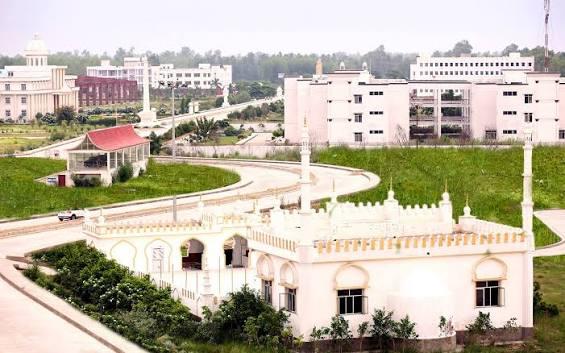
In a significant legal development, an appeals authority in northern India has temporarily paused the demolition of 38 buildings at Mohammad Ali Jauhar University. This decision comes amidst ongoing legal battles faced by the institution, founded by jailed opposition leader Azam Khan, which has been under scrutiny since the rise of the Bharatiya Janata Party (BJP) in Uttar Pradesh.
Background of Demolition Orders
The Divisional Commissioner of Uttar Pradesh issued a directive to the Rampur district administration on Monday, mandating the maintenance of the current status of the university until further hearings. This suspension comes after the Rampur Development Authority claimed that the university had constructed these buildings without the necessary approvals and threatened that demolitions would ensue if the situation was not rectified.
Established in 2006, the university has been a crucial educational platform for economically disadvantaged students in western Uttar Pradesh. The threat posed by the demolition order aimed to eliminate most of the campus, raising concerns about the university’s future amidst ongoing legal and administrative challenges.
Legal and Political Context
Azam Khan, a prominent Muslim politician and former member of Parliament, has faced numerous criminal charges since the BJP came into power in 2017. Allegations have been diverse, ranging from land disputes to corruption, reflecting a larger trend of legal and political harassment faced by opposition leaders and Muslim figures in India. Khan has been incarcerated since 2022 due to controversial convictions, and he, along with the Samajwadi Party, argues that the legal challenges are politically motivated attempts to dismantle his political influence and legacy.
The proposed demolition led to significant protests from Samajwadi Party leaders and supporters, emphasizing that such actions are not only detrimental to the institution but also indicative of broader systemic discrimination against Muslims in the region. Former Uttar Pradesh minister Tej Narayan Pandey criticized the authorities for opting for demolitions instead of allowing the university to address any administrative shortcomings through legal means.
Broader Implications of State Actions
The order to halt the demolition temporarily has not resolved the core issues surrounding the university’s status. The situation exemplifies ongoing tensions between the state government, led by Chief Minister Yogi Adityanath, and minority communities, particularly Muslims. Human rights organizations assert that the Uttar Pradesh government utilizes bulldozer demolitions as a punitive measure against properties associated with Muslim individuals and political adversaries, raising significant legal and ethical concerns.
India’s Supreme Court has repeatedly emphasized that demolitions must adhere to due legal process, highlighting the necessity of ensuring that such actions are not treated as forms of punishment. This case feeds into broader criticisms of the political climate in Uttar Pradesh, where marginalized communities are often subject to exclusionary policies and practices.
Why It Matters
The developments surrounding Mohammad Ali Jauhar University are symbolic of the larger socio-political dynamics influencing marginalized communities in India, particularly Muslims. The legal battles faced by the university reflect ongoing issues of discrimination and exclusion at institutional levels, undermining efforts toward equitable access to education. Furthermore, this case serves as a crucial indicator of the tensions between religious identity and political power in contemporary India, making it significant for global observers concerned with human rights and democracy. Understanding these dynamics is essential for developers and policymakers striving for inclusive growth and social justice, particularly in multi-religious societies.
Frequently Asked Questions
What is Mohammad Ali Jauhar University known for?
Mohammad Ali Jauhar University, established in 2006, aims to provide higher education to students from economically disadvantaged backgrounds, particularly within the Muslim community in western Uttar Pradesh.
Why were the buildings ordered for demolition?
The Rampur Development Authority alleged that 38 of the university’s buildings were constructed without the necessary approvals, leading to a demolition order aimed at removing these structures.
What actions have been taken against Azam Khan?
Azam Khan, a senior opposition leader, faces numerous criminal charges since the BJP’s rise to power, including allegations related to land disputes and corruption. He has been imprisoned since 2022 following controversial convictions.
How have civil rights organizations responded to these actions?
Human rights organizations have criticized the Uttar Pradesh government for using demolitions as punitive measures against properties linked to Muslims and political opponents, emphasizing the need for due legal process in such cases.