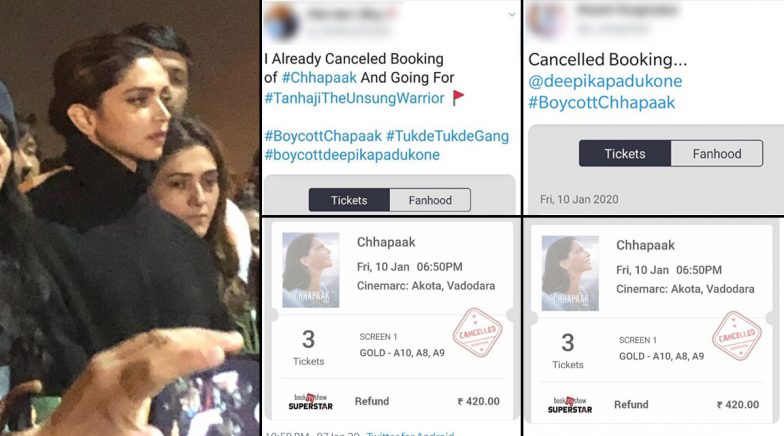

Deepika Padukone’s visit to Jawaharlal Nehru University (JNU) in support of students protesting against recent violence has sparked significant controversy on social media, leading to the trend of #BoycottChhapaak. As reactions unfold, many users reportedly shared images claiming they canceled their tickets to the actress’s upcoming film, Chhapaak, raising questions about the authenticity of such claims.
Deepika’s Support for JNU Students
On January 8, 2020, Deepika Padukone visited the JNU campus to stand in solidarity with students protesting against violent attacks on their peers. This visit came soon after masked assailants violently attacked students and staff at the university, resulting in numerous injuries, including severe ones to the Jawaharlal Nehru University Students Union (JNUSU) president Aishe Ghosh. Deepika’s presence at JNU aimed to show support and raise awareness regarding the plight of the students during a tumultuous time.
The #BoycottChhapaak Campaign
In reaction to her visit, the hashtag #BoycottChhapaak began trending on social media, primarily driven by right-wing Twitter handles. BJP leader Tajinder Pal Singh Bagga notably fueled this movement by calling for a boycott of the actress’s films, accusing her of supporting alleged anti-national elements. Various users began posting images of canceled tickets for Chhapaak, claiming to boycott the movie as an expression of dissent towards Deepika’s actions.
However, Mohammed Zubair, co-founder of the fact-checking website Alt News, highlighted the dubious nature of these cancellation claims. He shared a collage exposing that many accounts appeared to use the same images to support their cancelation narratives, suggesting a coordinated effort among certain Twitter users. This revelation raised questions about the authenticity of the boycott and the motivations behind it.
Public Reactions and Broader Implications
While many netizens expressed outrage towards Deepika’s show of solidarity with protesters, a considerable number praised her courage for taking a stand amidst adversity. The dichotomy of public response emphasized the polarized political climate in India, where entertainment figures are increasingly becoming involved in socio-political issues.
Following the violent attack at JNU, protests erupted across various Indian cities, with students demanding accountability and justice. The hashtag #BoycottChhapaak served not only as a stance against Deepika but also demonstrated how pop culture and political activism intersect in contemporary India. The timing of the movie’s release, set for January 10, 2020, added fuel to the fire, as it became a battleground for ideological expressions.
Why This Matters
The events surrounding Deepika Padukone’s JNU visit and the subsequent #BoycottChhapaak campaign highlight crucial themes in modern Indian politics. The intersection of celebrity culture and political activism sheds light on how influential figures navigate their roles amidst societal conflicts. The unfolding drama underscores the growing polarization in India, where media narratives are rapidly shaped by social media, impacting public perception and political discourse.
Additionally, this situation raises concerns over the integrity of information shared online, especially during politically charged times. Misinformation and organized campaigns can significantly distort the narrative, influencing public opinion and behavior.
Frequently Asked Questions
What prompted Deepika Padukone to visit JNU?
Deepika Padukone visited JNU to show solidarity with students protesting against the violent attacks that took place on campus, highlighting her support for their cause.
What is the #BoycottChhapaak campaign?
The #BoycottChhapaak campaign was initiated by right-wing users on social media calling for a boycott of Deepika Padukone’s film after her visit to JNU, which some perceived as a show of support for anti-national elements.
Who is behind the spread of images claiming ticket cancellations?
Fact-checking efforts by Mohammed Zubair revealed that many users shared identical images claiming to have canceled tickets for Chhapaak, indicating a potential coordinated effort rather than genuine individual actions.
Why is public reaction to Deepika Padukone significant?
The public reaction towards Deepika’s visit and the subsequent backlash illustrates the growing polarization in Indian society, where celebrity actions can ignite substantial political discussions and divisive sentiments.