
The recent social media commentary by Mohammed Zubair has raised concerns about Raghav Chadha, a prominent political figure in India. Zubair’s observations suggest that Chadha has engaged with influential YouTubers and Instagram personalities known for agendas targeting marginalized communities such as Muslims and Dalits.
Context of the Allegations
Raghav Chadha is a member of the Aam Aadmi Party (AAP) and has garnered attention both for his political stance and public appearances. In a recent public meeting, he reportedly interacted with a group of social media influencers. Mohammed Zubair criticized this gathering by pointing out that several of these influencers have a history of promoting divisive content, particularly against specific demographic groups.
Zubair’s remarks imply that the choice of influencers may reflect an opportunistic political strategy, leveraging popular figures to further a narrative that resonates with certain voter bases. This raises questions about the ethical implications of such engagements in contemporary political discourse.
Profile of the Accused Influencers
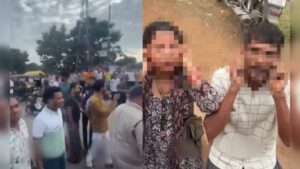
The individuals mentioned by Zubair are not just random social media personalities; many are known for creating sponsored content that is often criticized for being politically charged. These influencers frequently conduct vox-pop interviews, a practice that has become prevalent in Indian political culture where they interact with the public, but often in a scripted manner that can manipulate perceptions.
By fostering relationships with these influencers, Chadha may be seeking to gain favor among audiences who consume their content. However, the backlash Zubair highlights points to a broader concern regarding media literacy and the authenticity of public opinion shaped by such scripted interactions.
Public Response and Reactions
The response to Zubair’s claims has been mixed. Supporters of Raghav Chadha defend his efforts to connect with younger voters through influential platforms. However, critics argue that it is a troubling trend when politicians associate with personalities whose views may foster division. Social media users have been quick to weigh in on this issue, with some expressing their disappointment in Chadha’s choice of engagement.
The polarized reactions reflect the ongoing tension within Indian social and political landscapes, especially concerning narratives around identity, caste, and community relations. As these discussions unfold, the implications for Chadha and his party could be significant, particularly in an election year.
Why This Matters
The dynamics of social media influence in political communication are critical to understand within the context of contemporary Indian politics. The intersection of media, politics, and popular culture shapes public opinion and electoral outcomes. The repercussions of engaging with influencers like those identified by Zubair may impact Chadha’s credibility and the public’s trust in political processes.
Furthermore, this situation underscores the importance of accountability among public figures and the frameworks through which they engage with society. The stakes are high; divisive narratives can perpetuate social divides, highlighting the need for sensitivity in political engagement.
Frequently Asked Questions
What prompted Zubair’s criticism of Chadha?
Mohammed Zubair criticized Raghav Chadha for meeting with social media influencers known for producing divisive content targeting marginalized communities, raising concerns about his political strategy.
Who are the influencers mentioned in Zubair’s post?
The influencers discussed are popular figures on platforms like YouTube and Instagram, known for creating paid content and vox-pop videos that often have an agenda against specific communities.
What are the implications of these allegations for Raghav Chadha?
The allegations may affect Chadha’s public image and credibility, especially as he seeks to engage meaningfully with younger voters and the general populace.
Why is this issue significant in Indian politics?
The issue highlights the intersection of media influence and political communication in India, stressing the need for ethical engagement to ensure respect for marginalized communities and promote a more inclusive political discourse.