
The Delhi High Court recently quashed an FIR and an Enforcement Directorate (ED) case against NewsClick and its editor, Prabir Purkayastha, citing the proceedings as a “gross abuse of law” and an arbitrary attack on free and impartial journalism. This decision highlights significant implications for press freedom and the operational challenges faced by journalists in India.
Context of the Case
The case against NewsClick and its editor emerged amidst a broader environment of increasing scrutiny and regulation of media organizations in India. Several journalists and media outlets have faced legal troubles, often framed as inquiries into funding sources or accusations of anti-national activities. In Purkayastha’s instance, the allegations not only jeopardized the organization’s stability but also directly impacted the lives of its reporting staff.
Impact on Journalists and Media Organizations
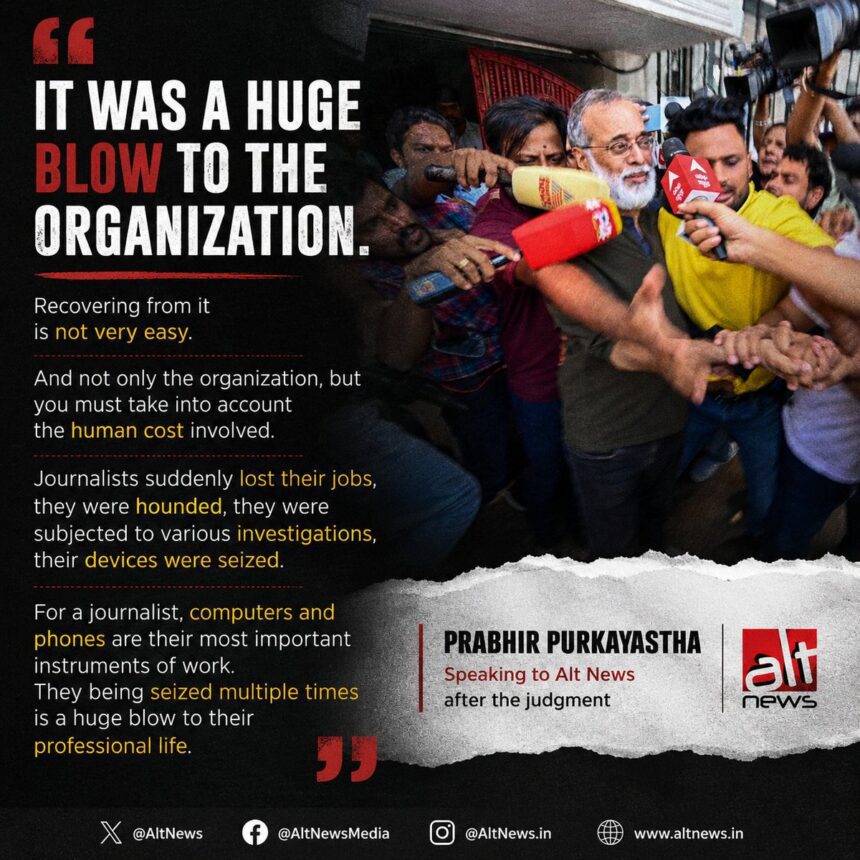
In the aftermath of the court’s ruling, Purkayastha spoke regarding the profound effects of the case on the organization and its journalists. He emphasized the human cost, noting that many journalists lost their jobs, faced intimidation, and underwent invasive investigations. The seizure of essential work tools, such as computers and phones, dealt a particularly heavy blow, disrupting their ability to report effectively.
The Judgment’s Repercussions
The High Court’s judgment is significant as it brings to light the constitutional obligations of the state in protecting freedom of expression and the press. By characterizing the legal action against NewsClick as arbitrary, the court reaffirmed the need for transparency and fairness in pursuing cases against media organizations. This ruling may encourage other journalists and media outlets facing similar judicial threats to continue their work without the fear of retribution.
Why This Matters
The political significance of this ruling cannot be overstated. It stands as a critical defense of journalists’ rights to operate without intimidation, thereby reinforcing the foundations of democracy in India. The concept of a free press is vital for holding power accountable, and any encroachment on this freedom can have far-reaching consequences for society. Therefore, the Delhi High Court’s decision not only rescues the legal standing of NewsClick but may also set a precedent for future cases where the media is subjected to political or arbitrary actions.
Frequently Asked Questions
What was the nature of the case against NewsClick?
The case involved an FIR and an ED investigation alleging financial irregularities and anti-national activities. The Delhi High Court deemed these proceedings as a gross abuse of law.
What did Prabir Purkayastha say about the impact of the case?
Purkayastha described the case as a significant blow to the organization and highlighted the human cost, including job losses and the seizure of essential work devices for journalists.
What are the broader implications of this judgment?
The judgment promotes the need for a free and impartial press, emphasizing that legal actions against media organizations must be grounded in fairness and transparency, which is crucial for a functioning democracy.
How does this ruling affect the future of journalism in India?
This ruling may encourage journalists and media outlets to report fearlessly, as it affirms the judiciary’s support for press freedom and reinforces the constitutional right to free speech.