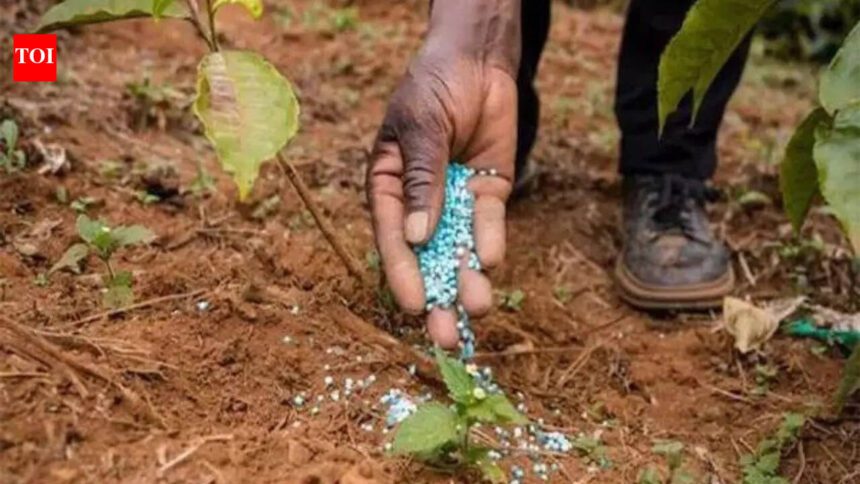

NEW DELHI: India has revised its fertilizer consumption estimates for the Kharif sowing season in light of the Indian Meteorological Department’s (IMD) forecast of a below-normal monsoon, a senior government official reported on Monday. The demand for urea is now projected at 190 lakh tonnes, down from the previous estimate of 194 lakh tonnes. Similarly, the demand for Diammonium Phosphate (DAP), a crucial soil nutrient, has been adjusted to 60 lakh tonnes from an earlier estimate of 66 lakh tonnes.
Aparna Sharma, Additional Secretary in the Department of Fertilizers, noted that the potential impact of the El Niño phenomenon has prompted the department to request the agriculture ministry to reassess fertilizer requirements. She further indicated that this reduction in demand reflects ongoing discussions between the ministry and various state governments.
To supplement domestic supplies for the Kharif season, the government has issued a second global tender for the import of 17 lakh tonnes of urea, despite significant increases in global prices. Sharma highlighted that the cost of urea has surged from $447 per tonne in February to $947 per tonne.
In related developments, officials from the consumer affairs and food departments confirmed that there is a sufficient stock of rice, wheat, and pulses to meet domestic demand and facilitate market interventions. Anupam Mishra, Additional Secretary in the Consumer Affairs Department, stated that the government’s buffer stock of pulses is approximately 43 lakh tonnes, more than double the amounts noted in May 2025.
He added that production levels of major horticultural crops, including potatoes, tomatoes, and onions, are adequate to satisfy domestic needs. Potato production stands at 584 lakh tonnes, slightly below last year’s 586 lakh tonnes; tomato yields are at 227 lakh tonnes compared to last year’s 205 lakh tonnes; and onion production is currently at 273 lakh tonnes, down from 307 lakh tonnes last year. The government plans to establish a buffer stock of 2 lakh tonnes of onions for the 2026-27 period.
Furthermore, food department officials informed that wheat stock in the central pool is currently at 513 lakh tonnes, nearly double the prescribed buffer norm for July 1. Wheat procurement for the ongoing Rabi marketing season has reached about 350 lakh tonnes, with operations expected to continue until June 30. Additionally, rice stock in the central pool is reported at 397 lakh tonnes, almost three times more than the required buffer stock for July 1.