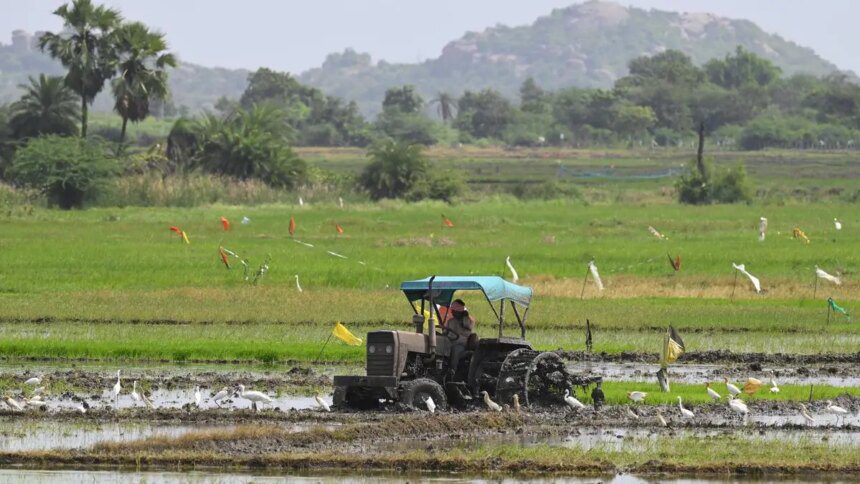

India has set a foodgrain production target of 373.93 million tonnes (mt) for the 2026-27 crop year (July-June), following a record production of 376.56 mt in 2025-26. The target includes 151 mt of rice, 121.5 mt of wheat, 28.42 mt of pulses, 18.08 mt of nutri-cereals, and 52.50 mt of maize. The reduced targets for rice and maize reflect a prudent approach amid potential adverse impacts from El Niño, as the India Meteorological Department has predicted below-normal rainfall.
A senior official stated that the crop targets are largely consistent with the previous year’s goals, denying any direct link to El Niño predictions.
Concerns emerged regarding the predictability of rainfall, particularly given current geopolitical tensions. Experts suggest that a predicted 90 percent of normal rainfall could have serious implications. While India is likely to have adequate stocks of staples like rice and wheat due to last year’s surpluses, the situation could negatively affect fruits and vegetables if rainfall falls below expectations.
Sources indicate that approximately 240 vulnerable rain-fed districts have been identified as potentially severely impacted if the IMD’s forecast materializes. Historically, 157 of these districts have experienced at least 19 percent deficient rainfall during El Niño years. Additionally, 577 districts will receive close attention from the Centre as they collaborate with state governments to enhance agricultural management.
Union Agriculture Minister Shivraj Singh Chouhan convened a review meeting to discuss monsoon progress, possible El Niño effects on crops, and water availability. Chouhan urged relevant officials to proactively plan for adverse weather conditions by ensuring timely guidance for farmers regarding seed choices and alternative crops while emphasizing moisture conservation and efficient water management.
“The preparation aims to minimize the weather challenges faced by farms and farmers,” Chouhan remarked. He highlighted the need for adopting advanced technologies, expanding irrigation facilities, and implementing climate-resilient practices to mitigate adverse effects.
Chouhan also directed increased monitoring of states and districts likely to face reduced rainfall and longer dry spells. He stressed the importance of launching contingency plans at the district level, ensuring water reaches the farthest points in the irrigation system, and delivering timely advisories to farmers in case of significant rainfall gaps to guide them on re-sowing, irrigation, and crops.
The article was published on June 2, 2026.