
Wedding Woes in Gaza: Venue Shortages Amid Conflict
The ongoing conflict in Gaza has created significant obstacles for couples wishing to celebrate their weddings. With escalating costs for flowers and a severe shortage of available venues, many face the reality of either forgoing traditional celebrations or economizing in ways that profoundly affect their special day.
Challenges in Accessing Floral Arrangements
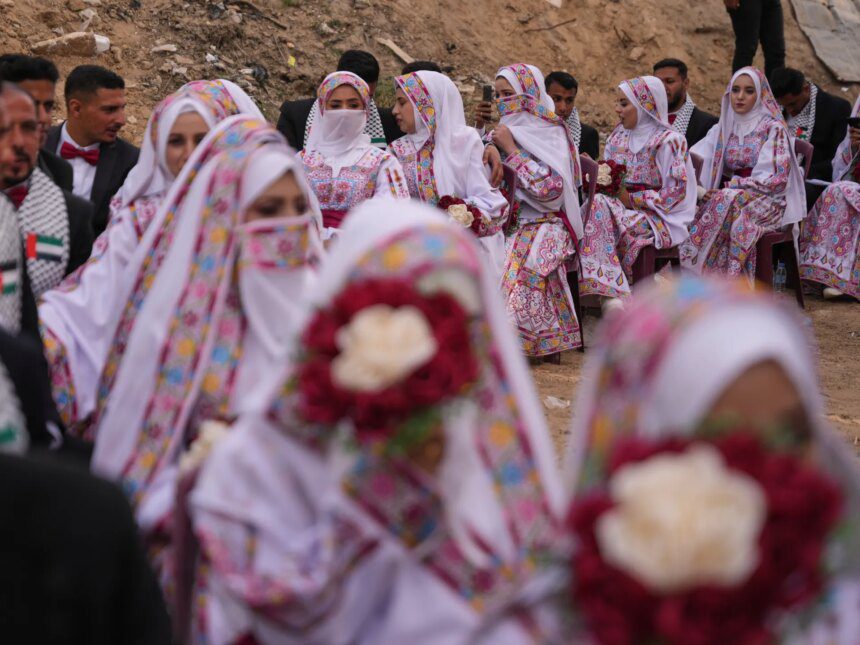
Flowers have long been a staple of weddings, symbolizing beauty and joy. However, in Gaza, the availability of fresh flowers has dramatically declined, forcing many brides to seek alternatives. Artificial flowers, once a more accessible option, have seen a sharp price increase due to scarcity, with some costing as much as 25 shekels ($8) each. As a result, brides are often left with no choice but to borrow or rent bouquets, which they may only hold for a few hours.
These disruptions are not mere inconveniences, but reflect a deeper social turmoil affecting couples hoping to celebrate their unions. In a place where every detail of a wedding signifies hope and joy amidst adversity, the struggle for even basic elements like flowers is emblematic of broader challenges faced by families.
Wedding Venues: A Scarcity of Celebratory Spaces
The war in Gaza has severely impacted available wedding venues, which were once grand spaces where families could gather, celebrate, and create lasting memories. As many wedding halls have been destroyed, those that remain are often located in areas restricted due to military action.
For instance, Mazaya Hall, previously a popular venue, now resides in the Yellow Zone, a contentious military border restricting access. Other venues that have managed to reopen often operate under dire conditions, utilizing makeshift repairs with nylon sheets to accommodate ceremonies.
Hani Reihan, manager of al-Reihan Hall, recognized a business opportunity amidst the crisis, transforming a dilapidated pickle warehouse into a venue designed to facilitate celebrations. However, the financial burden is heavy; many families find themselves paying exorbitant amounts for venues, sometimes equivalent to the average annual income in Gaza, as highlighted by Hani’s experience where his wife’s brother paid 3,900 shekels ($1,300) for a two-day rental.
Decreased Attendance and Emotional Toll
The emotional significance of weddings has not been lost amid the turmoil, but the dynamics of attendance have changed dramatically. Managers like Abu Warda of al-Wurood Hall report that wedding parties often have fewer family members involved than expected. In heartbreaking instances, grooms have described scenarios where they are the last of their family to celebrate, opting to proceed with weddings to bring happiness to the bride’s family.
The reality is that many families have suffered losses, making these gatherings bittersweet. The shrinking availability of venues, compounded by rising costs, has led some couples to celebrate in makeshift tents or empty open spaces, revealing a stark contrast to the opulent celebrations traditions once embraced.
What This Means
The implications of these challenges reach beyond individual couples and reflect a human crisis affecting broader societal functions. The deterioration of celebratory traditions impacts mental health and community cohesion. In light of India’s own understanding of cultural celebrations, the situation in Gaza serves as a reminder of the fragility of traditions in times of turmoil. As such, it underscores a global need for greater awareness and support for conflict-affected populations, highlighting the importance of resilience amid destruction.
Frequently Asked Questions
Why are flowers so scarce in Gaza?
Fresh flowers are rare due to ongoing conflict and an unstable economy, leading to high prices for artificial alternatives.
What happened to wedding venues in Gaza?
Many wedding halls have been destroyed by the war, while those that remain are often located in restricted areas, limiting access.
How do couples cope with these challenges?
Couples are increasingly turning to makeshift locations like tents or empty spaces for their celebrations, given the rising costs of traditional wedding venues.
What is the emotional impact of these changes?
The changes have resulted in a deeply emotional toll on individuals, with many families facing significant losses that alter the nature of wedding celebrations.