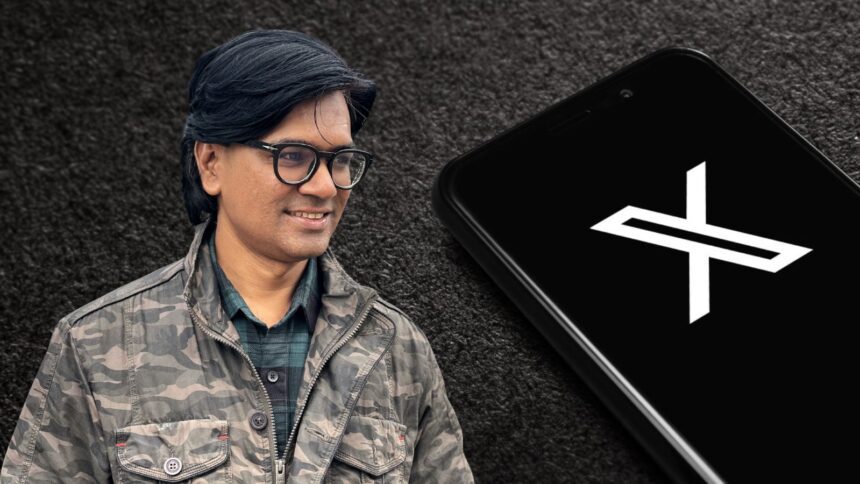

Blocking of Content Amidst Communal Violence Claims
Recent developments have raised concerns about censorship in India after Mohammed Zubair, co-founder of Alt News, revealed that his posts regarding alleged communal violence in West Bengal were removed following a government order. This action highlights ongoing tensions between freedom of expression and state control over information in India.
Details of the Incident
On March 27, 2026, communal violence erupted in Murshidabad’s Jangipur and Raghunathganj areas, predominantly Muslim locations. Local Muslims reportedly clashed with participants in Ramnavami processions due to loud DJ music disrupting Friday prayers. Following the violence, which included stone-pelting and arson, 30 individuals were arrested and Section 144 was imposed to prevent further gatherings.
In the wake of the incident, Zubair shared posts containing information and visuals about the violence. However, his account was subsequently subjected to a blocking order issued by the Indian Ministry of Electronics and Information Technology under Section 69A of the Information Technology Act, 2000. Zubair expressed his concerns on social media, questioning whether exposing “fake propaganda and false narratives set by the BJP” is now restricted.
Legal Framework and Censorship Concerns
Section 69A of the Information Technology Act allows the Indian government to block online content deemed harmful or unlawful. Upon receiving a blocking order, digital platforms are required to withhold access to the specified content within a tight time frame. The law has spurred significant debate regarding its implications for free speech and data privacy in the digital age.
Moreover, Section 79(3)(b) introduces additional layers of regulation, enabling the government to issue notices for content removal, which must be complied with promptly by intermediary platforms like social media networks. This has prompted critiques that the law serves as a tool for silencing dissent. In 2025, Zubair’s platform, X, challenged the regulations in court, alleging that the government is using third-party mechanisms to impose censorship.
Why This Matters
The situation casts a spotlight on the delicate balance between maintaining public order and safeguarding civil liberties in India. As elections approach, the government’s actions may be perceived as leveraging censorship to suppress dissenting voices and control narratives surrounding communal tensions. These events not only have repercussions for individuals involved but also threaten broader democratic values, making it crucial for Indian voters to stay informed about such developments.
Frequently Asked Questions
What led to the communal violence in Murshidabad?
The violence reportedly stemmed from a clash between local Muslims and participants of Ramnavami processions, with complaints regarding loud music disrupting Friday prayers being a triggering factor.
What is Section 69A of the IT Act?
This law allows the Indian government to block content on online platforms that it deems unlawful or harmful, requiring digital platforms to comply with government orders promptly.
What are the implications of this content removal?
The removal raises serious concerns about freedom of speech in India, particularly regarding the control of narratives around sensitive communal issues, especially before impending elections.
How has this situation been legally challenged?
In 2025, Zubair’s platform filed a petition in the Karnataka High Court objecting to the government’s actions and alleging that mechanisms like the Sahyog portal facilitate censorship.