
Recent protests led by the Cockroach Janta Party (CJP) in India have brought to light the tensions within the Muslim community regarding participation in socio-political movements. While thousands rallied against educational injustices, community leaders urged caution, reflecting a complex landscape of marginalization.
Community Divide Over Protest Participation
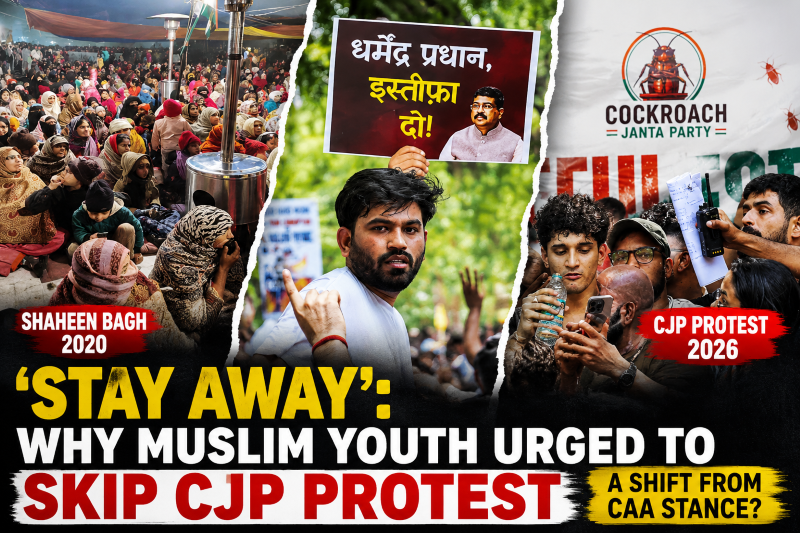
The Cockroach Janta Party’s rally at Jantar Mantar drew significant attention as young Indians protested alleged exam leaks and rising unemployment. However, in a notable contrast to previous movements, many Muslim clerics and community leaders actively discouraged participation in this demonstration. Through various channels such as mosque announcements and social media, they conveyed a strong message: “Don’t participate. Don’t even go near the protest site.”
This advisory highlights a sense of caution ingrained in the community, fueled by a fear of potential backlash should any violence or unrest occur during the protest. Young Muslims were told to prioritize their personal growth and safety over activism in this particular instance. For instance, Ashraf Masood, a college student, reported his father advising him to avoid the protest, stating, “As always, Muslims will be made the scapegoat.”
Cautious Messaging from Religious Leaders
The sentiment to refrain from public demonstrations was echoed by religious clerics, who emphasized the importance of wisdom in decision-making. The Imam of the Shaheen Bagh mosque remarked, “Muslim youth should remember that activism is not only on the streets.” This shift away from on-the-ground protests reflects broader concerns about the social repercussions that could arise from engaging in public dissent.
Unlike the strong Muslim-led activism observed during the 2019-2020 anti-Citizenship Amendment Act (CAA) protests, this muted response indicates a changed political climate where participation could lead to greater marginalization. Leaders in the community are advocating for change through education and community work, prioritizing long-term benefits over immediate social upheaval.
The Emergence of the Cockroach Janta Party
The Cockroach Janta Party itself emerged in 2026 as a grassroots movement catalyzed by frustrations surrounding unemployment and exam-related irregularities in India. Initiated by Abhijeet Dipke, the CJP utilized satirical elements to connect with young people disenchanted by the current political and educational landscape. In its first major protest, supporters donned cockroach masks, a symbolic gesture against dismissive remarks regarding their plight.
The movement’s quick rise demonstrates a pivotal shift in Indian youth activism. With significant turnout claimed at the rally—though figures varied widely—the CJP has successfully sparked conversations around accountability in educational institutions. This grassroots activism is set against a backdrop of increasing scrutiny and criticism of both the ruling Bharatiya Janata Party (BJP) and the broader societal response to it.
Why It Matters
The current situation surrounding the Cockroach Janta Party protests encapsulates ongoing dynamics of exclusion faced by the Muslim community in India. Social movements often serve as bellwethers for broader political and sociocultural trends; thus, the hesitance to participate in protests reflects a chilling effect on activism. The messages conveyed by community leaders indicate a strategic retreat from public demonstrations in favor of quieter forms of advocacy and development. As such, this shift may influence how future generations engage with social justice and equity issues, particularly in a landscape where religious and ethnic minorities face rising scrutiny.
Frequently Asked Questions
What is the Cockroach Janta Party?
The Cockroach Janta Party is a youth-led protest movement that began in India in 2026. Initially a satirical campaign, it evolved to address concerns about unemployment and educational reform.
Why did Muslim leaders discourage protest participation?
Community leaders warned Muslim youth against participating in protests due to fears of potential backlash and marginalization, emphasizing the need for safety and personal development over immediate activism.
How does this current protest differ from previous movements?
Unlike the 2019-2020 anti-CAA protests which saw robust participation from the Muslim community, this protest has been met with calls for caution, reflecting a shift in the community’s approach to social activism amid concerns regarding ramifications.
What are the implications of these protests for the Muslim community in India?
The hesitance to engage in public protests may signal a strategic pivot in activism among the Muslim community, prioritizing community support and educational efforts over direct confrontation with the state, thereby influencing future advocacy methods.