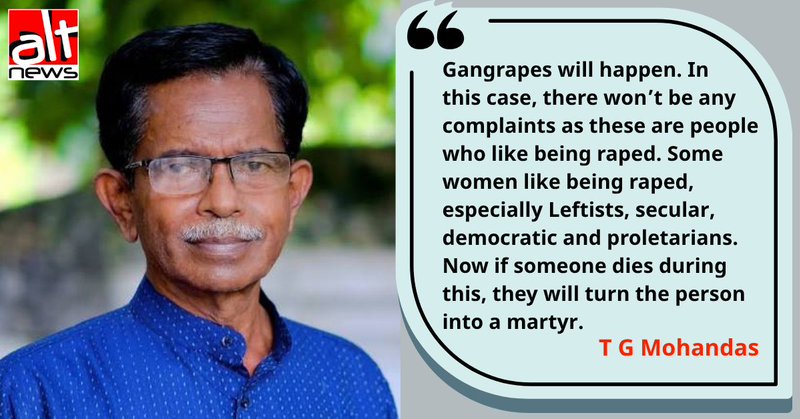

Former BJP Kerala intellectual cell convenor T G Mohandas has come under severe scrutiny for his inflammatory remarks, including a shocking assertion that he “would have shot Jantar Mantar protesters” and a disturbing comment that “Leftist, secular women like rape.” These remarks have led to a formal case being filed against him by the Thiruvananthapuram City Cyber Police.
Context of Controversial Remarks
T G Mohandas, known for his right-wing ideology and political commentary, made these incendiary comments during a series of YouTube videos. His remarks have drawn widespread condemnation for promoting violence and normalizing sexual violence against women, particularly those identified as belonging to certain ideological groups. The videos in which he made these comments have sparked outrage on social media, prompting calls for accountability from various advocacy groups and political factions.
Legal Action and Public Reaction
The police case was registered on July 29 in response to Mohandas’s explicit threats and derogatory remarks against women involved in protests. Civil rights activists have pointed out that his comments could incite violence and hatred, further polarizing societal divisions. Following the backlash, social media platforms have seen an avalanche of reactions, with many users calling for stricter actions against hate speech and calling attention to the systemic misogyny prevalent in political discourses. The case reflects a worrying trend where inflammatory rhetoric is increasingly normalized in political narratives.
Political Implications
This incident occurs against the backdrop of a broader conversation around women’s safety and rights in India. Mohandas’s statements have reignited discussions about the intersections of gender, ideology, and violence in India’s political landscape. Many commentators have noted that such remarks could discourage political participation among women, especially from non-traditional backgrounds, thereby undermining democratic engagement. The ruling party’s silence or reaction to Mohandas’s comments will be closely watched, as it could indicate its stance on such extremist rhetoric within its ranks.
Why This Matters
The situation surrounding T G Mohandas’s comments is significant for several reasons. Firstly, it highlights the pervasive culture of misogyny and radicalized political discourse in India, where aggressive rhetoric can galvanize extremist behaviors. Secondly, it raises questions about accountability and the role of political leaders in moderating or endorsing such views. Lastly, the legal repercussions resulting from these comments may set a precedent for how similar future cases are handled, fostering an environment for either stricter regulation of hate speech or further entrenchment of extremist philosophies within mainstream politics. The implications of this case extend beyond Mohandas, influencing the overall climate of political engagement in India.
Frequently Asked Questions
Who is T G Mohandas?
T G Mohandas is a right-wing ideologue and former convenor of the BJP’s Kerala intellectual cell, noted for his controversial political commentary.
What remarks did T G Mohandas make?
Mohandas made remarks suggesting he “would have shot Jantar Mantar protesters” and claimed that “Leftist, secular women like rape.”
What actions have been taken against him?
The Thiruvananthapuram City Cyber Police have filed a case against Mohandas in response to his inflammatory and threatening comments made in YouTube videos.
Why are these remarks significant?
These remarks highlight the normalization of misogyny and extremist rhetoric in political discourse, raising concerns over women’s safety and political engagement in India.