
Summary
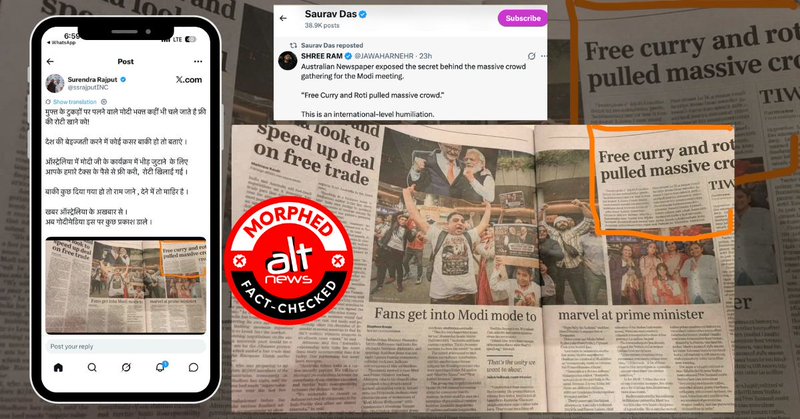
A viral newspaper clipping allegedly suggesting that free curry and roti were provided to attract crowds at Prime Minister Narendra Modi’s event in Australia has been proven false. The claim has been deemed entirely inaccurate, as the original news was manipulated using artificial intelligence.
Context of the Viral Claim
Recently, social media witnessed a surge in a newspaper clipping that purportedly revealed that Indian Prime Minister Narendra Modi’s event in Australia relied on serving free meals to draw people. The clipping included photos of Modi, Australian Prime Minister Anthony Albanese, and an enthusiastic crowd of Indian-origin attendees. The claim gained traction, leading many to believe that the allegations regarding the event’s organization were credible.
However, comprehensive fact-checking has confirmed that the article was doctored, and no reputable Australian media outlet published the story. This kind of misinformation is not uncommon in the current digital landscape, where manipulated content can spread rapidly and mislead the public.
Dissection of the Misinformation
The assertion regarding free food served at Modi’s event is a classic example of how misinformation can circulate, especially in politically charged environments. The manipulation of legitimate news content through editing and AI tools raises ethical questions about the responsibility of content creators and the audience’s role in verifying information.
Notably, the fabricated clipping attempted to frame Modi’s event as one dependent on giveaways, thereby potentially undermining the legitimacy of the significant Indian diaspora that participated. By creating a false narrative, it aimed to detract from the event’s actual successes and the positive engagement between Australia and India.
Moreover, Indian media and fact-checking organizations, including Alt News, have stepped in to clarify the situation. They emphasized the importance of scrutinizing sources, especially when sensational claims are made about public figures.
Political Ramifications
The incident underscores the ongoing challenges of political communication in a digital era. As misinformation spreads quickly, it becomes vital for both political leaders and citizens to be vigilant. The viral nature of such claims can damage reputations and undermine public trust in legitimate news outlets.
For readers in India, this is a significant reminder of the impact of misinformation and the importance of critical thinking. As political narratives become increasingly polarized, distinguishing fact from fiction becomes essential in making informed opinions and decisions.
Why This Matters
The political implications of misinformation are profound—especially in a democracy like India, where public perception can heavily influence political outcomes. Misleading information can sway public opinion, fuel polarization, and distort the narrative surrounding key events and figures.
In the wake of events featuring high-profile politicians, how these leaders, including Modi, are portrayed can have lasting effects on their political capital. As misinformation techniques evolve, the resilience of democratic institutions and public discourse will increasingly depend on the ability to counter falsehoods with verified facts.
Frequently Asked Questions
What was the original claim regarding PM Modi’s event in Australia?
The claim suggested that free curry and roti were provided to attract crowds to PM Modi’s event, implying that the attendance was artificially inflated.
Was the newspaper clipping authentic?
No, the newspaper clipping was found to be edited and manipulated. Reputable Australian media did not publish such a story.
Why do misinformation campaigns gain traction so quickly?
Misinformation often taps into existing biases or sensationalizes events, making them more likely to be shared. The emotional response it elicits can lead to rapid dissemination across social media platforms.
How can individuals verify information effectively?
Individuals can verify information by checking reputable news outlets, utilizing fact-checking websites, and being cautious about sharing information without confirming its authenticity.