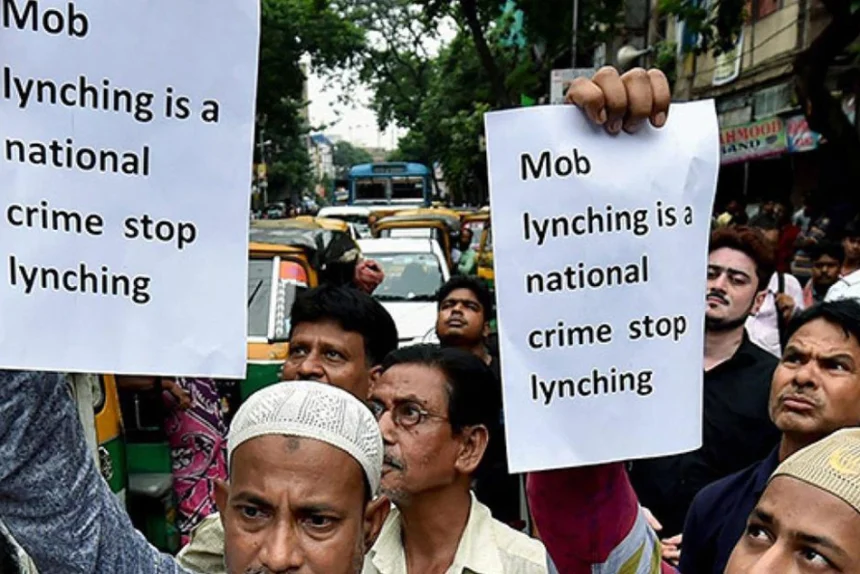

Maulana Mahmood Madani, President of Jamiat Ulama-i-Hind, has vehemently opposed former IAS officer Niaz Khan’s controversial suggestion that Muslims should alter their appearance and shed visible markers of their identity to avoid mob violence. Madani emphasizes that the focus should be on addressing the root causes of such violence rather than shifting the burden onto victims.
Rejection of Identity Alteration
In response to Niaz Khan’s proposal, Maulana Madani labeled the suggestion as dismissive of critical evidence and a misinterpretation of the situation facing Muslims in India. He expressed deep concern that a former official would propose hiding one’s identity as a means of protection. “The problem does not lie in a victim’s beard, the cap on his head, a woman’s hijab, or a person’s kurta-pyjama. The real problem lies in the hatred harbored in the mind of the attacker,” Madani stated. He called such recommendations neither just nor representative of civilizational values.
Data on Mob Violence Against Muslims
To substantiate his stance, Maulana Madani referred to a research-based report conducted by Jamiat Ulama-i-Hind that evaluated 38 significant mob violence incidents over the past decade. Alarmingly, it revealed that in 83% of these cases, the victims were wearing ordinary clothing without any overt markers of Islamic identity. He highlighted noteworthy cases, including the lynching of individuals like Mohammad Akhlaq in 2015 and Tabrez Ansari in 2019, emphasizing that attire was not the trigger for these heinous acts.
He pointed out that these incidents were often rooted in fabricated rumors or groundless allegations, revealing a troubling pattern of discrimination that transcends mere appearance. “In all these cases, the victims’ clothing was neither the underlying cause of the attacks nor did their appearance bear any conspicuous markers of Muslim identity,” Madani reiterated.
A Historical Perspective
Drawing parallels with historical injustices, Maulana Madani referenced the experience of Bosnian Muslims during the conflict in the 1990s. They were virtually indistinguishable from their Christian neighbors in terms of language and customs but still faced grave atrocities and genocide. He posited that simply changing one’s outward appearance will not shield individuals from targeted violence when hatred is pervasive.
“The real question should not be what the victim was wearing. The real question is: what emboldened a mob to stop a citizen, scrutinise his identity, pursue his vehicle, attack him and ultimately kill him?” Madani pondered. This highlights the critical need to confront the motivations behind mob violence rather than place the onus of safety on potential victims.
Why It Matters
The issues of mob violence and identity discrimination are not isolated incidents but reflect broader societal tensions that can affect India’s social fabric and democratic principles. The suggestions to conform or hide identity can lead to an environment ripe for social exclusion and fear among marginalized communities. Upholding the rule of law and justice is essential to ensuring safety for all citizens, regardless of religious or cultural background. Such societal dynamics pose challenges not only for marginalized communities but also undermine the fundamental tenets of a democratic society, where all individuals should feel secure and valued irrespective of their identity.
Frequently Asked Questions
What was Niaz Khan’s suggestion to Muslims in India?
Niaz Khan suggested that Muslims should alter their appearance and discard visible markers of their identity, such as traditional attire, to protect themselves from mob violence.
What was Maulana Madani’s response to this suggestion?
Maulana Madani rejected Khan’s advice, arguing that it shifts the responsibility of violence from the perpetrators to the victims and fails to address the root cause of mob violence, which is the hatred within society.
What evidence did Maulana Madani present to counter the claims about appearance?
Madani cited a research report from Jamiat Ulama-i-Hind showing that 83% of victims in studied mob violence incidents were wearing ordinary clothing without identifiable Islamic markers, suggesting that appearance is not the cause of such attacks.
What historical context did Madani provide to illustrate his point?
Madani referred to the plight of Bosnian Muslims, who faced mass killings and atrocities despite being similar in appearance to their neighbors, emphasizing that violence is driven by deeper societal issues rather than outward identity.