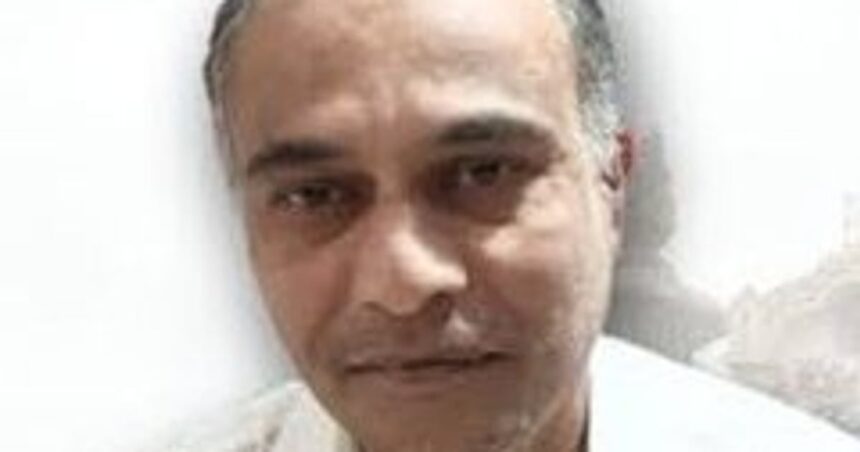

Bhiku Mhatre’s controversial tweet, which has been deleted, has led to his arrest in Ponda, South Goa. The tweet accused the Congress party of anti-Hindu sentiment and sparked a significant political fallout, drawing responses from both the Congress and the BJP regarding the implications for free speech and dissent in India.
Context of the Controversy
On April 22, Bhiku Mhatre shared a tweet criticizing the Congress party’s manifesto, alleging that it seeks to promote wealth distribution favoring Muslims at the expense of Hindus, including marginalized groups such as SC/STs. The inflammatory nature of his remarks led to significant backlash, prompting his arrest by the Karnataka police under claims of communal instigation.
Mhatre’s statement included divisive rhetoric that has long been a point of contention in Indian politics. The language he employed was seen as not only provocative but also deliberately targeting specific communities, hence raising serious concerns regarding communal harmony.
The Arrest and Its Implications
Mhatre’s arrest occurred shortly after he shared a screenshot suggesting that the magistrate in Bengaluru had issued a court order regarding his social media activity. He defended his position by stating that he had never posted anything that could be considered incendiary, claiming instead that his views represented a “truth” that the Congress party was trying to suppress.
The BJP has positioned itself as a defender of Mhatre, with leaders accusing the Karnataka Congress government of misusing its power. Amit Malviya, the BJP’s IT cell chief, characterized the arrest as an attempt to stifle dissenting voices, emphasizing the party’s commitment to providing legal support to Mhatre and asserting that such actions threaten India’s democratic framework.
Responses from Political Parties
The response from the BJP highlights the ongoing tensions between the party and the Congress government in Karnataka. As the ruling party in the state, Congress faces accusations from the opposition of enacting draconian measures against free speech and dissent, particularly in light of Mhatre’s arrest.
Conversely, the Congress party maintains that Mhatre’s statements crossed a line into inflammatory rhetoric that could exacerbate communal tensions. Congress representatives have refrained from explicitly discussing the arrest itself but instead have focused on condemning hate speech and encouraging responsible discourse.
Why This Matters
The controversy surrounding Bhiku Mhatre’s arrest underscores critical issues regarding freedom of speech and the role of social media in political discourse in India. As political parties continue to navigate a polarized environment, the boundaries of acceptable speech are consistently tested, revealing the underlying vulnerabilities in India’s democratic fabric.
The incident illustrates how social media can serve as a battleground for ideological conflicts, often inflaming tensions rather than promoting constructive engagement. As the BJP positions itself as a defender of free expression, it also raises questions about the implications for governance and law enforcement in dealing with speech that may provoke communal discord.
Frequently Asked Questions
What led to Bhiku Mhatre’s arrest?
Bhiku Mhatre was arrested for posting a controversial tweet that accused the Congress party of targeting Hindus while favoring Muslims in regard to wealth distribution. The tweet was deemed inflammatory and communal.
What was the reaction from the BJP regarding Mhatre’s arrest?
The BJP has publicly condemned Mhatre’s arrest, labeling it an abuse of power and asserting that they will provide him with legal support. They argue that the Congress party is suppressing dissent.
What does Mhatre say about his comments?
Mhatre claims he never intended to incite communal tensions and that his statements were a reflection of what he perceives as the Congress party’s anti-Hindu agenda.
Why is this incident significant in the current political landscape?
This incident illustrates the ongoing tension regarding freedom of speech in India, especially related to political criticism. It raises crucial questions about how laws are applied to speech that is perceived as inflammatory and the broader implications for democracy in India.