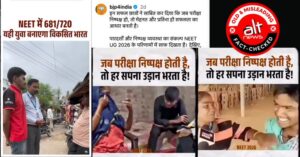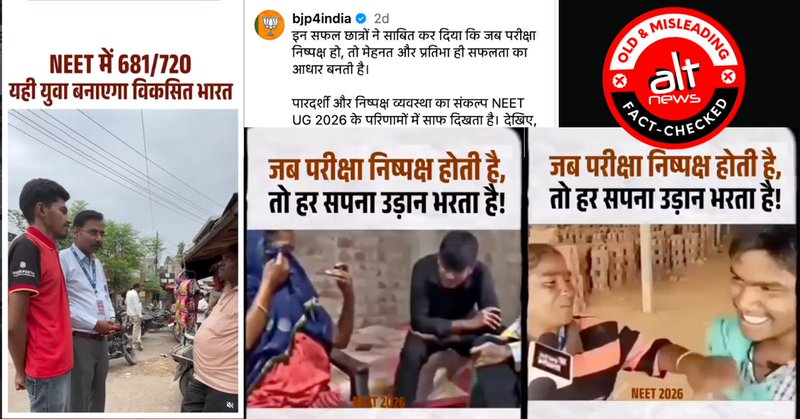

In the aftermath of the NEET UG 2026 re-examination results, the Bharatiya Janata Party (BJP) faced criticism for sharing three unrelated video clips celebrating student successes. These videos were outdated and did not correspond with the recent examination results, leading to allegations of misinformation.
Context of the NEET UG 2026 Re-exam
The NEET (National Eligibility cum Entrance Test) is a critical entrance examination for aspiring medical students in India. The 2026 session’s re-exam was conducted after issues arose during the original exam, prompting authorities to reschedule the test. On July 16, the results for this re-exam were finally announced, creating a wave of enthusiasm among successful candidates and their families who were eager to celebrate their academic achievements.
Despite this backdrop, the BJP took to its official social media platforms to share videos purportedly showcasing students celebrating their results. However, investigations revealed that these clips were not connected to the recent examination, leading to accusations that the party was attempting to orchestrate a narrative that did not reflect reality.
Allegations of Misinformation
The distribution of these outdated video clips led to significant backlash, particularly from the opposition and various educational advocacy groups. Critics have accused the BJP of utilizing cherry-picked footage to manipulate public sentiment and present a false image of success surrounding the NEET re-examination results.
Fact-checking organizations like Alt News have confirmed that the videos shared by the BJP celebrated previous victories unrelated to the current context. By doing so, the party risks undermining trust among the electorate, particularly in a country where educational competitions are critically significant to many families.
Social Media’s Role in Political Narratives
The incident underscores the growing influence of social media in shaping political narratives in India. Political parties frequently leverage platforms like Twitter and Facebook to disseminate information and engage with the public. However, the rapid spread of misinformation poses challenges to the integrity of political discourse.
The BJP’s use of these outdated clips raises questions about accountability in political communication, especially in a time where the dissemination of information is instantaneous. This raises wider concerns about how political narratives can be constructed and manipulated in the digital age, potentially affecting voter perceptions and decisions.
Why This Matters
The controversy surrounding the BJP’s actions extends beyond a simple case of misinformation; it reflects broader political strategies and public trust in governance. As India approaches crucial elections, how parties communicate and the authenticity of their messages can significantly influence public sentiment.
Furthermore, in a country where education is a priority for many families, portraying a misleading narrative regarding academic success can exacerbate frustrations, especially among students and parents. The emphasis on verifiable claims and responsible communication is critical in fostering a more informed electorate.
Frequently Asked Questions
What is NEET UG?
NEET UG (National Eligibility cum Entrance Test – Undergraduate) is an entrance exam for students aspiring to pursue undergraduate medical courses in India.
What happened during the NEET UG 2026 re-exam?
The NEET UG 2026 re-examination was conducted after issues with the original exam, prompting authorities to give students another opportunity to qualify for medical courses.
Why is the BJP facing criticism?
The BJP is being criticized for sharing old video clips that do not relate to the recent NEET UG results, which raises concerns about misinformation and political manipulation.
What are the implications of misinformation in politics?
Misinformation can undermine public trust, distort electoral processes, and lead to misguided perceptions among voters, which are crucial in a democratic setup like India.