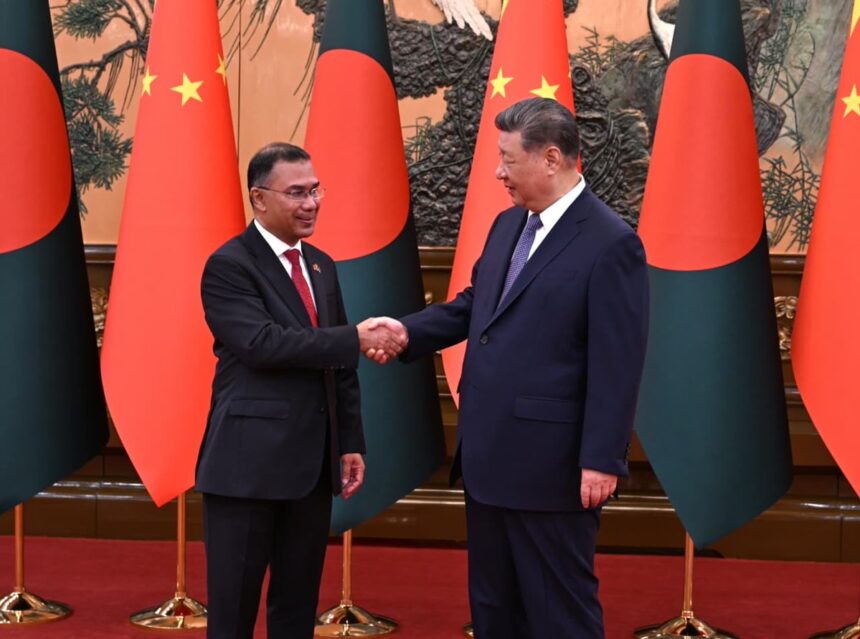

Recent diplomatic moves by neighboring leaders in the South Asian region indicate a significant shift away from New Delhi as the first port of call for their foreign visits. Following the footsteps of Maldives President Muizzu and Nepal PM Oli, Bangladesh Prime Minister Tarique Rahman has opted to meet with Chinese President Xi Jinping in Beijing, marking a notable change in longstanding regional diplomatic protocols.
Shifting Diplomatic Trends
The tradition among leaders from South Asian countries to visit India first has been a longstanding norm, often symbolizing a commitment to regional cooperation and solidarity. However, this norm has faced seismic shifts recently. President Muizzu of the Maldives and Nepal’s former Prime Minister K.P. Sharma Oli both made headlines by choosing destinations other than New Delhi for their inaugural foreign visits after assuming office.
Prime Minister Rahman’s recent engagement with Chinese President Xi Jinping adds another layer to this evolving diplomatic landscape. The meeting, held at the Great Hall of the People in Beijing, showcases an increasing inclination among South Asian leaders towards strengthening ties with China rather than with India, traditionally seen as their larger regional counterpart.
Bangladesh and China: A Deepening Partnership
During the bilateral meeting, Rahman and Xi discussed topics ranging from economic cooperation to future partnerships focusing on mutual interests, signaling a deepening of Bangladesh-China relations. This is particularly significant as Bangladesh has been poised to benefit from China’s vast Belt and Road Initiative (BRI), which aims to enhance infrastructure and connectivity across participating nations.
Rahman’s decision to prioritize China over India resonates with a broader trend of engagement with China among South Asian nations, who view it as not just an ally for economic growth but as an indispensable partner in their national agendas. Such strategic interests can reshape the balance of influence in the region, with Bangladesh emerging as a pivotal player.
The Geopolitical Implications for India
India’s traditional dominance in South Asian politics is increasingly being challenged by China’s growing influence. As neighboring leaders like Rahman engage with Xi Jinping, concerns about encirclement and diminishing sway in the region are growing within Indian policy circles.
This shift can lead to complications for India, particularly in terms of trade, security, and diplomatic alliances. India has historically relied on its cultural and historical ties with its neighbors, but as economic opportunities with China become more appealing, New Delhi risks being sidelined. The changing dance of diplomacy underlines the necessity for India to reassess its foreign policy towards its immediate neighbors, not just in South Asia but beyond.
Why This Matters
The choices made by these South Asian leaders reflect a burgeoning trend of re-evaluating traditional alliances and the emergence of China as a leading strategic partner in the region. For Indian readers, this indicates a potential shift in regional power dynamics that could have lasting implications for trade, security, and collaborative efforts against shared challenges. The evolving relationships can result in a reformed geopolitical landscape, necessitating a response from India to strengthen its ties while underscoring the importance of mutual cooperation among South Asian nations.
Frequently Asked Questions
What does Rahman’s visit to China signify for Bangladesh?
Rahman’s visit to China underscores a strategic pivot towards strengthening economic ties and aligning Bangladesh more closely with China’s initiatives, particularly the Belt and Road Initiative.
How does this affect India’s position in South Asia?
India risks losing its traditional influence in South Asia as countries like Bangladesh increasingly seek to engage with China, potentially reshaping regional alliances.
What historical significance does the first visit tradition hold?
The tradition of leaders visiting India first represents diplomatic importance and trust but is increasingly being challenged as regional dynamics evolve.
What are the possible ramifications of these diplomatic shifts?
The ramifications could include altered trade routes, shifts in security alliances, and a potential decrease in collaborative efforts to address regional issues, such as climate change and security threats.