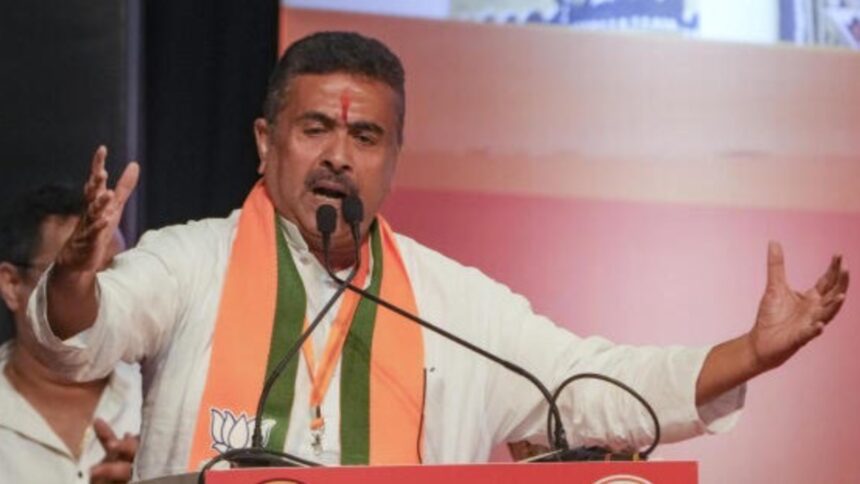

West Bengal Chief Minister Suvendu Adhikari’s recent announcement to implement the Uniform Civil Code (UCC) represents a significant political move in a state with a large Muslim population. Following the governmental trend seen in other BJP-ruled states such as Gujarat and Assam, the decision has sparked concerns regarding social equity and the potential marginalization of minority communities, particularly Muslims.
Overview of the Uniform Civil Code Initiative
The UCC seeks to provide a common set of civil laws for all citizens, cutting across religious lines, and covers essential areas such as marriage, divorce, inheritance, adoption, and succession. Chief Minister Adhikari expressed the intention to implement this code while strictly adhering to legal procedures, stating, “There is a procedure for UCC implementation, and we will adhere to that.” As multiple states governed by the BJP have begun the UCC process, West Bengal’s entry into this arena raises questions about the implications for its diverse population.
Political Context and Implications
The decision to introduce the UCC Bill in the West Bengal Assembly aligns with the BJP’s broader electoral strategy, as highlighted in their ‘Sankalp Patra’ manifesto for the upcoming 2026 Assembly elections. Union Home Minister Amit Shah emphasized this commitment during the manifesto unveiling, framing it as part of a larger vision for national integration and equality. However, critics point out that the move may exacerbate existing grievances among religious minorities, particularly Muslims, who fear their cultural identities could be further undermined by a uniform set of laws.
Concerns Over Social Equity
Critics of the UCC argue that it may impose one set of values over the diverse fabric of Indian society, risking the marginalization of religious minorities. Organizations representing Muslims in India have raised alarms over the UCC’s potential to discriminate against their community, especially in personal law matters. By reportedly proceeding with the implementation, the BJP government not only reinforces a national developmental narrative but also stirs deeper societal divisions. Observers note that similar initiatives in other states often provoke backlash and resistance from minority groups, further complicating social cohesion in West Bengal.
Why It Matters
The introduction of the UCC in West Bengal carries significant implications for social harmony and governance in the region. For governments and policymakers, this serves as a case study in balancing national integration with the preservation of cultural diversity. For AI developers and users, the political dynamics surrounding the UCC present a unique context for understanding how data privacy, representation, and ethical considerations can vary across different governance approaches. The potential socio-political fallout from the UCC can provide input for AI applications aimed at predicting social trends and responses within culturally diverse populations.
Frequently Asked Questions
What is the Uniform Civil Code (UCC)?
The UCC aims to replace personal laws based on the scriptures and customs of each major religious community in India with a common set governing every citizen.
Why has the BJP government prioritized the UCC?
The BJP sees the UCC as a means to promote national integration and eliminate disparities among citizens based on religion, aligning with its overarching political philosophy.
What are the concerns related to the UCC implementation in West Bengal?
Critics argue that the UCC could infringe upon the cultural identity and rights of religious minorities, particularly Muslims, leading to increased social exclusion and discrimination.
How has the response been from the Muslim community regarding the UCC?
The Muslim community has expressed significant concerns about the UCC, fearing it could lead to marginalization and threaten their traditional practices and personal laws.