
The recent commentary by Mohammed Zubair raises concerns about the influence of certain media figures in India. He highlights the troubling trend of fixed narratives targeting opposition parties, exemplified by the actions of prominent journalists and their guests.
Context: The Role of Godi Media
Godi Media, a term popularized in India, refers to media outlets perceived as sympathetic to the ruling government. This phenomenon has been criticized for promoting a homogeneous narrative that often sidelines dissenting voices. Journalists associated with Godi Media, like Anjana Om Kashyap, are accused of amplifying pro-government propaganda while disparaging opposition perspectives. This has raised alarms about media freedom and integrity in India.
Specific Instances and Patterns
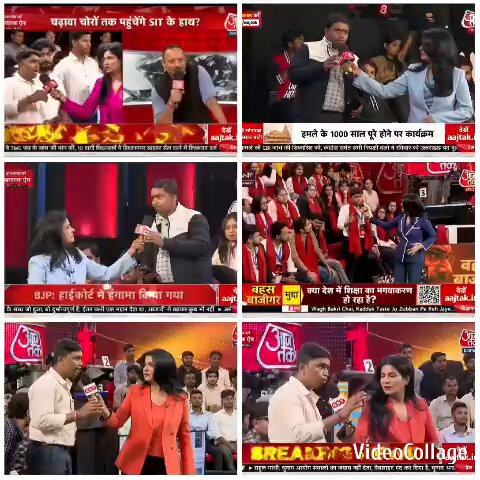
Zubair points to videos where Anjana Om Kashyap and ABVP member Shreyansh engage in discussions that seem orchestrated to target political opponents. Shreyansh, in particular, is noted for appearing on various debate platforms, including those hosted by Rubika Liyaquat, Amish Devgan, and India TV. The similarities in their debate styles indicate a trend where media platforms may utilize the same individuals to push a predefined agenda. This raises concerns about the authenticity of public discourse and the potential manipulation of opinion by media conglomerates.
The Impact on Public Discourse
The reliance on fixed narratives in political journalism, as pointed out by Zubair, undermines the plurality of opinions that are crucial for a healthy democratic process. When media figures consistently target only the opposition while failing to hold the government accountable, it results in a skewed representation of political realities. This behavior not only misinforms the public but also stifles constructive debate, ultimately degrading the quality of democracy in India.
Why This Matters
The implications of Godi Media’s practices are significant for Indian democracy. A media landscape dominated by a single narrative endangers the principle of free speech and creates an environment where dissent is silenced. For Indian readers, this situation suggests a pressing need for media literacy and critical engagement with news sources. Understanding the influence of these media figures is essential for citizens to navigate the complexities of Indian politics effectively.
Frequently Asked Questions
What is Godi Media?
Godi Media refers to media outlets and journalists that are perceived as overly supportive of the ruling party, often to the detriment of unbiased reporting.
Who are some notable figures associated with Godi Media?
Journalists like Anjana Om Kashyap and hosts from channels like India TV and Times Now are often cited as examples of Godi Media practitioners who promote government narratives.
What impact does Godi Media have on public perception?
It creates a narrow understanding of political issues by amplifying specific viewpoints while neglecting balanced reporting and critical analysis of the government’s actions.
How can citizens counteract the influence of Godi Media?
Citizens can engage in media literacy, seek diverse news sources, and critically analyze the information presented to them, thus ensuring a more informed citizenry in a democratic society.