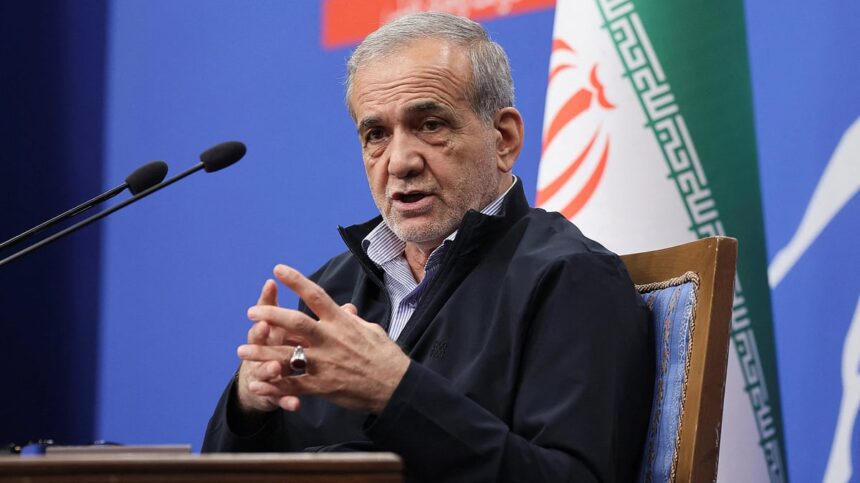

Iran’s Missile Program: A Pillar of Survival Amidst Western Criticism
Iranian President Masoud Pezeshkian has firmly dismissed Western calls for a re-evaluation of Iran’s missile program, declaring it a cornerstone of the nation’s survival strategy against perceived existential threats. His remarks highlight a growing resolve in Tehran, as Iran grapples with both regional instability—exemplified by the conflict in Gaza—and the pressures of international scrutiny surrounding its defensive capabilities.
Missile Negotiations Off the Table
Pezeshkian’s stark denial of any future negotiations regarding Iran’s ballistic missile capabilities represents a significant hardening in Tehran’s stance. He likened the current geopolitical reality to that of Gaza, warning that a lack of deterrent power could lead to a catastrophic outcome for Iran similar to what has transpired for Palestinians. “If Iran did not have missiles for self-defense, Israel and America would plow through Iran the same way Gaza was destroyed,” he stated, emphasizing that the essence of these capabilities is rooted not in ambition, but in national security.
This unyielding position undermines Western proposals, particularly those calling for a new nuclear agreement that would also encompass missile development. Pezeshkian’s comments reflect a deep-seated skepticism against Western assurances, a perspective that resonates broadly in a region fraught with conflicts and shifting power dynamics.
Moral Imperative Intertwined with Defense Strategy
In addition to the practical implications of military preparedness, Pezeshkian infused his rhetoric with religious undertones, drawing parallels between modern resistance and the historic narrative of Karbala. He invoked the legacy of Imam Hussain, emphasizing the need for moral courage in the face of tyranny. “Hussain taught humanity to stand firm against tyranny, reject oppression, and never sacrifice freedom for personal gain,” he articulated, positioning Iran’s defense posture not only as a matter of survival but also as a moral obligation underscored by Shia Islamic values.
This intertwining of moral sentiment with military strategy serves to bolster domestic resolve while resonating with wider audiences across the Shia community. It reinforces Iran’s self-image as a bastion against perceived global injustice and oppression.
Implications for Regional Power Dynamics
Pezeshkian’s declaration that Iran “will not gamble its survival on Western promises” mutes any potential openness to concessions in forthcoming diplomatic engagements. This skepticism may influence not only U.S.-Iran relations but also broader regional politics. It raises questions about the reliability of Western security arrangements and highlights a pervasive mistrust emanating from Tehran since the 1979 revolution. Such sentiments have only intensified in the aftermath of international crises, including the situation in Gaza, as they draw parallels between regional conflicts and their implications for national security.
Furthermore, as neighboring nations observe Iran’s steadfastness, it may compel them to reassess their own defense strategies, possibly leading to an arms race in an already volatile region. The implications of Pezeshkian’s assertions extend beyond Iran, challenging the efficacy of international law and the United Nations when vital state interests are perceived to be at stake.
Why It Matters
The complexities of Iran’s stance on its missile program and defense strategy raise significant questions regarding geopolitical stability in the Middle East. As the region grapples with power imbalances and the fragile balance of deterrence, the implications extend beyond political dialogues. The responses to Iran’s position may guide international policies and security frameworks necessary to stem conflicts fueled by mistrust and military competition. Understanding these dynamics is crucial for policymakers, diplomats, and scholars alike, as they navigate the precarious waters of international relations in an era defined by national security concerns, ideological battles, and regional alliances.
Frequently Asked Questions
What is the significance of Iran’s missile program?
Iran’s missile program is viewed as a crucial element of its national defense strategy, framing it as necessary for survival in a region characterized by military aggression and instability.
How does Pezeshkian’s rhetoric reflect Iran’s broader geopolitical stance?
Pezeshkian’s rhetoric underscores a firm commitment to national sovereignty, dismissing Western calls for negotiation while drawing upon historical and religious narratives to reinforce the moral justification for Iran’s military initiatives.
What are the implications of a hardline approach from Iran?
A hardline approach may diminish chances of diplomatic engagement with Western powers, potentially leading to escalated tensions and the recalibration of regional military strategies among neighboring countries.
How do regional conflicts influence Iran’s defense strategies?
Conflicts like the one in Gaza serve as cautionary tales for Iran, reinforcing its belief that without military deterrence, smaller nations can easily fall victim to aggression from more powerful states.