
Activist’s Year-Long Vigil Challenges Indifference
In Tokyo, Japanese activist Yusuke Furusawa has dedicated nearly three years to solo demonstrations, advocating for an end to the genocide in Gaza. Despite his unwavering commitment, he faces widespread indifference from local pedestrians, demonstrating the complexities of activism in a society often reluctant to engage in sensitive international issues.
Ongoing Protests from a Passionate Voice
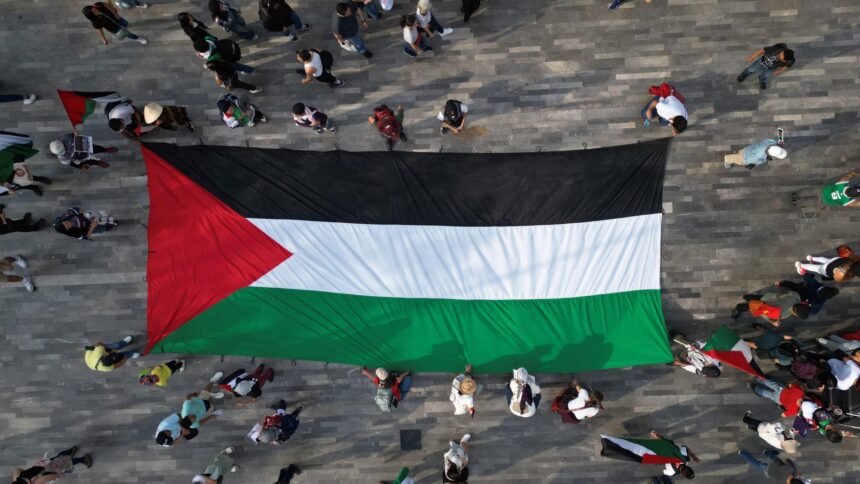
Yusuke Furusawa, a 49-year-old carpenter and actor, has been actively protesting in busy districts such as Shinjuku and Shibuya since October 2020. Clad in a keffiyeh—a symbol of Palestinian solidarity—he kneels on sidewalks, raising a Palestinian flag and chanting cries for freedom and human rights such as “Free Palestine,” “Stop the Genocide,” and “Ceasefire Now.”
Furusawa’s protests are not just a weekend activity; they occur daily, underscoring his deep commitment to the cause. Yet, he often finds that while international visitors are more responsive, local passersby tend to ignore his presence completely. “Even when I stand in the middle of the street and raise my voice, most people act as though I don’t exist,” he remarked, highlighting a persistent apathy among the general public.
Cultural Factors Influencing Public Response
Furusawa attributes this indifference to several cultural dimensions in Japan. Social conformity, a strong value in Japanese culture, often leads to avoidance of contentious international topics. He also notes a general reluctance to discuss issues perceived as sensitive or divisive, further isolating his cause.
Despite this, he remains determined. “No matter how much people may call it ‘an empty ideal,’ I will continue to say: ‘Protect people. Treat people as human beings. Defend human rights,’” he emphasized. His dedication has not gone unnoticed; his actions have cultivated a substantial online following, with videos of his protests being shared internationally, echoing the messages he seeks to promote.
The Digital Ripple Effect
Though largely ignored on the streets of Tokyo, Furusawa’s protests resonate in the digital realm. His daily demonstrations have garnered attention across social media platforms, transcending geographical boundaries and sparking conversations about human rights and global awareness. Videos of his protests serve not only as documentation of his commitment but also as a rallying cry for others who might feel marginalized or silenced.
Why It Matters
The significance of Furusawa’s activism extends beyond the immediate context of his protests. It raises questions about civic engagement and social responsibility in global citizenship. In an era where information spreads rapidly through digital mediums, individual actions can foster collective awareness and mobilization. For developers and users in the digital space, this highlights the need to create platforms that amplify marginalized voices and encourage meaningful discourse surrounding pressing global issues.
Frequently Asked Questions
What are Yusuke Furusawa’s main demands during his protests?
Furusawa calls for an end to the genocide in Gaza, a ceasefire, and the protection and recognition of human rights.
How does Japanese society respond to international activism?
There tends to be widespread indifference, influenced by social conformity and a reluctance to engage in sensitive international discussions.
What symbols does Furusawa use in his protest?
He uses the keffiyeh, a traditional Palestinian scarf, and the Palestinian flag as symbols of solidarity during his demonstrations.
Has Furusawa’s protest gained international attention?
Yes, while local responses may be muted, his protests have resonated online, leading to a substantial following and sharing of his videos globally.