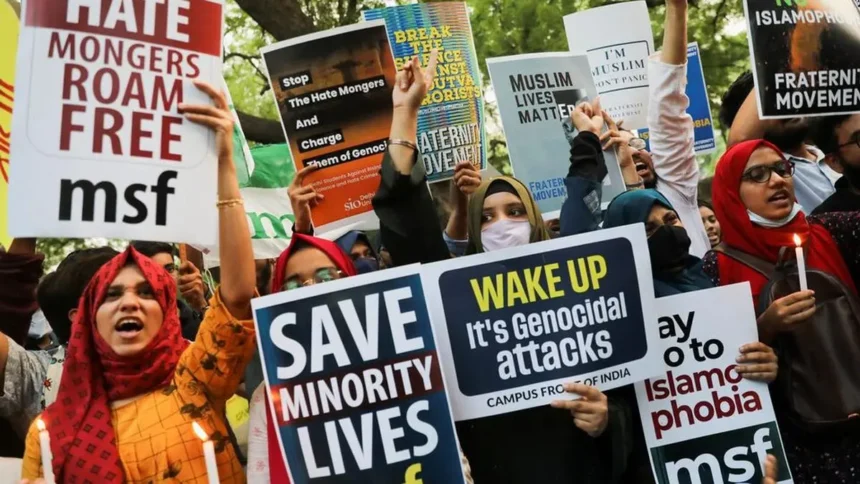

Recent events surrounding protests in India have highlighted the complex and often contentious relationship between the state and its Muslim citizens. From a Supreme Court remark catalyzing political mobilization to questions of identity and representation, the discourse underscores the broader challenges faced by Indian Muslims in a rapidly changing socio-political landscape.
The Rise of the “Cockroach Movement”
In April 2022, remarks made by the Chief Justice of India during a Supreme Court hearing suddenly ignited a widespread movement known informally as the “cockroach movement.” Initially a reaction to the Chief Justice’s comment, the momentum quickly escalated into a political statement against perceived injustices, particularly towards Muslims in the country. The leader of this movement, Abhijeet Dipke, emerged as a recognizable figure, illustrating how a moment of judicial controversy could transcend its court confines to spark a broader discourse on dissent and political engagement.
The atmosphere surrounding this movement was different from previous protests against institutional authority. This particular rally received police permission, which locals interpreted as an indication of dwindling democratic freedoms. The mere existence of a mobilized citizenry questioning state power brought hope amidst an environment characterized by the suppression of dissent.
The Burden of Identity in Political Expression
Despite the visibility of the movement, an unsettling question raises its head: How would the dynamics have shifted if its leader had been a Muslim, especially a Kashmiri Muslim? Many political expressions among this demographic carry an implicit burden of suspicion, where their motivations and intentions are questioned more rigorously than those from other communities. The reality is that Muslims often find themselves having to navigate a landscape where their actions can be politicized, viewed through a lens of distrust, and scrutinized more harshly than those of their peers.
This perception amplifies among Kashmiri Muslims, who have long been urged to engage with the state through constitutional avenues. Despite actively participating in democratic processes, many Kashmiris feel marginalized and distrustful of how their political actions are received and interpreted. This dynamic serves to alienate communities, stifling engagement and undermining trust in democratic institutions, ultimately threatening the fabric of a diverse society.
The Absence of Muslim Voices
One of the striking observations about the recent protests was the conspicuous absence of Muslim representatives among its leading figures. This gap raises pertinent questions about the comfort levels of Muslims in openly participating in movements critical of government authority. The hesitancy to align with such movements could signal a deeper issue within Indian democracy, where free political expression is not equally secured for all citizens.
This void of representation contributes to a chilling effect on political activism within Muslim communities, making the broader struggle for inclusion and equality even more fraught. If significant societal movements do not reflect the voices of all sections, the underlying diversity foundational to India’s democracy is at risk of being degraded.
Why It Matters
The ongoing challenges faced by Indian Muslims under current political regimes raise critical questions about societal inclusion and democratic engagement. The trend of marginalization has implications not just for the Muslim community but for the entire polity, where uneven power dynamics can jeopardize social cohesion and collective progress. When people feel threatened or scrutinized for expressing their opinions, the very essence of democracy suffers. The situation calls for introspection on whether all citizens can engage equally and freely in political discourse, underscoring the importance of protecting democratic rights for everyone, irrespective of identity.
Frequently Asked Questions
What sparked the “cockroach movement” in India?
The movement was initiated after a controversial remark made by the Chief Justice of India, which led to collective outrage and mobilization among citizens concerned about state authority and its implications for marginalized communities, particularly Muslims.
What challenges do Indian Muslims face in political expression?
Indian Muslims often encounter skepticism and scrutiny when participating in political discourse, leading to a burden where their intentions are questioned more rigorously than those of other communities. This dynamic stifles open participation and diminishes democratic engagement.
How does the Kashmir conflict relate to the political engagement of Muslim communities?
Kashmiri Muslims often feel that their political actions are viewed with suspicion, despite having engaged with democratic processes such as elections and court systems. This feeling of exclusion further complicates their relationship with national institutions.
Why is diverse representation crucial in social movements?
Diverse representation ensures that a variety of perspectives are included in social movements, promoting inclusivity and addressing the concerns of all communities. The absence of representation can alienate entire demographics and hinder the overall effectiveness of the movement.