
The ongoing marginalization and discrimination against Indian Muslims under the Sangh and BJP governments reflects a broader trend of systemic exclusion and socio-economic disparities in India. This article explores the historical roots of settler colonialism, political narratives around democracy, and their implications for communal tensions in contemporary India, particularly focusing on Muslims.
Historical Context of Settler Colonialism
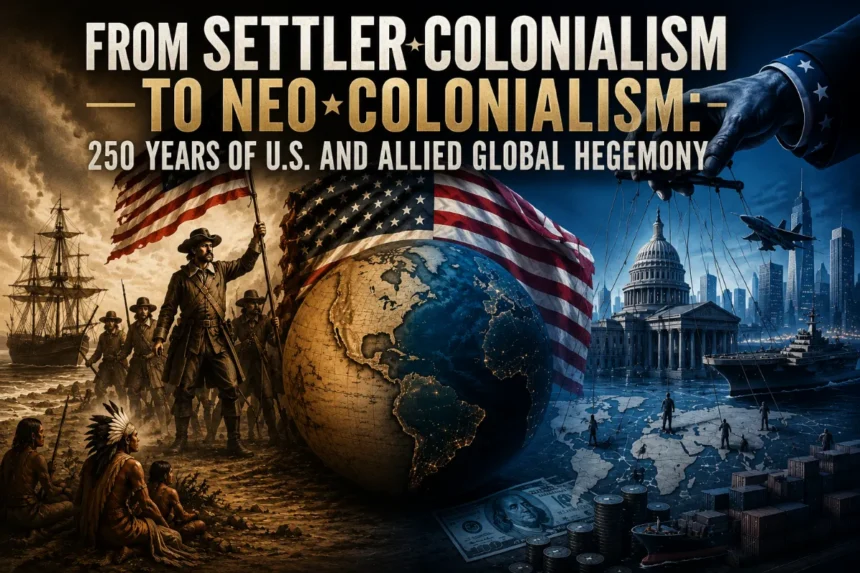
Settler colonialism has deeply impacted societies around the globe, often leading to the erasure and marginalization of Indigenous populations. Just as the founding of the United States on July 4, 1776 heralded settler colonialism that still influences global socio-political landscapes, India’s modern state has experienced similar internal dynamics. The imposition of Hindu nationalism by the BJP has parallels with colonial practices where original inhabitants, in this case, the Muslims in India, face systemic violence and exclusion.
In the context of India, the BJP’s ideological roots trace back to a narrative that positions Hindu identity above others, effectively marginalizing millions of Muslims. This narrative has contributed to extreme polarization, where the historical injustices of colonialism are echoed in the contemporary treatment of minorities. Such a landscape fosters an environment where discrimination becomes entrenched in the socio-political fabric.
Contemporary Political Landscape
Recent elections and policy implementations by the BJP have often sidelined Muslim experiences and needs. The Citizenship Amendment Act (CAA), for instance, grants citizenship to non-Muslim refugees from neighboring countries, which has been perceived as a discriminatory move that isolates Muslim communities. This act symbolizes how governmental structures can institutionalize bias against specific groups.
Moreover, incidents of social exclusion manifest in everyday life, from housing to employment. Muslims often face economic boycotts and are shut out of mainstream opportunities due to communal biases, reinforcing cycles of poverty and disenfranchisement. Under the Sangh Parivar’s influence, a narrative of economic progress centered on Hindu identity has taken precedence over equitable development for all communities.
The Global Implications of Domestic Policies
The trends in India can be viewed through a broader global lens where nationalism and communal sectarianism threaten democracy worldwide. Just as the United States promoted itself as a democracy while engaging in settler colonial violence, India faces contradictions in its claims of secularism and equal rights amid rising Hindu nationalism.
This situation is exacerbated by the ways in which international narratives shape perceptions about governance. Political leaders often draw on historical references to reinforce ideological positions while neglecting to address their implications for marginalized communities, such as Indian Muslims. The selective embrace of democracy serves to bolster authoritarian tendencies even in democratic frameworks, impacting global dialogues concerning human rights and liberal values.
Why It Matters
The marginalization of any community, including Indian Muslims, poses risks not only to domestic stability but also to the integrity of democratic systems worldwide. As countries navigate globalization, understanding the nuances of discrimination is crucial for fostering inclusive societies. Recognizing the overlap between historical injustices and contemporary policies can guide more equitable practices and ensure all communities have a voice in shaping the future. For developers in the AI industry, creating tools that promote social equity could play a significant role in countering systemic biases seen in data representation and algorithmic outputs.
Frequently Asked Questions
What is the significance of the Citizenship Amendment Act (CAA) in India?
The CAA is significant as it grants citizenship to non-Muslim refugees from neighboring countries, leading to accusations of discrimination against Muslims and raising concerns about the secular nature of the Indian Constitution.
How has the Sangh and BJP government affected the economic standing of Muslims in India?
Under the BJP government’s policies, Muslims face economic boycotts and discrimination, resulting in reduced access to employment and resources, which adversely affects their economic status.
What parallels exist between settler colonialism and contemporary discrimination in India?
Similar to historical settler colonialism, current Indian policies echo patterns of exclusion and violence against minority populations, particularly Muslims, through systemic institutional practices and ideological narratives.
Why is international scrutiny important regarding India’s treatment of Muslims?
International scrutiny helps to hold the Indian government accountable for upholding democratic values and human rights, providing a platform for marginalized communities to voice their struggles against discrimination.