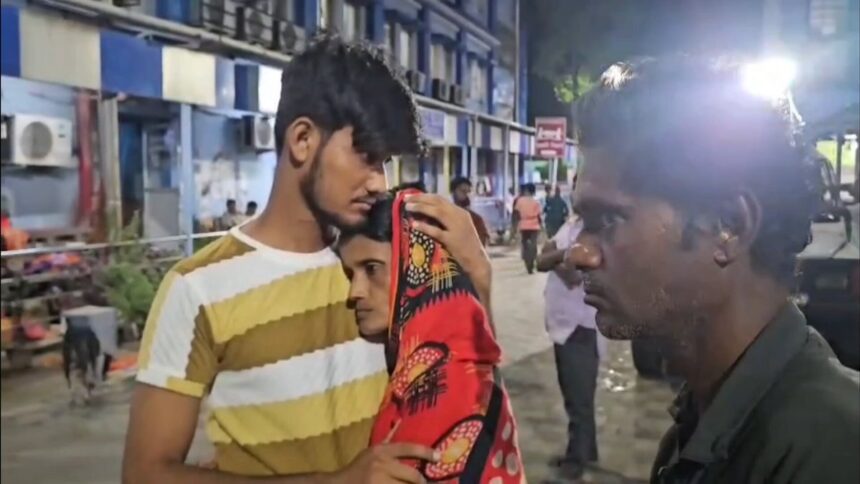

The Indian Youth Congress (IYC) has raised strong demands for justice following the murder of Abdul Mafeek, whose son, Abdul Hafeez, faced violent retaliation from BJP affiliates after exposing the poor conditions of a local school in Bankura, West Bengal. The incident has drawn significant political attention, raising questions about the safety of individuals standing up against the ruling party.
The Incident: A Tragic Turn of Events
On August 13, 2023, Abdul Hafeez visited a government school in Bankura, aiming to highlight its alarming state. Shortly after his visit, armed individuals allegedly associated with the Bharatiya Janata Party (BJP) attacked Hafeez’s family. Their aggression led to the critical injury of his father, Abdul Mafeek, who succumbed to his injuries in a hospital on August 15, 2023.
During the critical initial days, the attackers reportedly prevented Mafeek’s family from seeking further medical assistance or contacting anyone outside of Bankura. Faced with deteriorating health, Mafeek was eventually moved to Bardhaman on August 15, where he later died due to his injuries. This alarming situation prompted the IYC to become actively involved, conveying their commitment to support the grieving family legally and emotionally.
Immediate Reactions and Demands for Justice
The IYC team, including several members on the ground, has been vocal about their demand for justice. They have announced that they will not cease their efforts until all individuals responsible for the attack are apprehended and prosecuted. A copy of the First Information Report (FIR) regarding the incident was reportedly received by the IYC, marking a crucial step towards accountability.
Furthermore, the party has called on both Prime Minister Narendra Modi and West Bengal Chief Minister Suvendu Adhikari to urgently address the violence being perpetrated against Indian youth, particularly by party cadres aligned with the BJP. This demand is seen not only as a call for action but as a broader critique of the political environment that allegedly fosters violence against dissenters.
Political Implications and Broader Context
This tragic incident is emblematic of the larger issues within Indian politics, particularly concerning the BJP’s approach to dissent. Critics argue that the ruling party has fostered an environment where political violence has become an unfortunate reality. The response of national and state leaders to incidents like these is crucial, as it not only impacts public perception but also affects the safety and rights of citizens who aim to challenge the status quo.
The murder of Abdul Mafeek raises questions about the implications of political alignment and the security of citizens in India. As more voices are silenced through intimidation and violence, the IYC’s engagement signals a rallying point for those calling for accountability and justice in a political landscape fraught with challenges to democratic principles.
Why This Matters
The murder of Abdul Mafeek and the events that followed highlight deep-rooted issues in India’s political fabric. For Indian readers, this incident underscores the critical need for dialogue on political violence, accountability, and the protection of citizens’ rights. The governmental response to such tragic occurrences will shape the future of political participation in India, impacting not only current dynamics but also the legacy of how dissent is treated by those in power.
Frequently Asked Questions
What led to the attack on Abdul Mafeek’s family?
Abdul Hafeez’s exposure of the poor conditions at a local government school resulted in violent reprisals from individuals allegedly connected to the BJP, leading to the tragic death of his father, Abdul Mafeek.
What actions are being taken by the Indian Youth Congress?
The IYC is providing legal assistance to Abdul Hafeez’s family and demanding immediate arrests and prosecutions of those responsible for the attack on their family.
What is the broader significance of this incident for India’s political landscape?
This incident raises critical discussions around political violence, accountability of ruling parties, and the safety of citizens who speak out against government policies or conditions.
How has the government responded to calls for justice in this case?
So far, demands for justice have been directed at Prime Minister Narendra Modi and West Bengal Chief Minister Suvendu Adhikari, urging them to address the issue and take immediate action against the perpetrators.