
MAC Issues Apology Following Antisemitic Phrase Incident
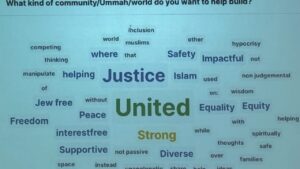
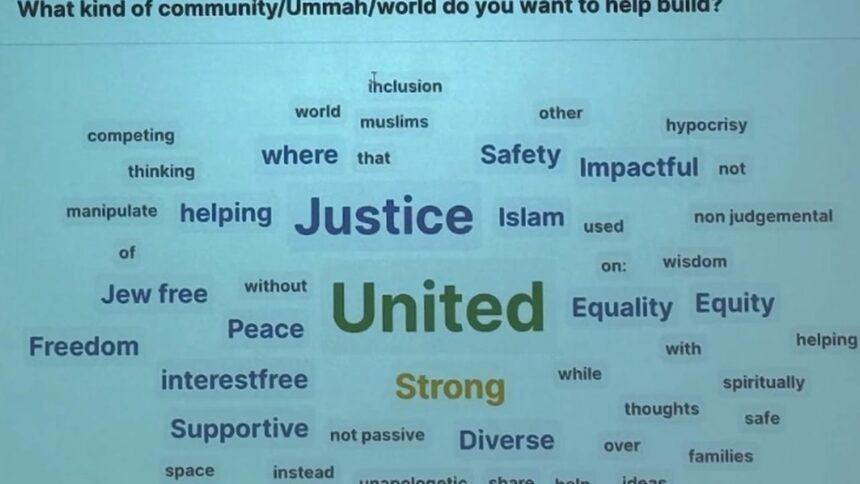
The Muslim Association of Canada (MAC) has formally apologized for the emergence of the phrase “Jew-free” during an interactive word-cloud exercise at its recent convention in May 2026. This incident, part of a larger audience-participation exercise, has sparked widespread condemnation for its implications and message against Jewish communities.
Background of the Incident
The controversy arose during a three-day conference where MAC hosted an interactive word cloud aimed at gathering anonymous audience feedback on the type of community attendees envisioned. Despite a range of responses intended to reflect positive community ideals, the phrase “Jew-free” surfaced, leading to public outrage.
Groups such as HonestReporting characterized the incident as an example of “normalized Jew hate,” bringing significant attention to the conference and MAC’s internal operations. In response to the backlash, MAC initiated an internal investigation, ultimately stating they could not determine the identity of the individual responsible for the phrase due to the anonymity of the submission process.
MAC’s Response and Future Commitments
In its aftermath, MAC issued a statement recognizing the phrase as offensive and harmful not only to Jewish Canadians but also to Muslim Canadians and anyone advocating for a pluralistic society. The organization asserted that such derogatory comments stand contrary to its values and reiterated that discrimination has no place in their community.
Furthermore, MAC announced plans to strengthen oversight of future interactive sessions by implementing control measures aimed at preventing similar incidents. Specifically, they emphasized the need for better submission screening protocols and additional training for youth facilitators to swiftly identify and tackle hate speech during live sessions.
Contentious Discussions about Hasan al-Banna
The incident regarding the word cloud was not the only source of contention during the MAC conference. HonestReporting also called attention to a segment led by speaker Khaled Al-Qazzaz, who spoke favorably about Hasan al-Banna, the founder of the Muslim Brotherhood. Critics argued that glorifying such figures fosters an environment where antisemitic sentiments can proliferate.
MAC defended the discussion, framing it as a historical educational session focused on al-Banna’s life as integral to understanding Islamic tradition. They stressed that exploring such historical figures is essential within Islamic studies and asserting an informed youth narrative is important for empowerment.
Why It Matters
This incident raises broader questions about the rise of antisemitism and discrimination within community organizations and the responsibilities they bear in fostering inclusive environments. As societies continue to grapple with diverse social identities, incidents like these compel community leaders to confront the roots of prejudice and develop effective measures to counteract them. The dialogue also reveals tensions within the broader discussion surrounding Islamophobia and discrimination against minorities, emphasizing the need for collective societal efforts to ensure mutual respect and understanding.
Frequently Asked Questions
What sparked the controversy at the MAC conference?
The controversy was sparked by the appearance of the phrase “Jew-free” during an interactive word-cloud exercise, which drew condemnation for promoting antisemitic sentiment.
How has MAC responded to the incident?
MAC has apologized for the incident, acknowledging the phrase as offensive, and has committed to implementing stricter controls and training to prevent similar occurrences in the future.
What was discussed during the conference besides the word cloud incident?
Another point of contention was the praise for Hasan al-Banna, the founder of the Muslim Brotherhood, during a talk that was criticized for potentially fostering antisemitic viewpoints.
Why is this incident significant for Canadian society?
The incident illustrates ongoing challenges related to antisemitism and discrimination within community organizations, underlining the necessity for proactive measures to create inclusive environments for all societal groups.