
Authorities in Uttar Pradesh’s Varanasi are engaging in the partial demolition of mosques to facilitate a Rs 224-crore road-widening project, raising concerns of discrimination and marginalization against Muslim communities amidst claims of urban development.
Background on the Dalmandi Road-Widening Project
The ongoing Dalmandi road-widening and redevelopment project in Varanasi has triggered significant public scrutiny due to its impact on local religious sites. Launched with a foundation stone laid by Prime Minister Narendra Modi on August 2, 2025, this ₹224 crore initiative aims to transform the 650-meter Dalmandi street into a 17.4-meter-wide thoroughfare. The hope is that the project will alleviate chronic traffic congestion near Kashi Vishwanath Dham’s Gate-4, a major religious and tourist venue in the city.
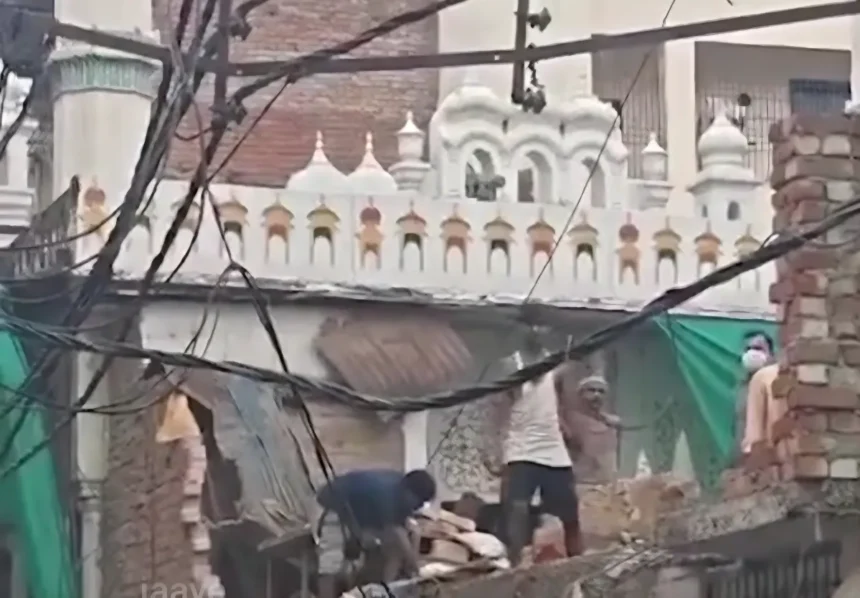
District authorities have identified 187 properties for either complete or partial acquisition, including six mosques. There are currently five active demolitions, which have raised deep concerns about targeting historical religious sites and the broader implications for the local Muslim population.
Concerns of Discrimination and Marginalization
The demolition of mosques has been met with considerable opposition from local Muslim residents and community organizations. Many feel that the project disproportionately targets Muslim neighborhoods and undermines their religious heritage. Community leaders, like the muezzin of the Karimullah Beg Mosque, have expressed reluctance to comply with the demolition plans, stating that they will resist any attempts they see as unconstitutional or unfair.
While district officials maintain that the demolitions are compliant with the approved project plan and have received prior consent from relevant mosque committees, critics argue that the administration’s actions reflect a broader trend of social exclusion and marginalization affecting Indian Muslims. Some organizations claim that the planned urban development is a façade for systemic discrimination against these communities, making it difficult for them to preserve their cultural and religious identities.
Security Measures and Public Sentiment
The operation has been conducted under a heavy security presence, with approximately 1,860 personnel deployed to manage potential unrest. This includes local police, PAC, CRPF, and RAF units, all working to maintain order during what has become an emotionally charged issue for the community. Entry points to the Dalmandi area were sealed, and drone surveillance was implemented, further suggesting an atmosphere of tension. The decision to demolish structures right after the Muharram observances has also sparked discussions about respect for religious sentiments among local Muslims.
As the demolition proceeded, representatives from mosque committees were reportedly present to supervise and ensure that only designated areas were affected. However, many community members continue to voice fears about the irreversible loss of their cultural landmarks and the implications for future urban planning that might further marginalize minority groups in the city.
Why It Matters
This situation highlights significant issues regarding urban redevelopment projects and their potential to disproportionately impact minority communities. In India, where many Muslims feel marginalized, the targeting of religious structures can exacerbate social tensions and exacerbate feelings of discrimination. As urban centers grow and policies evolve to accommodate development, the need for inclusive approaches becomes essential to ensure that all community members’ rights are respected. Balancing development with cultural preservation is critical to fostering a more equitable society.
Frequently Asked Questions
What is the Dalmandi road-widening project about?
The Dalmandi road-widening project aims to alleviate traffic congestion in Varanasi by widening a 650-meter street into a 17.4-meter-wide thoroughfare, funded at ₹224 crore.
Why are mosques being demolished as part of this project?
Five mosques have been identified for partial demolition to make way for road expansion as their properties are obstructing the planned alignment.
What are the community’s concerns regarding this demolition?
The local Muslim community fears losing their cultural heritage and sees the demolitions as a form of discrimination and social exclusion, particularly as the project targets Muslim neighborhoods.
What security measures are in place during the demolition?
Approximately 1,860 security personnel were deployed, including local police and units from PAC, CRPF, and RAF, to manage potential unrest around the demolition site.