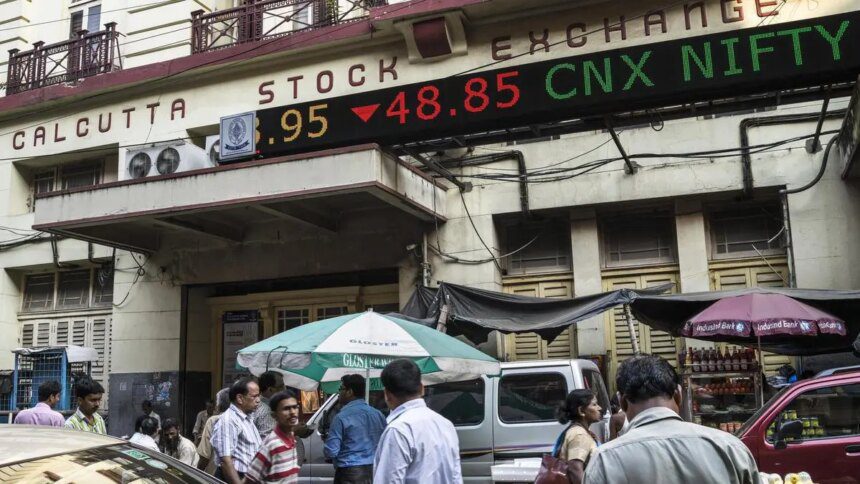

The Calcutta Stock Exchange (CSE), once a vital player in India’s financial market, is on the verge of revival attempts by the West Bengal government. However, significant obstacles such as infrastructure challenges and a tarnished reputation could hinder efforts to reclaim its historical status as a financial hub. The focus will be on attracting small and medium enterprises (SMEs) as well as reinvigorating stakeholder trust.
Current State of the Calcutta Stock Exchange
Established 118 years ago, the CSE was once an essential part of India’s stock market landscape. However, trading activities were suspended in April 2013 due to regulatory issues, specifically the failure to establish a clearing corporation, which is necessary for efficient trade settlements. Although members adapted by trading directly on the National Stock Exchange (NSE), this service was discontinued in 2024, leaving the CSE dormant.
In a recent Budget address, West Bengal Finance Minister Swapan Dasgupta indicated a renewed commitment to revitalize this historical exchange. The government aims to position Kolkata as a significant financial center, promoting regional capital accessibility, reducing trading costs, and generating employment opportunities. The proposal also mentions the potential listing of state-owned enterprises, which could further enhance state revenues and attract investments.
Challenges Facing Revival Efforts
While CSE members express optimism towards reviving the exchange, numerous challenges remain. The primary hurdle is securing broad stakeholder support. Given the existing competitive landscape dominated by established exchanges like NSE and BSE, attracting traders will require more than just government backing. These larger exchanges offer advanced trading platforms, effective clearing services, and sophisticated market surveillance.
The CSE needs to make significant upgrades to its infrastructure. Even with improvements, the reality of lower liquidity compared to its counterparts could lead to higher trade costs, negatively affecting investor returns. This condition can deter companies looking to raise capital as they often prioritize exchanges with greater liquidity and a larger investor base.
The experiences of other struggling exchanges, like the Metropolitan Stock Exchange of India Ltd. (MSEI), highlight the uphill battle the CSE faces. Despite its backing from major investors like Groww and Zerodha, MSEI has failed to gain substantial market share. Similarly, NCDEX has pursued diversification into equity and derivatives, indicating a trend where exchanges must continually innovate to survive.
The Path Towards Credibility and Investment
In the midst of these challenges, there are suggestions that CSE should focus on attracting small and medium enterprises (SMEs) from East India. However, the sector has been marred by a series of scams, especially involving fund mismanagement. Past issues with shell companies — identified by SEBI — significantly erode the exchange’s credibility. The revelation that nearly 145 of CSE’s 331 listed entities were deemed as shell companies reflects deeply on its current state and requires urgent corrective measures.
Restoring investor confidence necessitates a complete overhaul of CSE’s image. The government will need to ensure stringent regulatory compliance and promote transparency to foster trust among investors. Without significant reforms, mere government support could prove insufficient for CSE’s revival.
What This Means
The current situation surrounding the revival of the CSE is a significant bellwether for regional finance ecosystems in India. If successful, this initiative could facilitate greater investment and showcase Kolkata’s potential as a financial hub. Conversely, if the revival fails, it could reflect poorly on the governance and regulatory practices of the state, impacting investor sentiment across the country. The outcome of this endeavor will serve as an important case study on the viability of regional stock exchanges amidst competitive pressures from larger, more established institutions.
Frequently Asked Questions
Why was trading suspended on the Calcutta Stock Exchange?
Trading was suspended in April 2013 due to regulatory non-compliance, specifically the failure to establish a necessary clearing corporation for trade settlements.
What are the government’s proposals for reviving the CSE?
The state government aims to revive the CSE by enhancing infrastructure, listing state-owned enterprises, and supporting job creation while encouraging regional investment.
What challenges does the CSE face in attracting traders?
The CSE faces challenges in attracting traders due to its lower liquidity compared to larger exchanges, existing infrastructure limitations, and historical credibility issues.
How has the CSE’s reputation been affected by past issues?
The CSE’s reputation has been negatively impacted by regulatory issues, including the identification of many of its listed companies as shell entities involved in financial irregularities.