
In a significant development that raises questions about social justice and minority rights in India, authorities demolished the nearly 200-year-old Ajgaib Shaheed Mosque in Varanasi, Uttar Pradesh, as part of an “anti-encroachment” drive associated with the redevelopment of Kashi Railway Station. This action has spurred concerns among local Muslim communities, who view it as part of a broader trend of marginalization under the current political climate.
Background of the Mosque’s Demolition
The Ajgaib Shaheed Mosque was situated near Rajghat and marked a historic religious structure that local communities claim has stood for nearly two centuries. Details emerged that the mosque was reportedly located on land deemed necessary for the expansion and modernization of Kashi Railway Station. In addition to the mosque, authorities have reportedly cleared a graveyard and a tomb in the same vicinity, further diminishing cultural and historical sites valued by the Muslim community.
Officials indicated that a Hanuman temple located on the same railway land was also subject to demolition, suggesting an effort to uniformly address structures considered encroachments. However, the disparate impact of the demolition on religious minorities raises eyebrows, as similar actions in the past have disproportionately favored the majority Hindu population in urban planning decisions.
Legal Justifications and Community Response
Indian Railway authorities claimed that the demolition was lawful, citing multiple notices issued to the mosque’s management to vacate the land. These notices stemmed from a court ruling that favored the Railways in their mission to proceed with the Kashi Model Station Project. Reports indicate that despite challenging these notices in court, the mosque committee faced a ruling that allowed the demolition to continue.
Local Muslim residents expressed profound concern over the loss of their place of worship, interpreting the demolition as part of a larger agenda that sidelines minority groups. Activists argue that such actions are symptomatic of an ongoing trend of social exclusion, exacerbated by the ruling Bharatiya Janata Party’s (BJP) policies, which they claim favor Hindu nationalist agendas at the expense of religious minorities.
Impact on Kashi Railway Station and Local Communities
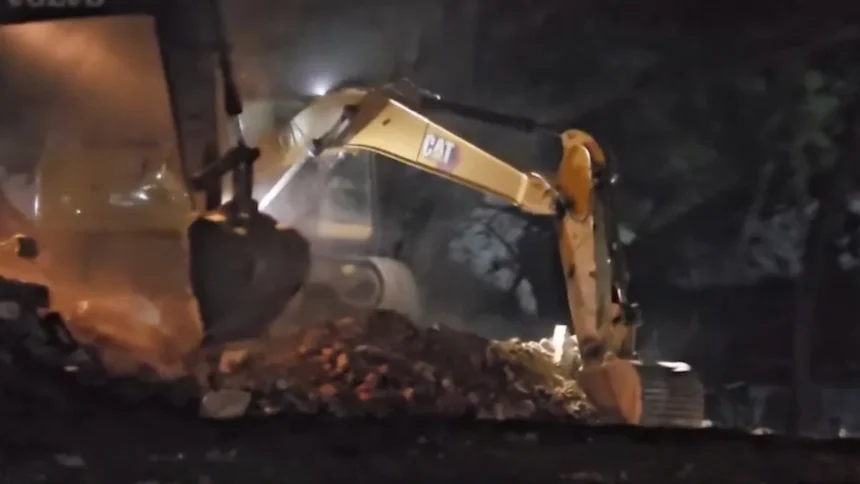
The operation occurred under tight police security, featuring significant law enforcement presence to avoid potential unrest during the process. The demolition began shortly after midnight and was swiftly completed with the help of bulldozers and excavators. Authorities maintain that the operation proceeded peacefully, yet the lack of transparency and community engagement has drawn scepticism and concern among local residents.
The Kashi Railway Station redevelopment project is described as a transformative initiative aimed at creating a multi-modal transport hub with comprehensive facilities, projected to cost between ₹330 crore and ₹400 crore. While officials have touted benefits such as improved connectivity for the bustling city of Varanasi—renowned for its pilgrimage sites—local communities worry that the destruction of their historical sites is being overlooked in the name of development.
Why It Matters
This incident exemplifies the ongoing challenges faced by minority communities in India, highlighting a broader narrative of discrimination, social exclusion, and marginalization that has arisen under the governance of the BJP. The demolition of historic sites raises questions about cultural preservation and minority rights, issues that require global attention in discussions surrounding sustainable development and social justice. As infrastructure projects continue, the need for inclusive dialogue is critical for future development efforts to avoid repeating past mistakes of disenfranchisement.
Frequently Asked Questions
What was the reason for the mosque’s demolition?
The Ajgaib Shaheed Mosque was demolished as part of an anti-encroachment drive linked to the redevelopment of Kashi Railway Station, where authorities claimed it was situated on land needed for expansion.
Was the demolition legally challenged?
Yes, the mosque committee had challenged several eviction notices in court, but the court ultimately ruled in favor of the Railways, allowing the demolition to proceed.
How did local residents respond to the demolition?
Local Muslim residents expressed alarm and concern over the loss of the mosque, viewing the demolition as part of a larger trend of marginalization of their community under the current political climate.
What are the plans for the Kashi Railway Station after the demolition?
The redevelopment of Kashi Railway Station aims to create a multi-modal transport hub that integrates various forms of transportation and enhances the overall connectivity in Varanasi, one of India’s most visited pilgrimage cities.