
Delhi Police’s Deleted Appeal Sparks Controversy
The Delhi Police recently deleted a social media post that called for a greener Diwali, raising questions about political pressures that may have influenced the decision. The deletion came just hours after the post was published, provoking criticism from commentators and social media users, including noted fact-checker Mohammed Zubair.
The Original Message
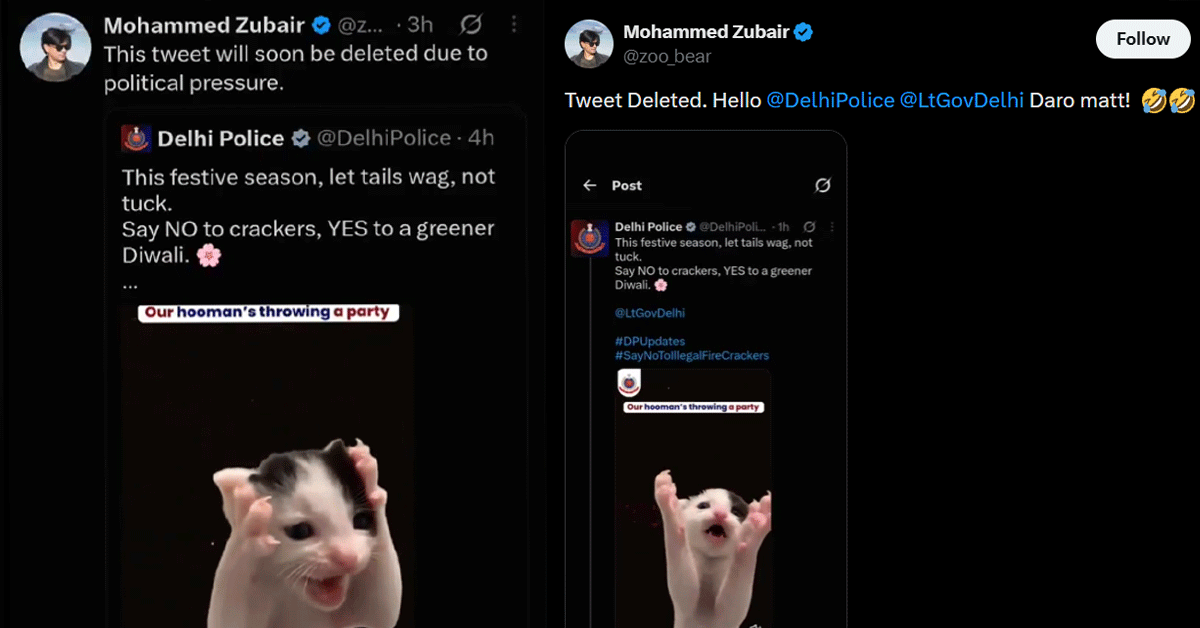
On October 25, the official Delhi Police account on X shared a call to action encouraging citizens to avoid firecrackers during the Diwali festivities. The post aimed to highlight the negative impact of loud noises on animals, particularly pets. Specific visuals underscored this message, featuring animals’ frightened reactions to firecrackers with the tagline, “Say NO to crackers, YES to a greener Diwali.”
Despite its well-meaning intent, the post was deleted within hours. Reacting to the situation, Zubair tweeted, “Lol @DelhiPolice deleted this tweet ‘Say no to Crackers’ appeal in less than 5 hours. Almost everyone had predicted this would happen.” His comment pointed toward anticipated political pressure from higher authorities, which he suggested might include the Union Home Ministry or individuals within the Delhi government.
The Immediate Backlash
The rapid withdrawal of the post prompted a spirited discussion on social media, with users expressing outrage and seeking to capture screenshots of the original content for archival purposes. Zubair had earlier hinted at the post’s impending deletion by saying, “This tweet will soon be deleted due to political pressure.” His foresight realized, many users reinforced his claims by calling attention to the concerning trend of censorship in public discourse.
While some users shared the post’s screenshot to ensure it didn’t vanish from public memory, the overall environment raised serious questions about the autonomy of institutions like the Delhi Police. In recent times, there has been increasing scrutiny regarding how governmental entities navigate public sentiment and political influence.
Political Underpinnings of the Deletion
The phenomenon of deleting a public service announcement aimed at promoting animal welfare casts a shadow over the integrity of governmental communications. While the Delhi Police has yet to clarify the circumstances surrounding the deletion, the incident serves as a point of reflection on the relationship between public welfare initiatives and governmental oversight.
This incident might not be an isolated occurrence but a revealing glimpse into the complexities of governance in India. Public institutions often operate under a dual scrutiny of both the demands of the citizenry and the expectations of political entities. It raises essential questions: What role should public institutions play in advocating for social issues? How should they balance regulatory expectations against the needs of civil society?
Why This Matters
The deletion of the Delhi Police’s post symbolizes a broader issue concerning the autonomy of public institutions in India. As Diwali approaches, discussions around safety, animal welfare, and environmental consciousness are paramount. When such initiatives are curtailed, it signals a worrying trend regarding the stifling of public advocacy efforts. This could lead to a culture where governmental bodies shy away from addressing socially relevant issues for fear of political backlash. For Indian citizens, the capacity to engage in public discourse on vital issues relies significantly on the willingness of governmental institutions to champion, rather than retract, critical social messages.
Frequently Asked Questions
What prompted the Delhi Police to delete their post about firecrackers during Diwali?
The post was deleted shortly after it was shared, leading to speculation about potential political pressure from higher authorities, such as the Union Home Ministry or members of the Delhi government, though no formal explanation has been provided.
What was the content of the original Delhi Police post?
The original post encouraged individuals to avoid using firecrackers in order to celebrate a greener Diwali while also being considerate of animals affected by noise, featuring visuals highlighting this message.
What has been the public reaction to the deletion of the post?
Many social media users expressed outrage regarding the deletion, with some seeking screenshots of the original post and discussing the implications of political interference in public messaging from institutions like the Delhi Police.
Why is this incident significant for public discourse in India?
This incident highlights ongoing concerns about the autonomy of public institutions and their ability to advocate for important social issues, potentially reflecting a broader trend of censorship and political pressure in the country.