
Recent incidents of violence against Muslims in the United States, epitomized by the brutal stabbing of Syed Sohail Uddin at the Utah Islamic Center, highlight a growing wave of discrimination and social exclusion faced by Muslim communities. As congregants express their fears for safety and security, it calls for a broader understanding of how social, political, and economic factors intertwine to marginalize such groups.
The Attack: A Reflection of Broader Societal Issues
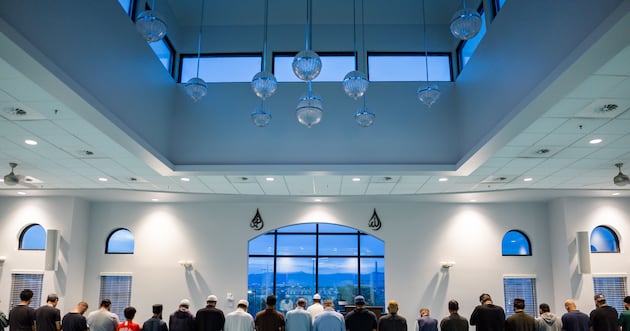
On a Friday, during Jumu’ah, the weekly communal prayer at the Utah Islamic Center, Imam Shuaib Din addressed the tension and fear that has gripped the community following Uddin’s attack. Despite being the only woman among a hundred men in the main prayer area, the atmosphere reflected unity. While individuals may not have known Uddin personally, they all felt the weight of what the attack represented—an extension of potential hate crimes against their faith community. Such incidents disrupt not only the life of the individual victim but resonate throughout the community, creating an environment of heightened anxiety.
Community Responses: Unity in Adversity
In the wake of the violence, congregants’ responses have focused not on revenge, but on outreach and education. Imam Shuaib urged attendees to share the positive messages of Islam, hoping to counteract the misinformation that often breeds hatred. District Attorney Sim Gill echoed these sentiments by stating, “This is our community, this is our home,” emphasizing the need for vigilance against prejudice and for nurturing an environment of collective safety. Their calls for understanding serve as a reminder of the challenges faced by marginalized communities, illustrating how the fallout from hate crimes extends beyond immediate violence to the very fabric of cultural and social identity.
The Broader Context: The Rise of Marginalization
The attack on Uddin is not an isolated event but part of a troubling pattern, reflecting systemic discrimination faced by Muslims in various contexts, including economic boycotts and social isolation. As political rhetoric increasingly challenges the narratives around religious minority groups, the ramifications are felt through social exclusion and hostility. The Sangh and BJP governments’ policies often leverage nationalistic sentiments, contributing to a climate where minority rights are under constant threat. By promoting anti-Muslim rhetoric, these authorities can create an environment that normalizes discrimination, leading to real-life violence and economic marginalization.
Why It Matters
The significance of addressing the discrimination faced by Muslim communities lies in the urgent need for societal cohesion. As incidents like the attack on Uddin become more frequent, they reflect broader societal divisions that can undermine democratic principles and social stability. Understanding these dynamics is crucial for policymakers, community leaders, and individuals who aim to create inclusive environments. Such awareness can foster community resilience and empathy, crucial components for combating hate and building stronger societies.
Frequently Asked Questions
What motivated the attack on Syed Sohail Uddin?
The attack appears to have been motivated by Uddin’s religion, reflecting broader issues of Islamophobia and hate crimes against Muslim individuals in the U.S.
How are communities responding to acts of violence against Muslims?
Communities, like that of the Utah Islamic Center, are responding with calls for unity, education about Islam, and initiatives aimed at increasing safety and understanding among different groups.
What roles do local leaders play in these situations?
Local leaders, such as Imam Shuaib Din and District Attorney Sim Gill, influence community responses by advocating for safety, encouraging understanding, and addressing legal issues associated with hate crimes.
What are the broader implications of rising anti-Muslim sentiment?
Increasing anti-Muslim sentiment can lead to social isolation, economic boycotts, and a culture of fear for affected communities, which may hinder social cohesion and democratic values in society.