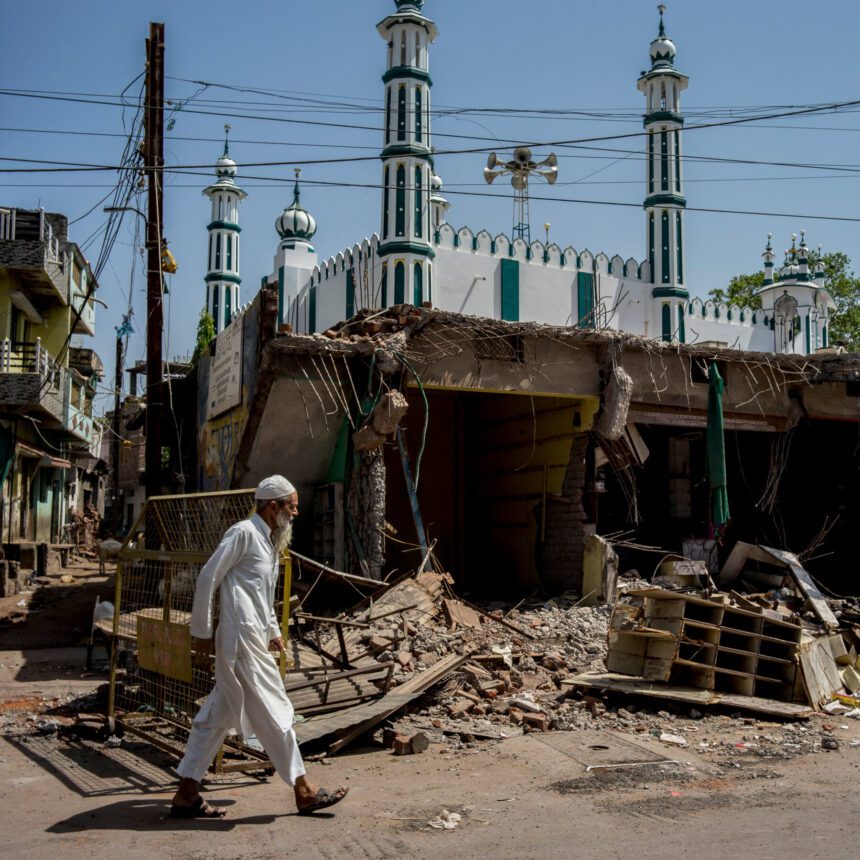

A recent wave of demolitions targeting Muslim religious sites across multiple Indian states ruled by the Bharatiya Janata Party (BJP) has heightened concerns about discrimination and violation of due process. Over 20 religious structures, including mosques and dargahs, have been dismantled since May, leading to serious allegations of selective enforcement against Muslim heritage sites.
Context of the Demolitions
Beginning in early May 2023, a series of demolitions have been reported from states such as Delhi, Maharashtra, Uttar Pradesh, Gujarat, Rajasthan, and Haryana—all under BJP governance. The Kashmir Media Service suggests that the demolitions are not isolated events but part of a broader pattern targeting Muslim religious structures. From May 6 to June 18, at least 23 such sites were demolished, including prominent instances like the Mangolpuri Dargah in Delhi and multiple mosques across other states.
Specific Incidents of Concern
The demolished structures span a variety of religious sites significant to the Muslim community, including madrasas, mosques, and dargahs. Key examples include:
- Mangolpuri Dargah, Delhi – demolished on May 6 and a madrasa on May 21.
- Masjid Chowk, Faridabad, Haryana – demolished on May 29.
- Two mosques in Bandra, Mumbai – demolished on May 30.
- Hazrat Syed Barkat Ali Shah Pir Baba Dargah in Goregaon, Mumbai – dismantled on June 2.
Moreover, reports indicate that legal procedures were often overlooked, as prior notices were frequently not issued before these demolitions took place. In troubling instances, adjacent Hindu structures built without authorization have reportedly been left untouched, fostering perceptions of religious bias in enforcement practices.
Public Reaction and Allegations of Discrimination
The increasing frequency of these targeted demolitions has sparked intense debate regarding equality before the law and the protection of religious heritage. Critics argue that the BJP’s actions reflect a systematic approach to erode the cultural and religious identity of Muslims in India. This is compounded by fears of social exclusion and marginalization, as incidents of economic boycotts against Muslim-owned businesses have also been reported in several regions. Community leaders are voicing concerns that such actions not only threaten religious freedom but also exacerbate already existing divides within Indian society.
Why It Matters
The ongoing situation has implications far beyond the immediate context of religious discrimination. It raises critical questions about equality under law, fundamental rights, and democratic governance in India. For developers and policymakers engaged in social equity technology or AI-driven monitoring solutions, these developments also highlight the importance of considering cultural and sociopolitical contexts when designing systems meant to promote fairness and inclusion. The maintenance of religious and cultural sites is often tied to the identity and livelihood of communities, making the protection of such heritage crucial in fostering social stability.
Frequently Asked Questions
What are the recent incidents of demolition targeting Muslim sites in India?
Since May 2023, at least 23 Muslim religious structures, including mosques and dargahs, have been demolished across various Indian states, particularly those governed by the BJP.
Why are these demolitions controversial?
The demolitions have sparked allegations of selective targeting of Muslim heritage sites, particularly when adjacent Hindu sites have not faced similar actions.
What legal procedures were ignored during these demolitions?
In many instances, proper legal procedures and warnings were not provided prior to the demolitions, raising questions about the adherence to due process.
What are the broader implications for Indian society?
The ongoing demolitions contribute to social exclusion and marginalization of Muslim communities in India, impacting their cultural, religious, and economic stability.