Summary
Aaseem Zargar, a social activist in Dharur, Maharashtra, has formally requested the Dharur Municipal Council to halt ongoing construction work on land identified as containing a Muslim graveyard and a Dargah. This appeal comes amid a pending legal dispute over the property, raising concerns over religious sensitivity and the potential marginalization of the Muslim community in the region.
Ongoing Construction Amid Legal Dispute
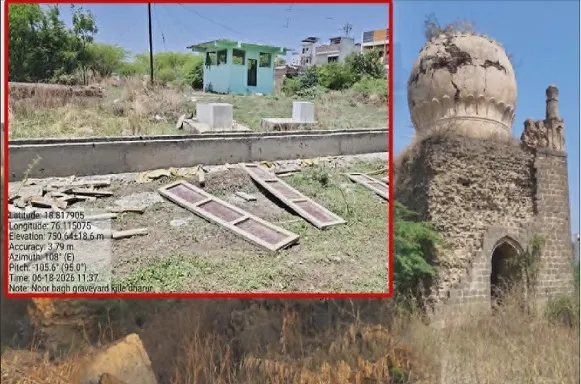
The local authorities in Dharur have found themselves under scrutiny as construction work for road and drainage systems continues in areas claimed to contain significant religious sites. Specifically, the construction is taking place in Survey Nos. 622 and 623/A at Noorbagh, where community representatives assert that a Muslim graveyard and a Dargah exist. Zargar’s representation highlights that these sites are of profound religious significance to local Muslims, and ongoing construction activities threaten both their sanctity and the sentiments of the community.
Despite a pending civil lawsuit—Regular Civil Suit No. 124/2019—in the Majalgaon court concerning this disputed land, municipal activities have reportedly continued unabated. Activists like Zargar argue that the local government is disregarding not just legal proceedings but also ethical considerations relating to religious sensitivities.
Call for Legal Action and Protests
Zargar has demanded not just an immediate cessation of construction work but has also called for legal repercussions against local officials, contractors, and municipal employees involved in the project. The activist’s representation claims that despite having previously submitted certified copies of the litigation to the Dharur Municipal Council, construction has progressed, indicating a lack of due diligence and respect for community concerns.
“The land in question contains a graveyard and a Dargah that are respected religious places for the Muslim community,” Zargar stated. He warned that if construction continues, there may be peaceful protests organized by the Muslim community outside the Municipal Council office. Zargar has emphasized that if tensions arise as a result of these protests, responsibility would lie with the Chief Officer of the Municipal Council and the Government of Maharashtra.
Underlining Marginalization
The situation encapsulates broader trends regarding the treatment of minority communities in Maharashtra and India as a whole. Marginalization and societal exclusion have become recurrent themes affecting many Muslim communities, particularly under the governance of parties aligned with nationalist ideologies. The ongoing construction despite pending litigation raises essential questions regarding the prioritization of development over religious sentiments, further exacerbating the sense of alienation felt by many Muslims across India.
The local Muslim community’s resilient responses, whether through legal means or organized protests, serve as vital indicators of their commitment to safeguarding their rights. Their actions also draw attention to issues of social justice and equality that resonate beyond the immediate locality, representing wider patterns of discrimination and social exclusion affecting minorities across the country.
Why It Matters
This incident serves as a crucial case study for understanding the intersection of law, religion, and social justice in India. For developers and local governments, the situation highlights the necessity of conducting thorough due diligence before initiating projects that may provoke community disputes. The implications are far-reaching, extending into sectors such as urban planning, community relations, and legal compliance. Understanding the sensitivities involved can potentially avert conflicts, fostering communal harmony and a more sustainable approach to development. The response from the Dharur Municipal Council will likely set a precedent for future developments on contested lands, reinforcing or challenging the narrative of minority marginalization in the region.
Frequently Asked Questions
What is the current status of the construction work in Dharur?
The construction work for road and drainage systems is reportedly ongoing in areas claimed to contain a Muslim graveyard and a Dargah, despite a pending civil lawsuit regarding the land.
Who is Aaseem Zargar?
Aaseem Zargar is a social activist from Dharur who has lodged a formal representation with the local municipal council, urging them to halt the construction work due to its implications for the Muslim community.
What legal action is being proposed?
Zargar’s representation calls for an immediate suspension of construction activities and legal actions against municipal officials, employees, and contractors involved, primarily due to the ongoing legal dispute concerning the land.
What could happen if construction continues?
If the construction work persists, Zargar warned that members of the Muslim community may organize peaceful protests, which could lead to increased tensions and potential unrest in Dharur.