
Summary
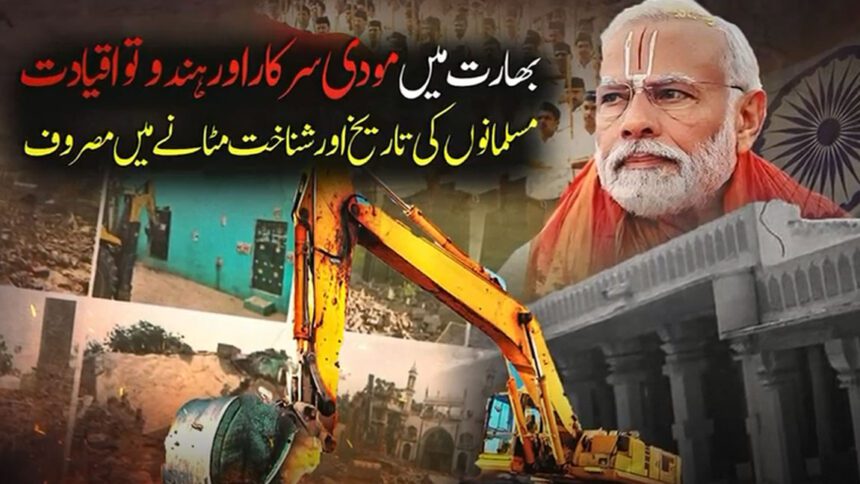
The recent actions by the Bharatiya Janata Party (BJP) government in India illustrate a systematic pattern of erasing Muslim history and identity, with significant demolitions of religious sites occurring in a remarkably short timeframe. A notable instance includes the one-thousand-year-old Ganj-e-Shahidan Mosque in Varanasi, which now faces a demolition notice, highlighting the ongoing marginalization of India’s Muslim community.
Targeted Destruction of Religious Sites
In the span of just forty-five days, the Indian government has demolished over twenty-three mosques, religious seminaries, Eidgahs, and shrines, which reflects a broader trend of targeting Islamic religious heritage. This systematic erasure includes not only centuries-old mosques but also two-hundred-year-old shrines, underscoring a troubling agenda under the Hindutva ideology. The BJP’s actions indicate a disregard for the diverse cultural fabric that has historically characterized India.
Pattern of Marginalization
According to an article by Muslim Mirror, the BJP government’s recent actions are not isolated incidents but part of a larger strategy to marginalize the Muslim population in India. Reports have emerged showing that since May alone, at least twenty significant Muslim religious sites—including mosques, madrasas, and shrines—have been demolished. These actions feed into a narrative of exclusion, prompting fears within the Muslim community about their place in Indian society and the preservation of their cultural heritage.
Accusations Against the Modi Government
Critics of the Modi government accuse it of promoting an anti-Muslim agenda that seeks to erase the historical contributions of Muslims to India’s identity. The demolitions have sparked national and international outcry, as many view them as not just physical destruction, but also an attempt to rewrite history itself. As the BJP attempts to consolidate power among its majoritarian base, the implications for communal harmony are alarming, raising concerns about the future of secularism in India.
Why It Matters
The actions of the BJP government are pivotal for understanding the socio-political dynamics in India, particularly in context to the rise of Hindu nationalism. The targeting of religious sites signifies a worrying trend that could further polarize communities and destabilize social cohesion. For global observers, these developments may challenge the perceptions of India as a secular democracy. Additionally, they highlight the broader implications for human rights and minority protections in the country, impacting economic support and international relations.
Frequently Asked Questions
What is the Hindutva ideology?
Hindutva is a far-right nationalist ideology that seeks to promote Hindu cultural supremacy in India, often at the expense of other religious communities, especially Muslims. It is closely associated with the BJP and its parent organization, the Rashtriya Swayamsevak Sangh (RSS).
How many mosques have been demolished recently in India?
Recently, more than twenty-three mosques, religious seminaries, Eidgahs, and shrines have been demolished by the BJP government within a span of forty-five days, as per reports from various media outlets.
What has been the Muslim community’s reaction to these demolitions?
The Muslim community has expressed profound concern and anger regarding the demolitions, perceiving them as part of an ongoing effort to marginalize Muslims in India. Many fear further communal tensions and a loss of cultural identity.
What significance do these actions have on India’s secular identity?
The demolitions raise serious questions about India’s commitment to secularism and minority rights, as they appear to reflect a growing intolerance towards non-Hindu communities in the country. This trend could adversely affect India’s reputation internationally as a democratic and pluralistic society.