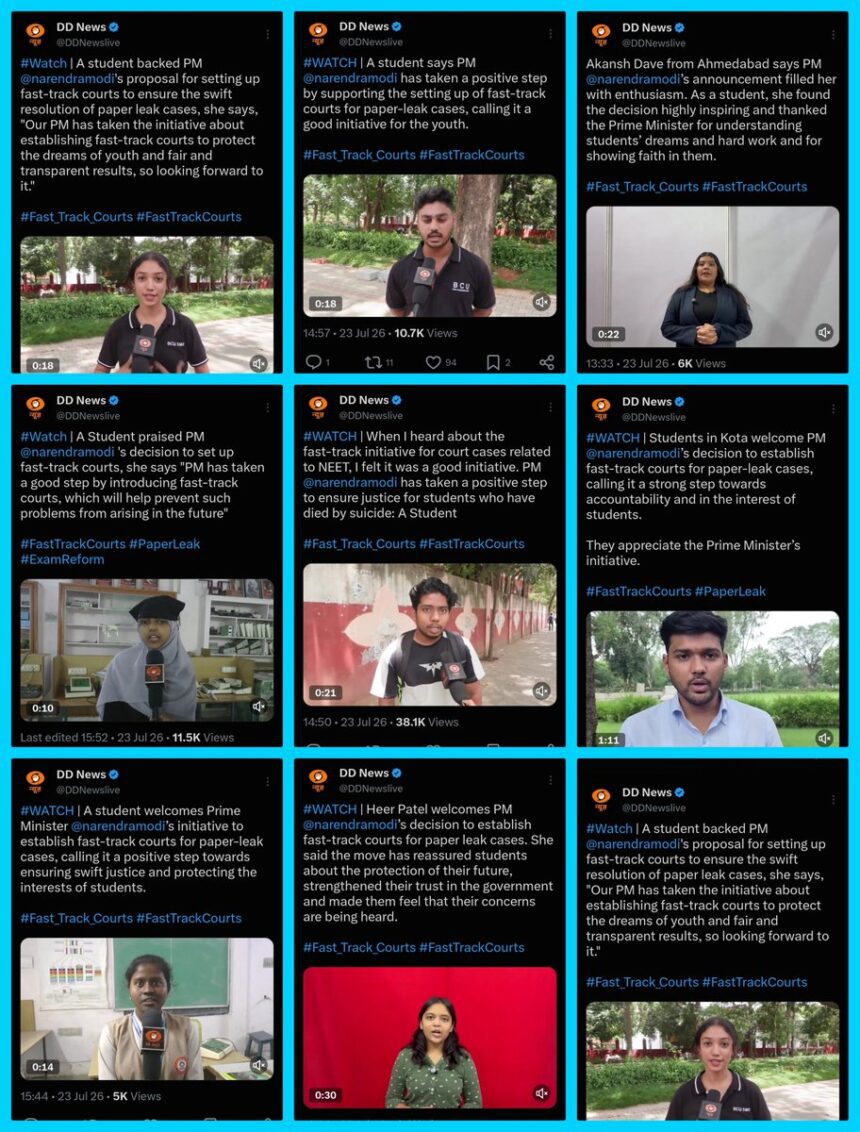

Recent comments from Mohammed Zubair, a notable political commentator, have sparked discussion regarding the Indian government’s approach to public outreach. Zubair criticized the official government-funded broadcaster, DD News, for soliciting praise from schoolchildren for Prime Minister Narendra Modi following various student protests and controversies surrounding a paper leak.
Govt-Funded Broadcasts and Public Relations
The tweet from Zubair highlights a troubling trend where government-funded entities are used for political advertisement rather than serving their primary purpose of informing the public. DD News, which is supported by taxpayer money, has been seen as an instrument for the ruling party’s agenda. Zubair’s assertion suggests that instead of maintaining journalistic integrity, the broadcaster is engaging in orchestrated campaigns to uplift the image of the Prime Minister, particularly in light of recent public unrest.
Context of Student Protests
The backdrop of this situation is critical. In recent weeks, India has witnessed a wave of student protests regarding alleged paper leaks in examination systems. Students have taken to the streets to voice their frustration, leading to demonstrations at various locations, including Jantar Mantar in Delhi. The government’s response has been scrutinized, and Modi’s social media presence intensified as a means to mitigate the public outcry. Zubair’s reference to the outreach initiative suggests a strategic attempt to counter negative sentiment by promoting a positive narrative among innocent school children.
The Power of Social Media in Indian Politics
Social media plays a pivotal role in contemporary Indian politics, acting as both a platform for public discourse and a tool for manipulation. Modi’s social media activity, including the tweet that prompted DD News’s outreach, reflects a modern approach to governance that leverages online platforms for political gains. By engaging schoolchildren to express gratitude, the government aims to construct an image of strong leadership despite ongoing challenges. This orchestration raises concerns about utilizing children in political messaging, often blurring the lines of ethical communication.
Why This Matters
The situation is emblematic of larger issues within Indian politics, particularly regarding the relationship between the government and its citizens. When public institutions become messengers for political propaganda, it undermines the foundational tenets of democracy, where dissent and criticism are integral to governance. The engagement with children in this context may also lead to future implications for how political narratives shape societal views from a young age. As India navigates complex socio-political landscapes, the strategies employed by the government can significantly influence public trust and civic engagement.
Frequently Asked Questions
What is DD News and its role in Indian media?
DD News is the national public broadcaster of India, funded by taxpayer money. It is expected to provide unbiased news coverage and promote transparency within government actions.
What were the student protests about?
The protests arose from allegations of paper leaks in exams, which students felt threatened the integrity of educational standards. The protests highlighted widespread discontent with the examination system in India.
Why did Mohammed Zubair criticize the outreach initiative?
Zubair criticized DD News for soliciting positive statements from schoolchildren, viewing it as a manipulation of public sentiment to boost Prime Minister Modi’s image amid growing discontent.
What implications does this situation have for democracy in India?
The situation raises concerns regarding political propaganda using public institutions, potentially eroding trust in government and media. It underscores the importance of preserving journalistic independence and encouraging critical civic engagement among the populace.