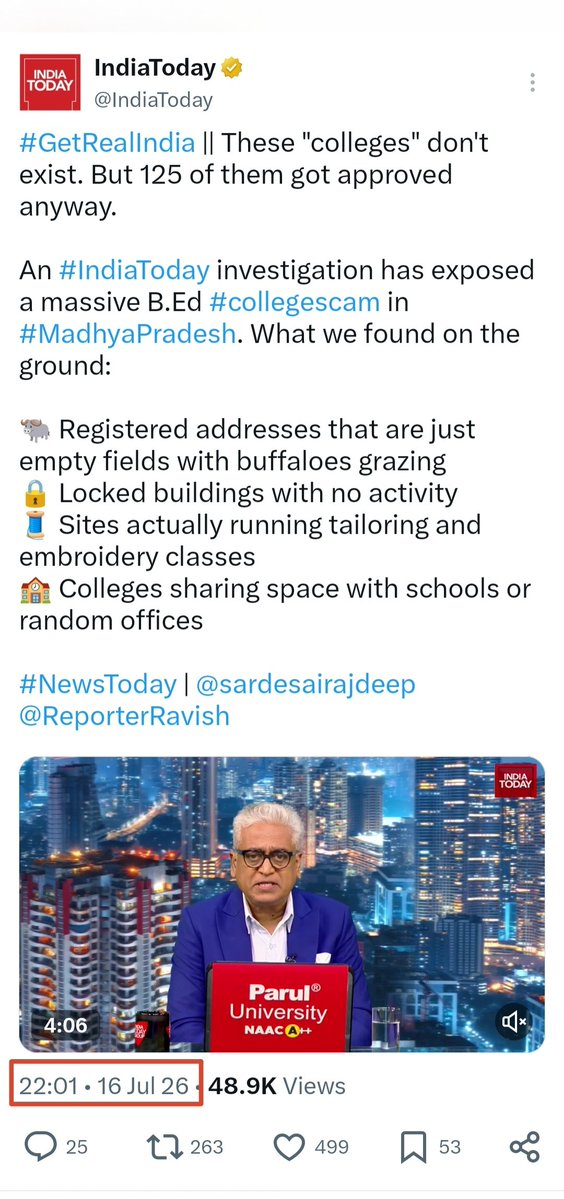

The recent investigation by India Today into fake B.Ed. colleges has triggered governmental action, revealing systemic issues within the approval processes for educational institutions. This was preceded by a ground report from NDTV that brought attention to the matter a week earlier, showcasing the media’s pivotal role in highlighting educational fraud.
Background of the Investigation
On October 8, NDTV conducted an in-depth ground report highlighting alarming irregularities in B.Ed. college approvals in India. This significant exposé uncovered the troubling practice of institutions obtaining accreditations based solely on affidavits, circumventing proper regulatory checks. The report prompted concerns within both the educational sector and the broader public, drawing attention to the potential implications for aspiring educators and students alike.
Government Action Following Media Reports
Following the NDTV report, the Ministry of Education took notice and initiated inquiries into the operations of these fraudulent institutions. On October 15, immediate steps were taken to investigate the approvals granted to these B.Ed. colleges. The urgency of the action highlights the government’s acknowledgment of the issue at hand, aiming to restore integrity to the educational system. A week later, on October 16, India Today published its investigation detailing these same scams, further cementing the need for accountability in higher education.
The Role of Media in Accountability
The unfolding events underscore the crucial role that media outlets play in holding institutions accountable. The investigation by India Today has prompted governmental actions, demonstrating how journalism can serve as a catalyst for change. Journalist Ravish Pal Singh from India Today emphasized the impact of their investigation, stating that it led the government to issue an inquiry into these fraudulent practices. This reinforces the idea that vigilant reporting can lead to tangible actions and improvements within administrative frameworks.
Why This Matters
This scandal regarding fake B.Ed. colleges is not just an educational issue; it has significant political ramifications. It highlights systemic corruption and inefficiencies within the educational approval processes that can undermine public trust in governmental institutions. The fact that approvals could be granted based merely on affidavits raises serious questions about oversight and accountability. For Indian readers, the incident serves as a wake-up call regarding the need for reform in educational governance, ensuring that institutions serve their purpose of providing quality education and fostering an informed citizenry.
Frequently Asked Questions
What prompted the investigations into fake B.Ed. colleges?
The investigations were prompted by reports from NDTV and India Today, which uncovered that several B.Ed. colleges had secured approvals based on dubious affidavits rather than proper regulatory scrutiny.
When did the government take action in this matter?
The Ministry of Education initiated inquiries on October 15, 2023, following public outcry and media coverage highlighting the fraudulent practices within the educational system.
How did media coverage contribute to the situation?
Media coverage by outlets like NDTV and India Today played a vital role in bringing the issue to light, which in turn spurred governmental action. This illustrates the significant influence of investigative journalism in promoting accountability within educational institutions.
What are the broader implications of this investigation?
The investigation raises significant questions about the quality of education and the integrity of approval processes in Indian universities. It stresses the need for systemic reforms in the educational governance structure to prevent similar incidents in the future.