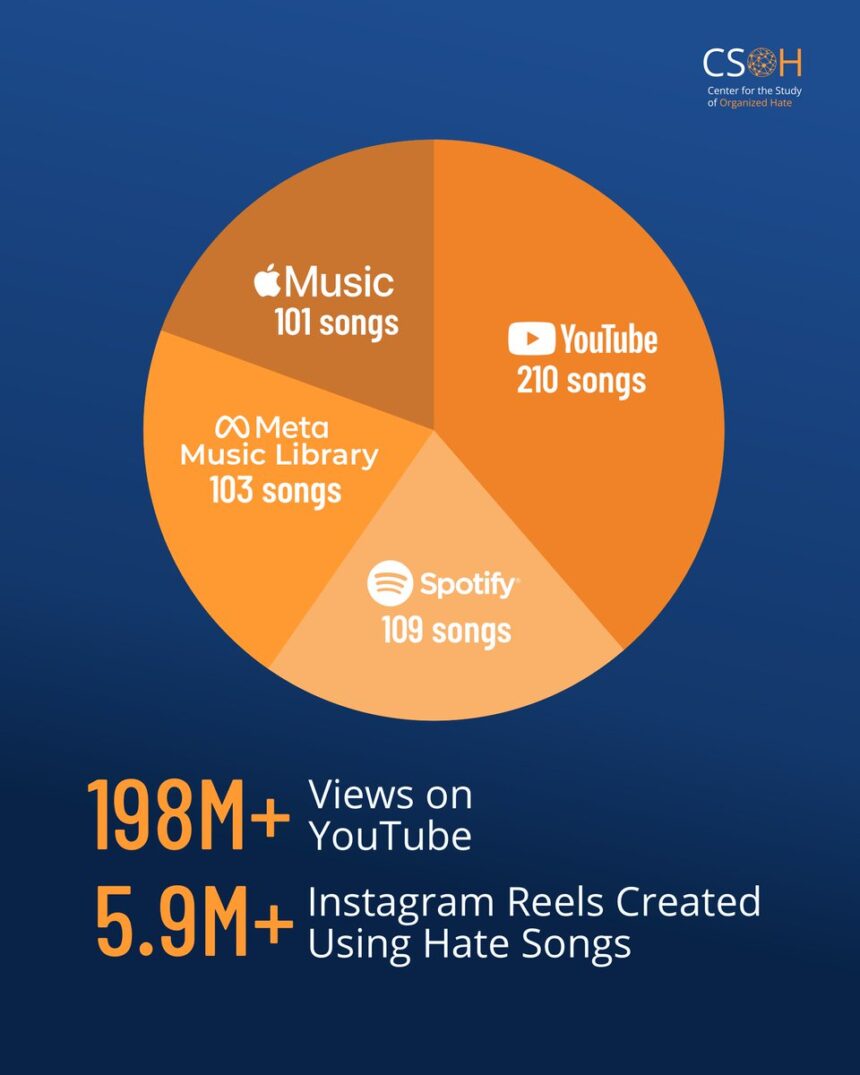

Summary: A recent investigation reveals that leading Big Tech companies such as YouTube, Meta, Apple, and Spotify have played a significant role in promoting Hindutva Pop music, which fosters violence against Muslims. Researchers documented 523 songs that propagate these harmful ideologies, raising serious concerns about the platforms’ complicity in funding and amplifying such music.
Context of Hindutva Pop Music
Hindutva Pop music has emerged as a genre that intertwines cultural expression with religious and political messaging, particularly resonating with the sentiments of certain nationalist groups in India. This genre often targets marginalized communities, particularly Muslims, framing them as adversaries through its lyrics and themes. Over the last few years, the rise of digital platforms has provided a widespread avenue for these narratives to take hold, reaching audiences far beyond geographic boundaries.
Evidence of Big Tech’s Complicity
The collaborative research conducted over the past year unearthed substantial evidence pointing to the role of major tech companies in promoting this incendiary music. Specifically, the study identified 523 songs that actively encourage violence against Muslims and perpetuate hate speech. The platforms in question, including YouTube, Meta, Apple, and Spotify, are not only amplifying these songs but have also been found to financially support their production and distribution. The findings raise profound ethical questions regarding corporate responsibility and the influence of technology on social narratives.
The Impact of Social Media Algorithms
Modern social media algorithms are designed to maximize user engagement, often putting sensational and controversial content in front of viewers more frequently. This has allowed Hindutva Pop songs to thrive on these platforms, as the more extreme content tends to generate higher engagement rates. Consequently, songs that promote hate often gain more visibility than those prioritizing peaceful or moderate themes. The perpetuation of this cycle exemplifies how tech companies inadvertently support divisive ideologies through their monetization models.
Why This Matters
The implications of these findings extend far beyond the confines of music and technology to touch on critical societal issues. For Indian readers, the normalization of hate speech through popular culture poses a significant threat to communal harmony and national unity. As these songs gain traction, they risk further entrenching divisions within society and emboldening extremist elements. Additionally, the failure of tech platforms to govern the content they host raises pressing questions about accountability and regulation in the digital age.
Frequently Asked Questions
What is Hindutva Pop music?
Hindutva Pop music is a genre that promotes religious nationalism, often targeting minority groups like Muslims, and is characterized by its provocative lyrics that incite violence and hate.
What role did Big Tech play in this issue?
Major tech companies like YouTube, Meta, Apple, and Spotify were found to be amplifying and even funding songs that promote violence against Muslims and propagate hate speech.
Why is this investigation significant?
This investigation is significant because it highlights the complicity of powerful tech giants in perpetuating harmful ideologies, raising questions of ethical responsibility and the need for regulation in the digital space.
What can be done to address this issue?
Addressing this issue may require stricter regulations and oversight on content shared by tech platforms, as well as a push for more responsible algorithmic practices that prioritize communal harmony and social responsibility over mere engagement metrics.