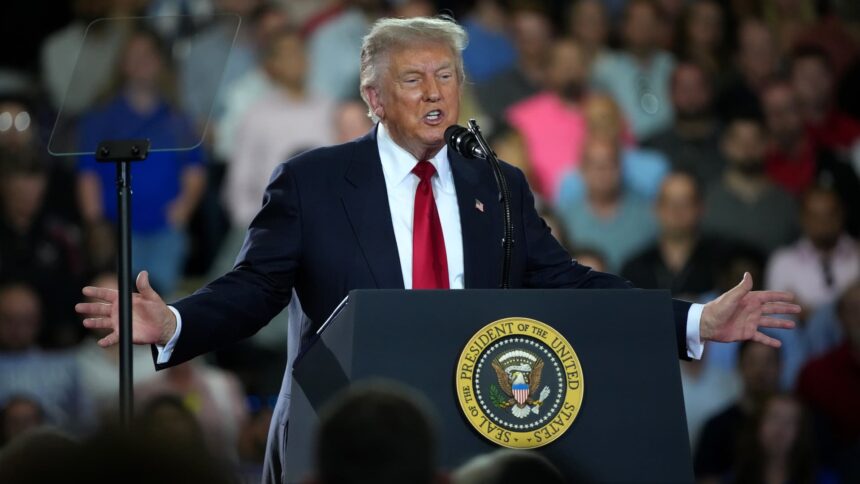

In a recent interview, U.S. President Donald Trump reiterated his commitment to tariffs, claiming that new measures are similar to those struck down by the Supreme Court. He expressed a willingness to forgo the USMCA trade deal in favor of greater economic independence, stirring concerns about the implications for global trade, particularly for countries like India.
Trump’s Tariff Strategies and Legal Controversy
During a Fox News interview, Trump addressed the newly announced tariffs, stating they effectively replicate earlier measures deemed illegal by the Supreme Court. “It’s a shame that I have to go a harder way for the tariffs because the Supreme Court, in a very close decision, you know, ruled against me,” he explained. The tariffs are now grounded in different legal frameworks following a federal lawsuit alleging misuse of statutes to impose tariffs that courts previously rejected. Sara Albrecht, CEO of the Liberty Justice Center, emphasized that merely changing the legal justification does not legitimize the tariffs, stating, “This statement bolsters our argument.”
Trade Relations Impact on India
According to Trump’s remarks, the U.S. does not need Canada and Mexico as much as they need the U.S. This stance raises questions about how tariffs could affect global trade, with potential ripple effects felt in countries like India. As India is significantly benefitting from trade relations with the U.S., shifts in tariff policies might complicate its exports to America. Trump’s administration recently imposed tariffs on over 80 countries for failing to prohibit forced labor practices, which can complicate supply chains internationally.
Trade Agreements Under Scrutiny
Trump’s willingness to withdraw from the USMCA—an agreement crucial for trade between the U.S., Canada, and Mexico—could signal a shift in American trade policy. The USMCA, which replaced the NAFTA, was designed to benefit all three nations, particularly in automaking and agriculture sectors. Trump commented, “I don’t care. I mean, I don’t really want to,” indicating a disinterest in negotiating favorable terms. This poses challenges for countries like India, as it indicates a possible move towards unilateral trade decisions, which may disadvantage smaller nations in international trade relationships.
Why This Is Trending
This topic is trending in India due to growing concerns over global trade dynamics influenced by U.S. policy changes. As one of the largest economies, fluctuations in U.S. tariffs directly affect Indian exports, especially in sectors like textiles, pharmaceuticals, and IT services. The upcoming U.S. midterm elections intensify scrutiny over Trump’s economic policies, further heightening interest in how these tariffs will impact global market stability and trade relations.
Frequently Asked Questions
What are the new tariffs announced by President Trump?
President Trump announced tariffs between 10% and 12.5% on goods from more than 80 countries, citing failures to prohibit forced labor practices. These tariffs came into effect as a new measure after previous ones were struck down by the Supreme Court.
How could U.S. tariffs impact India?
The new tariffs could complicate India’s exports to the U.S., particularly in sectors like textiles and technology. Increased costs could make Indian products less competitive in the U.S. market.
What reaction have Canadian and Mexican officials had to Trump’s comments on trade?
The Canadian and Mexican embassies in the U.S. did not immediately respond to inquiries regarding Trump’s comments, but their lack of response indicates potential concerns over the future of trade agreements and relations with the U.S.
Why is Trump’s trade policy significant now?
As the midterm elections approach, Trump’s trade policies are under greater scrutiny. Changes in tariffs can have immediate and long-term effects on global market stability, making it a critical point of discussion among economists and politicians alike.