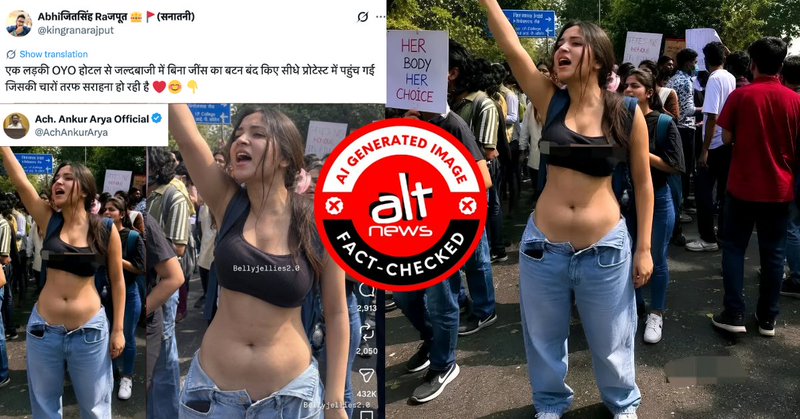

A viral image purportedly showing a girl in a crop top and jeans amidst a protest was recently flagged as AI-generated, despite being shared widely on social media as evidence of an alleged CJP protest. This revelation has sparked discussions around misinformation and the credibility of online images.
Understanding the Image’s Origin
The viral photograph features a girl dressed in a blue unbuttoned jean and a black crop top, standing among a crowd. Social media users circulated this image, claiming it was taken during a protest by the Citizens for Justice and Peace (CJP). However, Alt News, a prominent fact-checking site, conducted an investigation and confirmed that the image was generated using artificial intelligence, which highlights the growing prevalence of AI in creating misleading content online.
This revelation exposes the behind-the-scenes mechanics of digital media, where images can easily be manipulated or fabricated to serve specific narratives. The use of AI in generating fake images raises significant concerns about trust and authenticity in the visual aspect of news consumption.
The Role of Social Media in Misinformation
Social media platforms have been instrumental in the rapid spread of this misleading image. Users, motivated by various agendas, often share sensational content without verifying its authenticity. In this case, the AI-generated nature of the photo was overlooked, leading to its misuse to further a specific political narrative.
The incident underscores the challenges faced by both users and platforms in managing the authenticity of shared content. The burden of accountability increasingly falls on users to discern real from fake, while platforms are prompted to enhance their fact-checking mechanisms.
Digital Literacy and the Need for Vigilance
As misinformation continues to thrive online, the need for digital literacy becomes more pressing. Individuals must develop critical thinking skills to evaluate the authenticity of content before sharing. Educational initiatives aimed at boosting digital literacy can empower users to question the information they encounter online.
Recognizing the signs of manipulated or fabricated images, such as inconsistencies in context or quality, is essential. Encouraging users to engage with verified sources and participate in discussions around media integrity can contribute significantly to countering misinformation.
Why This Matters
The implications of this incident extend beyond the individual image. Misinformation can significantly impact public perception, influence political discourse, and even affect electoral outcomes in a democratic setup like India. Understanding the nuances of media manipulation becomes paramount for citizens who engage with political issues.
As the landscape of information evolves, users must refine their analytical skills to navigate the complexities introduced by technology. Failure to do so risks polarizing opinions and sensationalizing trivial issues while undermining serious discourse.
Frequently Asked Questions
What is the significance of the AI-generated image?
The AI-generated image highlights how digital tools can fabricate visual narratives, potentially misleading the public and influencing political perceptions.
How is this related to the protest community in India?
The CJP has been a vocal advocate for justice and peace. Misrepresentations in media, such as the AI-generated image, can detract from genuine discussions about their causes and the issues they seek to address.
What steps can be taken to combat misinformation?
Enhancing digital literacy, promoting fact-checking initiatives, and encouraging responsible sharing of information can significantly mitigate the spread of misinformation online.
Why is understanding the origin of images important?
Understanding the origin of images is crucial to maintaining the integrity of news and information. Misleading images can distort public understanding and contribute to the degradation of informed electoral and civic engagement.